







A new antenna made of plasma (a gas heated to the point that the electrons are ripped free of atoms and molecules) works just like conventional metal antennas, except that it vanishes when you turn it off.

That's important on the battlefield and in other applications where antennas need to be kept out of sight. In addition, unlike metal antennas, the electrical characteristics of a plasma antenna can be rapidly adjusted to counteract signal jamming attempts.

Plasma antennas behave much like solid metal antennas because electrons flow freely in the hot gas, just as they do in metal conductors. But plasmas only exist when the gasses they're made of are very hot.

Tiny probes packed with instrumentation have been turned loose in a laboratory in France. The marble-sized devices are an important step on the road to long-anticipated miniaturized machines known as smart dust (picture the artificial swarm in Michael Creighton's "Prey," only without the bloodlust). The small and simple machines are being developed to be released in large numbers to collect data about the motion of fluid systems such as ocean currents and atmospheric winds.

The two centimeter probes are on the large side for smart dust (typically, miniature machines must fill a volume of a cubic centimeter or less to make the cut), still the probes' abilities are impressive for their size.

It defies business sense to let lower supply raise costs and encourage energy alternatives but a study released today by Rice University's Baker Institute for Public Policy finds that the "Big Five" international oil companies (IOCs) are spending less money on oil exploration in real terms despite a four-fold increase in operating cash flow since the early 1990s.

Why would that happen? It may be knowledge that political upheavals in places like Venezuela and Russia could invalidate the investment entirely, making it unattractive for large companies who would be at risk.

A new study in the December issue of the Journal of Consumer Research finds that it is rarely the case that highly influential individuals are responsible for bringing about shifts in public opinion.

Instead, using a number of computer simulations of public opinion change, Duncan J. Watts (Columbia University) and Peter Sheridan Dodds (University of Vermont), find that it is the presence of large numbers of “easily influenced” people who bring about major shifts by influencing other easy-to-influence people.

“Our study demonstrates not so much that the conventional wisdom is wrong ... but that it is insufficiently specified to be meaningful,” the researchers write.

A new study identifies how genes are silenced in cancer cells through distinct changes in the density of nucleosomes within the cells.

The findings will enable researchers to explore new therapies to switch the genes back on and may lead to novel treatments for human cancers, says study lead author Peter A. Jones, Ph.D., D.Sc., director of the USC/Norris Comprehensive Cancer Center and Distinguished Professor at the Keck School of Medicine of USC.

"The study shows for the first time exactly how genes get shut down in cancer cells," Jones says. "It identifies what the target looks like so that new therapies can be designed to turn them back on."

A group of Scottish scientists at The Macaulay Institute, Aberdeen, have received funding to mass-produce a revolutionary food testing kit that will detect the presence of a host of potentially fatal contaminants from bugs such as Compylobacter, Listeria and Salmonella - but it will do it in five hours rather than the six days it currently takes, making it the fastest such technology in the world.

According to the Macaulay Institute’s Dr Brajesh Singh, who leads the project, the new technology could prevent thousands of deaths every year from food poisoning outbreaks.

“The conventional methods for detecting food contamination used by industries and regulatory agencies are labour intensive, time consuming and costly.

Since its discovery 30 years ago, Ebolavirus has struck repeatedly in several epidemics breaking out mainly in Central Africa. Gorillas and chimpanzees are also victims of the violent haemorrhagic fever attacks the virus triggers.

With the aim of understanding more of Ebola’s action mechanisms, scientists collect viral RNA samples from infected individuals at each outbreak. Hitherto it was only possible to analyse genetic sequences isolated from humans. Research scientists from the IRD and the International Medical Research Centre of Franceville in Gabon recently succeeded in mapping virus sequences from samples taken from anthropoid apes.

A group of Spanish researchers has made a new proposal for classifying mood swings in the current issue of Psychotherapy and Psychosomatics.

Although there is a great heterogeneity of depressive states in bipolar patients, there is only one definition in international classifications for describing them. However, this variety seems particularly important to recognize because of the possible exacerbation of some of these bipolar depressive states by antidepressants.

The researchers aimed at assessing whether it is possible to distinguish different forms of bipolar depression using a dimensional approach.

People paralyzed as the result of an accident or a serious illness are reliant on the help of others in many situations. In the Brain2Robot project, an international team of researchers has developed a robot control system based on EEG signals, which could in the future help very severely paralyzed patients to regain a certain degree of independence. You are cordially invited to attend a press demonstration of the Brain2Robot system:

Time: 14 November 2007, 12:30–1:30 p.m.

Place: Medica, Düsseldorf Trade Fair Centre, Hall 3, Booth F92 (BMBF)

To control the robot arm, the Brain-Computer Interface (BCI) developed at Fraunhofer FIRST is combined with an eyetracker, which first of all determines the direction in which the arm should move.

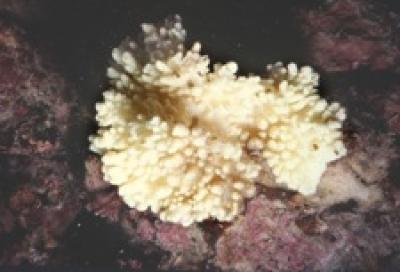
Tel Aviv University Professor (and alumnus) Hudi Benayahu, head of TAU's Porter School of Environmental Studies, has found that soft corals, an integral and important part of reef environments, are simply melting and wasting away. And Prof. Benayahu believes this could mean a global marine catastrophe.

Environmental stress, says Benayahu, is damaging the symbiotic relationship between soft corals and the microscopic symbiotic algae living in their tissues. There is no doubt that global warming is to blame, warns the marine biologist, explaining that this symbiotic relationship is key for the survival of most soft corals.


Sinularia, a common soft coral found on reefs.

