





New research led by Michael Symonds, Professor of Developmental Physiology in the School of Clincal Sciences at The University of Nottingham, says Brown adipose tissue (BAT), the brown fat found in abundance in hibernating animals and newborn babies, could be the key to new ways of preventing obesity.

Studies have previously shown that BAT activity in adults is reduced with obesity, so logically  promoting BAT function could prevent or reduce obesity in some people. 

Symonds now says that daylight is a major factor in controlling BAT activity.  “Our research has suggested a previously unknown mechanism for controlling BAT function in humans and this could potentially lead to new treatments for the prevention or reversal of obesity.”
Would you like to make your own black hole before the LHC supposedly dooms us all (though it has to stop breaking first before it can unleash  physics-induced Eschaton)?
 
Dartmouth researchers say they may be able to do it.

Writing in Physical Review Letters, they propose a new way of creating reproduction black holes in the laboratory on a much-tinier scale than their science-fiction staples. 

The new method, if it works, would create tiny quantum-sized black hole and allow researchers to better understand what physicist Stephen Hawking proposed more than 35 years ago; that black holes are not totally void of activity, they emit photons, what is now called Hawking radiation. 

Biomass refers to all the matter that can be obtained from photosynthesis. Most vegetable species use solar energy to create sugars from carbon dioxide and water. They store this energy in the form of glucose or starch molecules, oleaginous, cellulose, and lignocellulose .Biomass appears to be an attractive feedstock for three main reasons.

First, it is a renewable resource that could be sustain ably developed in the future. Second, it appears to have formidably positive environmental properties, notably the recycling of carbon in the biological processes, resulting in no net releases of carbon dioxide and a very low sulphur content.

My kids asked me if there was enough water in the universe to quench the Sun.  I voted yes, but of course science isn't about voting, but about verifiable facts.  So now the explanation.

The Sun has a mass of around a third of a million Earths.  Stealing a figure from MadSci.org, the mass of water on the Earth is 1/4400 the total mass.  We'll say we need enough water to completely douse every atom in that fusion-burning puppy we call Sol, so we'll need... 4400 * 0.3 * a million Earths. 

This works out neatly to just over a billion Earths, to get enough water to douse the Sun.

I just spent an extended weekend in Montréal (Picasa album with some highlight photos), and one thing I noted is the parking payment system — New York is adopting a similar system.

In some places, they still have the old parking meters (well, for some value of “old”; they’re digital), and I used one of those — you put coins in, and the time on the display increases up to the maximum.

On the big list of environmental challenges we face, you might worry about volcanic ash or industrial soot or farting cows ... some people are even concerned by an obscure greenhouse gas named carbon dioxide.    But you probably aren't concerned about the global impact of those rare rocket launches.

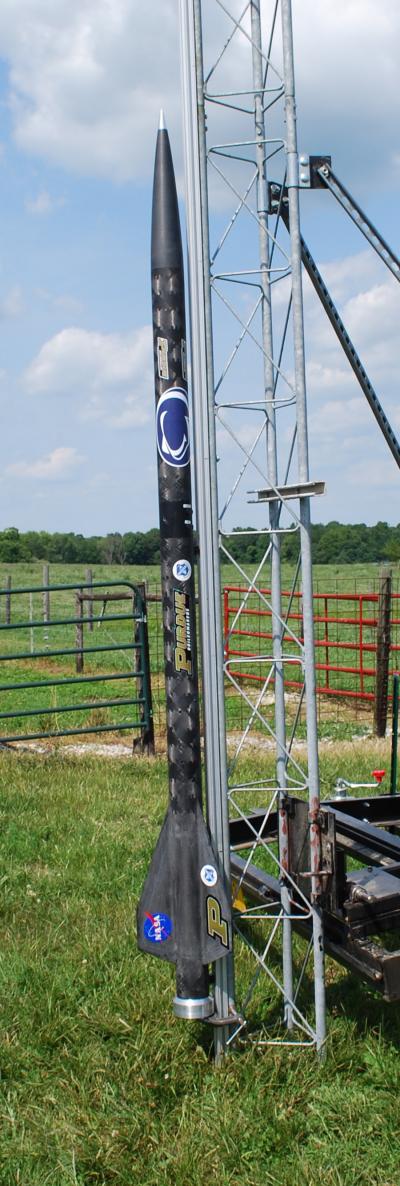
Going green is big, though, so efforts to make green rocket propellant are getting funding.   Thus, NASA and the Air Force Office of Scientific Research are pleased  to accounce they have successfully launched a small rocket using an environmentally-friendly, safe propellant comprised of aluminum powder and water ice, called ALICE. 
Researchers at the University of Iowa and Kansas State University say a deafness-causing gene defect in mice helped identify a new protein that protects sensory cells in the ear, according to findings in PLoS Genetics

In humans, hereditary deafness is one of the most common birth defects, yet most genes involved in hearing are unidentified. Mice are used as research models because mouse and human auditory genetics are very similar. 

Using a deaf mouse model generated at The Jackson Laboratory, the team identified the deafness-causing defect in the claudin-9 gene. The mutated gene fails to produce normal claudin-9 protein, which, the UI team showed, is needed to maintain the proper distribution of potassium in the inner ear.
We humans spend roughly one-third of our lives asleep but researchers don't know why. 

Science magazine listed the function of sleep is one of the 125 greatest unsolved mysteries in science and we've seen theories range from brain 'maintenance', including memory consolidation and pruning, to reversing damage from oxidative stress suffered while awake, to promoting longevity. None of these theories are well established, and many are mutually exclusive. 
Next year begins one of the largest and most important scientific experiments in history; the initial attempts at the National Ignition Facility (NIF) to produce the world's first controlled nuclear fusion reaction and tame the energy source of the sun.

That would mean a limitless new source of energy for homes, factories, and businesses.

We management professors are very conscious of the "professional school" label given to colleges of business, law, medicine, engineering, nursing, and education in diversified universities – universities in which some clinical fields, like psychology, may be part of the college of Arts&Sciences, and thereby on the other side of the divide. (At my alma mater, clinical psych is in A&S, and counseling psych is in the College of Education.)

Though a few verbal grenades are tossed over the divide each semester, schools on both sides generally co-exist tolerably well. What are the differences between them?

