Researchers say they directly convert spermatogonial stem cells, the precursors of sperm cells, into tissues of the prostate, skin and uterus, an effective alternative to the medical use of embryonic stem cells.
Scientists may be closer to understanding how to grow replacement bones with stem cell technology.
Many scientists are trying to create bone-like materials derived from stem cells to implant into patients who have damaged or fractured bones or who have had parts of diseased bones removed. The idea is that, ultimately, these bone-like materials could be inserted into cavities so that real bone could meld with it and repair the bone.
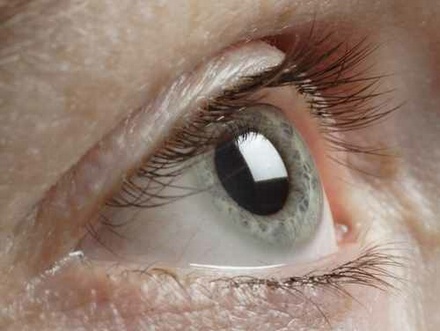
Nearly all species have some ability to detect light and at least three types of cells in the retina allow us to see images or distinguish between night and day. Now, researchers at the Johns Hopkins School of Medicine say they have discovered another type of cell that can sense light and contribute to vision.
Reporting in Nature, the team of neuroscientists say that retinal horizontal cells, which are nerve cells once thought only to talk to neighboring nerve cells and not even to the brain, are light sensitive themselves.
The tough editorial decision was behind us; the die had been cast. Pre-prints of the controversial article and its invited rejoinder appeared on the publisher’s web site. The same day, the Nicolas Cage movie Next opened in theaters. Those who believe in eerie coincidences will see one here. Let me explain.

Pterosaurs, the mighty winged-lizards, soared ancient skies expertly hunting for prey. Because they evolved from reptiles prior to modern birds, it was once believed that pterosaurs were primitive, passive fliers. They were seen as gliders, rather than skillfull hunters.
Those of you who know or follow me surely realize that I'm not exactly a guy with a lot of spare time on his hands. Yet, I just launched a second blog devoted to short entries (mostly a paragraph with an accompanying link) to document the fact that gullibility is bad for your health.
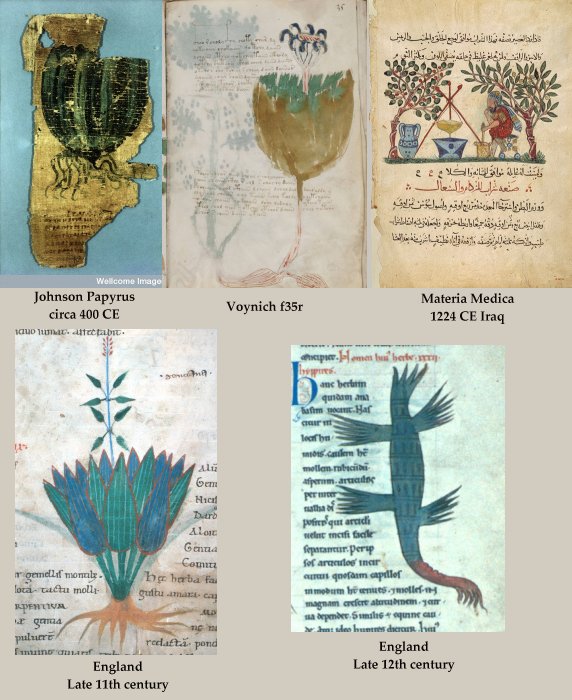
The Voynich Manuscript part 5 : The Baghdad Connection
A new technique has allowed researchers to make film bacteria infecting their living host.
Most studies of bacterial infection are done after the death of the infected organism a new technique developed by scientists at the University of Bath and University of Exeter has allowed researchers to make film bacteria and follow the progress of infection in real-time with living organisms.
The researchers used developing fruit fly embryos as a model organism, injecting fluorescently tagged bacteria into the embryos and observing their interaction with the insect's immune system using time-lapse confocal microscopy.
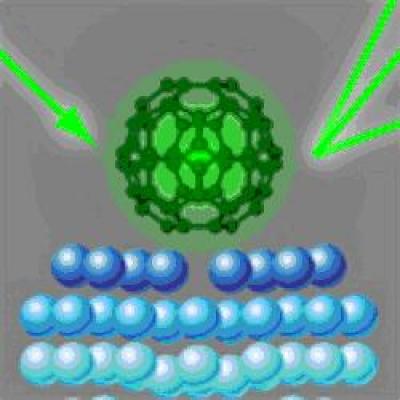
Scientists at Penn State University, in collaboration with institutes in the US, Finland, Germany and the UK, have figured out the long-sought structure of a layer of C60 – carbon buckyballs – on a silver surface. The results in Physical Review Letters and Physics could help in the design of carbon nanostructure-based electronics.
Ever since the 1985 discovery of C60, this molecule, with its perfect geodesic dome shape has fascinated scientists, physicists, and chemists alike. Like a soccer ball, the molecule consists of 20 carbon hexagons and 12 carbon pentagons. The electronic properties of C60 are very unusual, and there is a massive research effort toward integrating it into molecular scale electronic devices like transistors and logic gates.
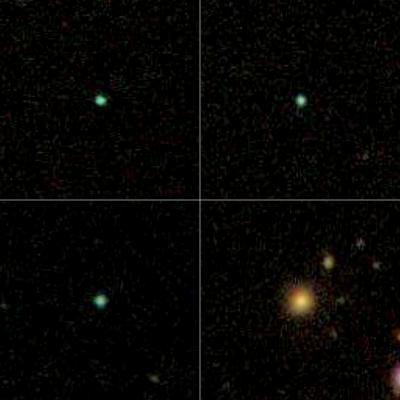
Citizen scientists working through an online project called Galaxy Zoo have discovered a group of rare galaxies called the "Green Peas" which could lend unique insights into how galaxies form stars in the early universe.
Galaxy Zoo users volunteer their spare time to help classify galaxies in an online image bank. When they came across a number of objects that stuck out because of their small size and bright green color, they dubbed them the Green Peas. Employing the help of the volunteers to further analyze these strange new objects, the astronomers discovered that the Green Peas are small, compact galaxies forming stars at an incredibly high rate.