




Dutch researcher Laura Brandán Briones, that's who.

She improved both the tests and the method to determine the reliability of the tests. This means, for example, that washing machines and coffee machines can be tested far better before they are launched on the market.

In a new study that will be published this year in Employee Responsibilities and Rights Journal, Dr. Debbie Knapp, Kent State assistant professor of management and information systems, examines the efficacy of the “Don’t Ask, Don’t Tell, Don’t Pursue” policy. She finds that homosexuals are no more disruptive to military life than their heterosexual counterparts.

Approximately 60,000 gays are active in the U.S. military today, according to the Center for the Study of Sexual Minorities in the Military.

Small, clever process technology is essential for the future, but is it possible? Dutch-sponsored researcher Fernando Benito López investigated the possibilities of the so-called lab-on-a-chip: microreactor chips in which chemical reactions can take place under (high) pressure. The results were very promising. The reaction rate increased compared to conventional equipment, the measurements were accurate and safety was not a problem. Moreover it was possible to follow and regulate the reaction during the process.

Environmental injustice in people-of-color communities is as much or more prevalent today than 20 years ago, say researchers commissioned to conduct a follow-up to the 1987 landmark study, "Toxic Wastes and Race in the United States."

The new report, "Toxic Wastes and Race at Twenty, 1987-2007: Grassroots Struggles to Dismantle Environmental Racism in the United States," shows that 20 years later disproportionately large numbers of people of color still live in hazardous waste host communities, and that they are not equally protected by environmental laws.

Immune cells that are the body’s front-line defense don’t necessarily rest quietly until invading bacteria lock onto receptors on their outside skins and rouse them to action, as previously thought. In a new paper, University of Michigan scientists describe their findings that bacteria can barge inside these guard cells and independently initiate a powerful immune response.

Research finds calorie-dense dessert recipes printed in major newspapers across the country may be contributing to obesity in large cities. The study, conducted by researchers at Marshfield Clinic Research Foundation, Marshfield, Wis., is published in the latest issue of the Wisconsin Medical Journal (Volume 106, No. 2).

The regions studied were in the West (Los Angeles, Denver, Portland), Midwest (Milwaukee, Detroit, Kansas City), South (Washington D.C., Dallas, Jacksonville) and the Northeast (New York, Philadelphia, Boston).

Maybe not, but they get hot flashes related to genital changes.

Men who have undergone chemical castration for conditions such as prostate cancer experience hot flashes similar to those experienced by menopausal women, says a new study in Psychophysiology.

Gay and bisexual men may be at far higher risk for eating disorders than heterosexual men, according to a study conducted at Columbia University. In the first population-based study of its kind, the researchers found that gay and bisexual men have higher rates of eating disorders. The findings are reported in the April 2007 issue of International Journal of Eating Disorders.

Researchers Ilan H. Meyer, PhD, associate professor of clinical Sociomedical Sciences at the Mailman School of Public Health and principal investigator, and Matthew Feldman, PhD, of the National Development and Research Institutes and first author, surveyed 516 New York City residents; 126 were straight men and the rest were bisexual men and women.

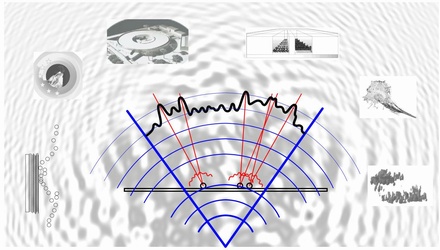
John Hauptman stood before an international gathering of particle physicists and announced he had another idea.

One that was different. One that was simpler. And best of all, one that he was sure would work.


The 4th Concept detector would eliminate the iron surrounding most particle detectors and would be about one-tenth the mass of other detectors. Credit: Iowa State University

For the growing number of people with diminished immune systems - cancer patients, transplant recipients, those with HIV/AIDS - infection by a ubiquitous mold known as Aspergillus fumigatus can be a death sentence.

The fungus, which is found in the soil, on plant debris and indoor air, is easily managed by the healthy immune system. But as medical advances contribute to a growing population of people whose immune systems are weakened by disease or treatment, the opportunistic fungus poses a serious risk.


