




Ladybugs may look pretty but they also have a dark side. In some places, the polka-dotted insects have become a nuisance by invading homes and crops, including some vineyards. To make matters worse, the bugs produce a foul-smelling liquid that, besides irritating homeowners, can be inadvertently processed along with grapes and taint the aroma and flavor of wine.

Now, chemists at Iowa State University in Ames, Iowa, say they have identified several compounds that are responsible for the ladybug’s noxious odor, a finding that could lead to new strategies to detect and eliminate the offensive compounds.

Too much of a good thing (nutrients or water) actually decreases the diversity of species in an ecosystem while it increases the productivity of a few species, according to a grassland experiment conducted by University of Minnesota researchers.

The reduction in species diversity occurs because increasing the amounts of limiting resources, such as nitrogen and water, makes an ecosystem more homogeneous and consequently reduces the number of opportunities for competing species to coexist. Put another way, it reduces the number of niches, allowing a few species to dominate.

Preliminary research suggests that use of a novel, potent drug to treat cholesterol disorders decreases triglycerides and increases HDL-C, the "good" cholesterol, but also raises some safety concerns, according to a study in the March 28 issue of JAMA. The study is being released early to coincide with its presentation at the American College of Cardiology's annual conference.

Despite the attractive electrical properties and physical features of single-walled carbon nanotubes, incorporating them into scalable integrated circuits has proven to be a challenge because of difficulties in manipulating and positioning these molecular scale objects and in achieving sufficient current outputs.

Now, researchers at the University of Illinois, Lehigh University and Purdue University have developed an approach that uses dense arrays of aligned and linear nanotubes as a thin-film semiconductor material suitable for integration into electronic devices.

Juicing up your cell phone or iPod may take on a whole new meaning in the future. Researchers at Saint Louis University in Missouri have developed a fuel cell battery that runs on virtually any sugar source — from soft drinks to tree sap — and has the potential to operate three to four times longer on a single charge than conventional lithium ion batteries, they say.

For consumers, that could mean significantly longer time to talk and play music between charges. The new battery, which is also biodegradable, could eventually replace lithium ion batteries in many portable electronic applications, including computers, the scientists say. Their findings were described today at the 233rd national meeting of the American Chemical Society.

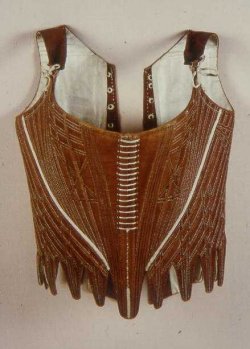
Prostitutes, perversions and public scandals – the stuff of the 21st century tabloids was familiar to readers three centuries earlier, according to new research from the University of Leeds.

The reading of erotic literature was already a social activity 300 years ago.


18th c. corset. Credit: www.museumofcostume.co.uk

futuresinbiotech.jpg Futures in Biotech

On the latest episode (#14, posted on 3/23/07) of Futures in Biotech, host Marc Pelletier talks with the founder and scientists from the Myelin Repair Foundation. The MRF is pioneering a new collaborative form of research aimed at developing treatments for multiple sclerosis, which is a disease where the myelin insulation of neurons is destroyed in an intermittent and unpredictable manner.

Modern man"s earliest known close ancestor was significantly more apelike than previously believed, a New York University College of Dentistry professor has found.

A computer-generated reconstruction by Dr. Timothy Bromage, a paleoanthropologist and Adjunct Professor of Biomaterials and of Basic Science and Craniofacial Biology, shows a 1.9 million-year-old skull belonging to Homo rudolfensis, the earliest member of the human genus, with a surprisingly small brain and distinctly protruding jaw, features commonly associated with more apelike members of the hominid family living as much as three million years ago.


IADR 2007 Conference Poster Dr. Timothy G.

Researchers at the University at Buffalo have described a novel pathway by which estradiol, the primary estrogen in humans, aids in maintaining bone density, a function critical to avoiding osteoporosis.

It is well known that estrogen is essential for healthy bone, and that when the production of estrogen is reduced, as occurs normally in postmenopausal women and pathogenically after exposure to radiation or chemotherapeutic drugs, bones become brittle and break easily. However, the mechanisms involved aren’t clearly understood.

Tissue engineering has emerged as a promising alternative for the reconstitution of lost or damaged organs and tissues, circumventing the complications associated with traditional transplants. Tissue engineers attempt to repair or regenerate damaged tissue by using engineered tissue substitutes that can sustain functionality during regeneration and eventually integrate into the host tissue. The traditional tissue-engineering paradigm combines isolated cells with appropriate bioactive agents in a biomaterial scaffold.


