




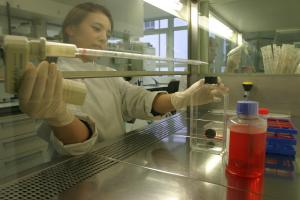
Pity the molecular biologist.

The object of fascination for most is the DNA molecule. But in solution, DNA, the genetic material that hold the detailed instructions for virtually all life, is a twisted knot, looking more like a battered ball of yarn than the famous double helix.

"What is a supermodel?" People sometimes ask me. It has a few definitions and sometimes people argue over them, much the way Heidi Klum and Elle MacPherson fight over who is called "The Body." *

But if you're reading this column, your definition of a 'supermodel' is an aspect of complexity science that incorporates multiple variables to try and spit out the best solution.

Ha Ha Ha.

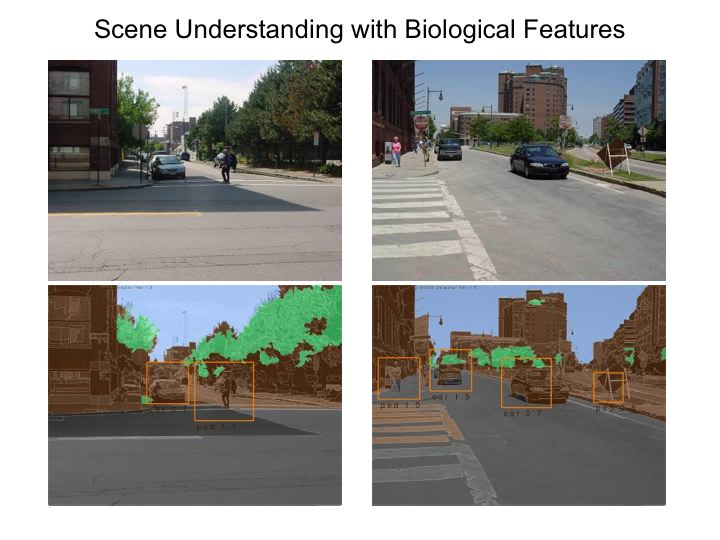
At last, neuroscience is having an impact on computer science and artificial intelligence (AI). For the first time, scientists in Tomaso Poggio’s laboratory at the McGovern Institute for Brain Research at MIT applied a computational model of how the brain processes visual information to a complex, real world task: recognizing the objects in a busy street scene. The researchers were pleasantly surprised at the power of this new approach.

“People have been talking about computers imitating the brain for a long time,” said Poggio, who is also the Eugene McDermott Professor in the Department of Brain and Cognitive Sciences and the co-director of the Center for Biological and Computational Learning at MIT. “That was Alan Turing’s original motivation in the 1940s.

A first-of-its-kind study published in the February issue of the Journal of Neurosurgery: Pediatrics suggests endoscopic brain surgery, pioneered by surgeons at the University of Pittsburgh Medical Center, has the potential to be safer and often more effective than conventional surgery in children with life-threatening conditions.

This minimally invasive approach -- known as the Expanded Endonasal Approach (EEA) -- was pioneered and refined in adults over the last decade by surgeons at UPMC and the University of Pittsburgh School of Medicine and is now a viable option for tumors in children and in many instances for tumors that were once deemed to be inoperable.

Collaborating with colleagues at Children's Hospital of Pittsburgh of UPMC, surgeons have recently expanded its use to in

The simultaneous effect of habitat fragmentation, overexploitation, and climate warming could accelerate the decline of populations and substantially increase their risk of extinction, a study published in the Proceedings of the Royal Society B has warned.


The viability of many marine and terrestrial species could be impaired due to interacting human activities that cause the loss of species' habitats, overexploitation of their populations and warming of their environments. Credit: Top left: John Veron from Corals of the World. Top right: Wolcott Henry/Marine Photobank, Bottom left: Steve Spring/Marine Photobank, Bottom right: NASA-GSFC/Marine Photobank

A new computer-based technique could eliminate hours of manual adjustment associated with a popular cancer treatment. In a paper published in the Feb. 7 issue of Physics in Medicine and Biology, researchers from Rensselaer Polytechnic Institute and Memorial Sloan-Kettering Cancer Center describe an approach that has the potential to automatically determine acceptable radiation plans in a matter of minutes, without compromising the quality of treatment.


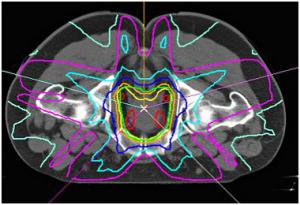
Prostate CT: The automatic radiation planning algorithm results in beamlet intensities that produce equal-dose contours. The prostate (center) receives a high dose, while nearby tissue receives a low dose. (Credit: Rensselaer/Richard Radke)

We may not be as fit as the people of ancient Athens, despite all that modern diet and training can provide, according to research by University of Leeds exercise physiologist, Dr Harry Rossiter.

Dr Rossiter measured the metabolic rates of modern athletes rowing a reconstruction of an Athenian trireme, a 37m long warship powered by 170 rowers seated in three tiers. Using portable metabolic analysers, he measured the energy consumption of a sample of the athletes powering the ship over a range of different speeds to estimate the efficiency of the human engine of the warship. The research is published in New Scientist today (February 8).


Trireme in a harbour. (Image courtesy of University of Leeds)

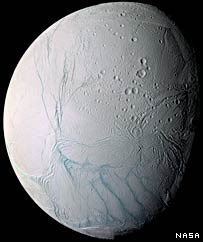
Astronomers from the University of Virginia and other institutions have found that Enceladus, the sixth-largest moon of Saturn, is a “cosmic graffiti artist,” pelting the surfaces of at least 11 other moons of Saturn with ice particles sprayed from its spewing surface geysers. This ice sandblasts the other moons, creating a reflective surface that makes them among the brightest bodies in the solar system (Enceladus, itself a ball of mostly ice, is the single most reflective body in our solar system).

“Enceladus’ art is a work-in-progress, constantly altering the surfaces of other moons orbiting within this moon’s beautiful swirl of ice particles,” said Anne Verbiscer, a research scientist in the astronomy department at the University of Virginia and the study’s lead investigator.

Physicists at the Commerce Department's National Institute of Standards and Technology (NIST) have taken the first ever two-dimensional pictures of a "frequency comb," providing extra information that enhances the comb's usefulness in optical atomic clocks, secure high-bandwidth communications, real-time chemical analysis, remote sensing, and the ultimate in precision control of atoms and molecules.


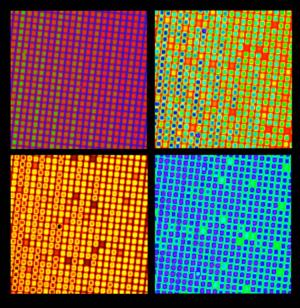
False-color images of the "fingerprints" of molecular iodine, each taken under different experimental conditions using a NIST frequency brush created with an ultrafast visible laser. The squares within each frame reveal the frequency and intensity of light from individual "bristles" of the brush.

Four million people die every year from respiratory diseases such as viral influenza. For elderly people in particular, an infection can be dangerous. What is more, the flu vaccine is not as effective with this risk group as it is with younger people. The reason for this is that with age the fire power of the immune system is reduced. Why this is the case is largely unknown. An international EU project led by the University of Bonn is now starting which aims at shedding light on this. Among other things, the researchers want to get a step closer to solving this riddle by examining tens of thousands of blood samples.

