



How do we often find something tiny in a large area? 

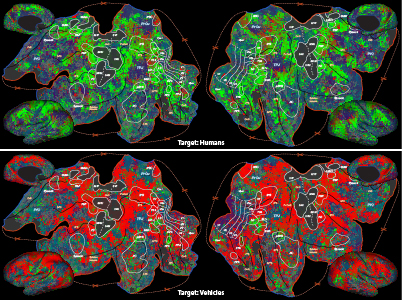
When our brains begin a targeted search, various visual and non-visual regions of the brain mobilize to track down that person, animal or thing. That means that if we're looking for a youngster lost in a crowd, the brain areas usually dedicated to recognizing other objects, or even the areas attuned to abstract thought, shift their focus and join the search party. The brain rapidly becomes highly focused child-finder, and redirects resources it uses for other mental tasks.

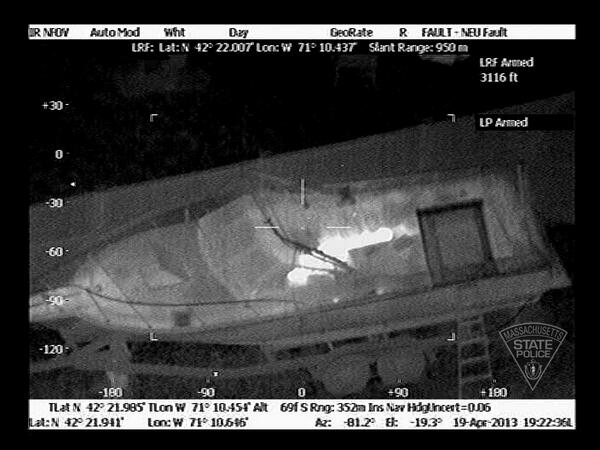
Widening The Net - The Capture of Dzhokhar Tsarnaev

Whenever there is a high profile criminal act like the Boston Marathon Attack, we usually hear from the media that "the net is closing" on a suspect.  In this age of rapid communication, surely it is more often the widening of the net that leads law enforcement agencies to the suspects.  Thanks to science, a communications net can be established very rapidly and globally.  Thanks to science there can be no hiding place for a high profile fugitive from justice.

The Dragnet
It becomes increasingly tedious that this question invariably elevates pure speculation to the verge of almost claiming actual science, simply because we can't imagine it otherwise.  Arguments are advanced about large numbers, large numbers of stars, large numbers of galaxies, etc. etc. ad nauseum.

None of that matters.  

The most important question is first; is life easy or hard?

Without an answer to that question, the rest is schoolyard nonsense.

I'm equally disturbed at how blithely we regard our own dominance.  It's as if there is no question that the universe was created for humans to use and abuse. 
Many may jump to the conclusion that ‘Uninformative Advertising’ simply provides a route by which a manufacturing corporation can ‘burn its money’ – but this may not always be the case, as explained in a recent paper from the Yale School of Management.

 Professors Dina Mayzlin and Jiwoong Shin have identified ways in which advertising that is deliberately devoid of any attribute information can (sometimes) help to promote sales.

Wildfires turn millions of hectares of vegetation into charcoal each year but it wouldn't seem like it ends up in the oceans.

Yet researchers have found that this charcoal does not remain in the soil, as previously thought. Instead, it is transported to the sea by rivers and thus enters the carbon cycle. The researchers analyzed water samples from all over the world. They demonstrated that soluble charcoal accounts for ten percent of the total amount of dissolved organic carbon. 

Pharmaceuticals don't have a discovery problem, or a financing one, they have a political one that impedes everything else. Politics have a greater direct effect on the pharmaceutical industry than anything else in the US, and correspondingly drug companies makes considerable investments in election campaigns, just like unions and any other special interest reliant on government.

The November elections kept the face of Washington the same as 2010, with President Obama in the White House, Democrats still in control of the Senate and Republicans still controlling  the House of Representatives - but that means the pharmaceutical industry will be impacted in a variety of ways. 

A new study has identified hundreds of previously unrecognized small aftershocks after Utah's deadly Crandall Canyon mine collapse in 2007, which suggest that the collapse was perhaps bigger than previous estimates.

Six coal miners died in the Aug. 6, 2007 mine collapse, and three rescuers died 10 days later. The mine's owner initially blamed the collapse on an earthquake, but the University of Utah Seismograph Stations said it was the collapse itself, not an earthquake, that registered on seismometers.

Some breast cancer patients report difficulties with memory, concentration and other cognitive functions following cancer treatment.

Determining whether that is psychosomatic or a sign of underlying changes in brain function has been a focus among scientists and medical doctors.  

A new paper found a significant correlation between poorer performance on neuropsychological tests and memory complaints in post-treatment, early-stage breast cancer patients — particularly those who have undergone combined chemotherapy and radiation.  

Are the eyes more accurate than the nose and tongue in determining the taste of food? 

Some people can actually see the flavor of foods, and the eyes have such a powerful role that they can even trump the tongue and the nose. The popular Sauvignon Blanc white wine, for instance, gets its flavor from scores of natural chemicals, including chemicals with the flavor of banana, passion fruit, bell pepper and boxwood. But when served a glass of Sauvignon Blanc tinted to the deep red of Merlot or Cabernet, people taste the natural chemicals that give rise to the flavors of those wines.

Genital warts prevalence in Australian women plummeted 59% since a nationally funded quadrivalent human papillomarivus (HPV) vaccination program
 for teen and pre-teen girls was introduced in 2007, says a paper in BMJ.

