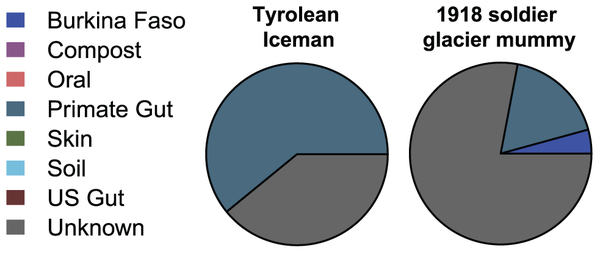




If you are an organic food or paleo diet lover and think it means your gut microbiome resembles your ancestors in any way, you are wrong.  We aren't even close to 100 years ago much less ancient times.  The microbiome does not lie.

A team analyzed microbiome data from ancient human fecal samples collected from three different archaeological sites in the Americas, each dating to over 1000 years ago. They also did a new analysis of published data from two samples that reflect rare and extraordinary preservation: Otzi the Iceman and a soldier frozen for 93 years on a glacier. 

Science can make better corn and, well, better everything - except perhaps the Christmas tree.

The genome of conifers like spruce, pine and fir has remained pretty much the same for the last 100 million years - a remarkable feat of genomic stability. Researchers analyzed the genome of conifers and compared it to that of flowering plants. Both plant groups stem from the same ancestor but diverged about 300 million years ago.

The Linac Coherent Light Source (LCLS) at the SLAC National Accelerator Laboratory is using X-rays to measure, in atomic detail, a key process at work in extreme plasmas like those found in stars, the rims of black holes and other massive cosmic phenomena.

Wilms' tumors, a type of cancer typically found in the kidneys of young children, might have a new weapon against them. A new therapeutic approach that one day might be used to treat some of the more aggressive types of this disease could be possible now that  scientists have isolated cancer stem cells that lead to the growth of the tumors.

In a little less than three weeks, a federal budget sequestration, which would have severe consequences for agencies that fund scientific research, will take effect unless a deal can be made between Republicans and Democrats. That’s a pretty discomforting sentence to write.

Discussions on the effect of sequestration on science research tend to focus on academia, and rightly so, since it will be the academics that are most directly impacted. But that is just the beginning—a very bad beginning—to the ripple effect that sequestration would have. Private companies that depend on the research industry would also be hit, and those companies are making sure that their concerns are heard.

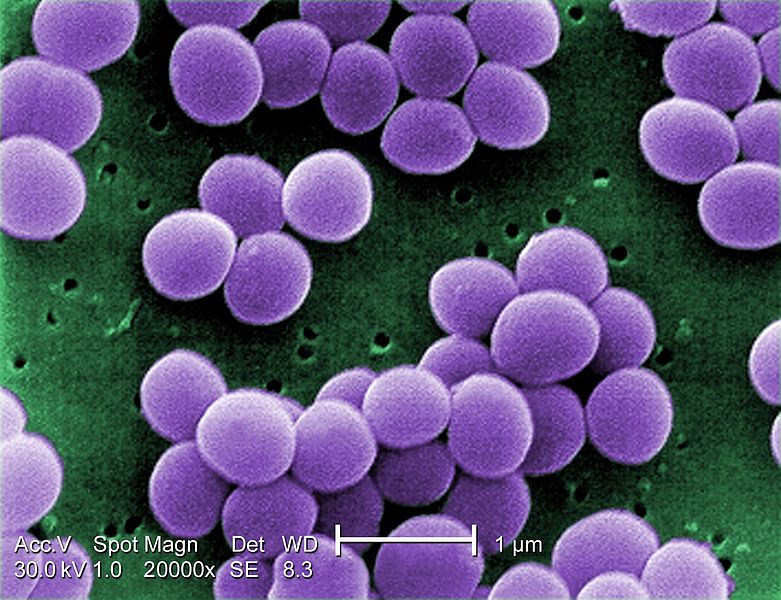
Bacteria have lived for millions of years in our planet where, with an impressive capability to adapt, they now colonize virtually every environment, including us. But as tiny one-cell organisms they had to learn to work together to be powerful enough to act on the environment and other organisms. And now, new research has discovered that their evolution is triggered exactly by these interactions, as scientists from Centre for Environmental Biology at the University of Lisbon in Portugal and the Institute Pasteur in Paris show that bacteria’s genes for secreted proteins - the ones that mediate the interactions with the outside - evolve faster than any others in the genome. 

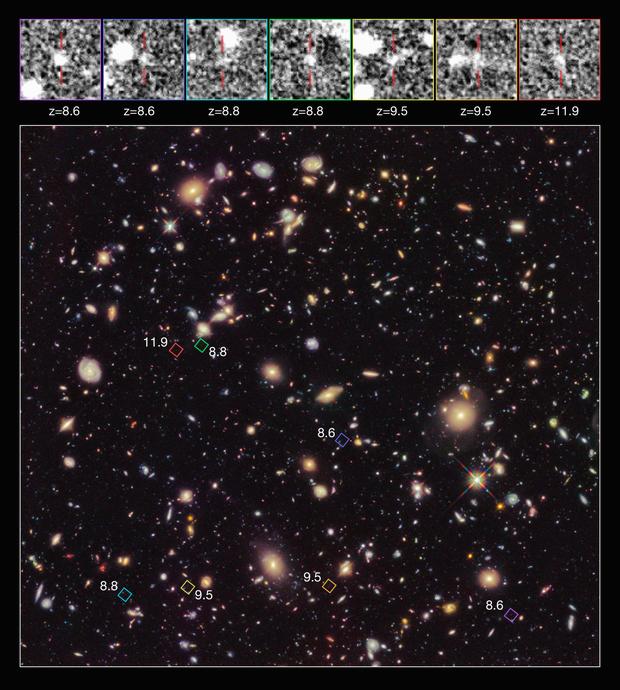
The Hubble Space Telescope has detected seven primitive galaxies formed more than 13 billion years ago, and also a candidate, at redshift 11.9, for the record for the most distant galaxy found to date. 

The images offer the deepest ever view of the Universe at near-infrared wavelengths, which capture the redshifted light of early galaxies. Because light takes so long to travel from these remote objects, astronomers are looking back in time and seeing those galaxies as they appeared just 600 million years after the Big Bang.

Do you prefer to have a few close friends or a larger social circle that is less deep? Social psychologists say your preference reflect your personality but also individual circumstances - like socioeconomic conditions.

This is a post about basics. That's because I think a point needs to be made which is surprisingly not as well-known as its elementary nature would have you guess.

Correlation -in its most used version, due to Pearson- is a measure of how two quantities can be observed to be in linear dependence on one another. It is a very common quantity to report the results of scientific studies, particularly but not exclusively in the social sciences. Researchers try to evidence the presence of a correlation between two phenomena as a preliminary step to investigating whether one can be the cause of the other.

The slow loris (Nycticebus) is a primate genus closely related to the lemur and found across South East Asia, from Bangladesh and China's Yunnan province to the island of Borneo.

The slow loris is rare amongst primates for having a toxic bite, and is rated as Vulnerable or Endangered on the IUCN Red List. Maybe not so endangered, since researchers have found a brand new species.  A team's analysis of the primate's distinctive facial fur markings, published in the American Journal of Primatology, reveals the existence of one entirely new species, while two possible sub-species are being officially recognized as unique.

