







It’s Physics World time again, folks!

This month’s (July 2008) issue has a cover headline “On reflection: Symmetry and the Standard Model”, and a diagram of the 8-dimensional E8 group squashed flat like a beached jellyfish on the 2-dimensional page. The article itself (by Stephen Maxfield of Liverpool University) is as good a summary of the development the Standard Model as I’ve come across, and does serve to persuade me that those guys, by and large, really do know what they’re talking about. But what are they talking about?

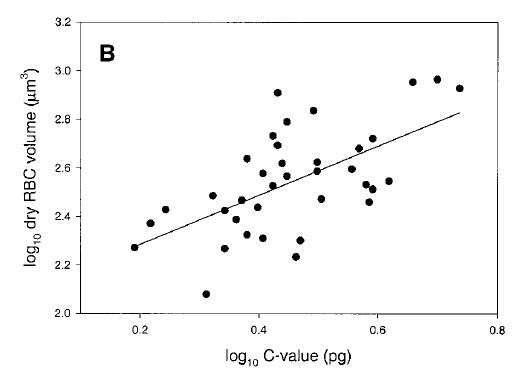
One of the many aggravations I encounter when reviewing manuscripts is that some authors greatly overstate the applicability of statistically significant patterns they report. For example, a statistically significant pattern in a small comparison of a few animals may be extrapolated in the discussion to the kingdom at large.

Today I was disappointed to see a paper that is soon to come out in Zoology that does the opposite -- i.e. takes a non-significant relationship in a handful of species and pretends that it challenges the importance of broad relationships that have been considered important for decades.

The paper in question is:

A dynamic way to alter the shape and size of microscopic three-dimensional structures built out of proteins has been developed by biological chemist Jason Shear and his former graduate student Bryan Kaehr at The University of Texas at Austin.

Shear and Kaehr fabricated a variety of detailed three-dimensional microstructures, known as hydrogels, and have shown that they can expand and bend the hydrogels by altering the chemistry of the environment in which they were built.

Hydrogels have been in development over the last couple of decades and are being used as parts in biology-based microdevices and medical diagnostic technologies, for drug delivery, and in tissue engineering. But the future utility of these "smart materials" relies on finding better ways to control their conformation.

Extinction risks for natural populations of endangered species are likely being underestimated by as much as 100-fold because of a mathematical "misdiagnosis," according to a new study led by a University of Colorado at Boulder researcher.

Assistant Professor Brett Melbourne of CU-Boulder's ecology and evolutionary biology department said current mathematical models used to determine extinction threat, or "red-listed" status, of species worldwide overlook random differences between individuals in a given population.

Such differences, which include variations in male-to-female sex ratios as well as size or behavioral variations between individuals that can influence their survival rates and reproductive success, have an unexpectedly large effect on extinction risk calculations, according to the study.

Six of every 100 patients who die in hospital do so as a consequence of an adverse drug reaction or, in other words, a fatal reaction to medicines, according to research carried out at the Department of Medicine of the University of Granada, in collaboration with the Clinical Hospital San Cecilio of Granada, by Alfredo José Pardo Cabello and directed by Professors Emilio Puche Cañas (Department of Pharmacology) and Francisco Javier Gómez Jiménez (Department of Medicine).

A adverse drug reaction to medicines (ADR) has been defined as any harmful and unwanted effect of a drug, at doses used for prophylaxis, diagnose or treatment. Their repercussion is usually minimal, but sometimes, they can be serious and they can even endanger the patient’s life.

Since earliest recorded history, and presumably beyond, humans have always wanted to fly. First attempts involved imitation of winged creatures around them, and unfailingly ended in disaster.

No workable flying machines have ever looked particularly similar to nature's fliers, and today there is little comparison between a top of the range military chopper and the humble bumblebee, despite similar flight patterns.

In an era in which engineers are increasingly exploiting designs from nature, understanding this paradox is becoming ever more important. Dr Jim Usherwood, from the Royal Veterinary College, has studied the reasons behind these differences in aerodynamics and concluded that scientists should, in this instance, be more hesitant before imitating nature.

The emotional well-being of families where children lack a genetic or gestational link to one or both of their parents (where the children have been conceived through surrogacy, egg donation or donor insemination) has long been a subject of debate.

In the first worldwide study of this issue, British scientists have shown that relationships within such families appear to be functioning well, and that there are few differences between them and families in whom children were conceived naturally.

Miss Polly Casey, from the Centre for Family Research, Cambridge University, UK, will tell the 24th annual conference of the European Society of Human Reproduction and Embryology this week that the study found that the egg donation, surrogacy, and donor insemination families showed more similarities than differences in the psychological well-being of the parents, the quality of parent-child relationships, and the psychological adjustment of the child.

Low maternal vitamin D levels during pregnancy may affect primary tooth calcification, leading to enamel defects, which are a risk factor for early-childhood tooth decay.

Investigators from the University of Manitoba (Winnipeg and Victoria) presented the results of a study they conducted to determine the vitamin D status of pregnant women, the incidence of enamel defects and early-childhood tooth decay among their infants, and the relationship with pre-natal vitamin D levels.

Researchers in Cameroon, the Democratic Republic of Congo, France, Gabon, Germany, Japan, Rwanda, the United Kingdom, and the United States have found that simian foamy virus (SFV) is widespread among wild chimpanzees throughout equatorial Africa.

Recent studies have shown that humans who hunt wild primates, including chimpanzees, can acquire SFV infections. Since the long-term consequences of these cross-species infections are not known, it is important to determine to what extent wild primates are infected with simian foamy viruses.

In this study, researchers tested this question for wild chimpanzees by using novel non-invasive methods. Analyzing over 700 fecal samples from 25 chimpanzee communities across sub-Saharan Africa, the researchers obtained viral sequences from a large proportion of these communities, showing a range of infection rates from 44% to 100%.

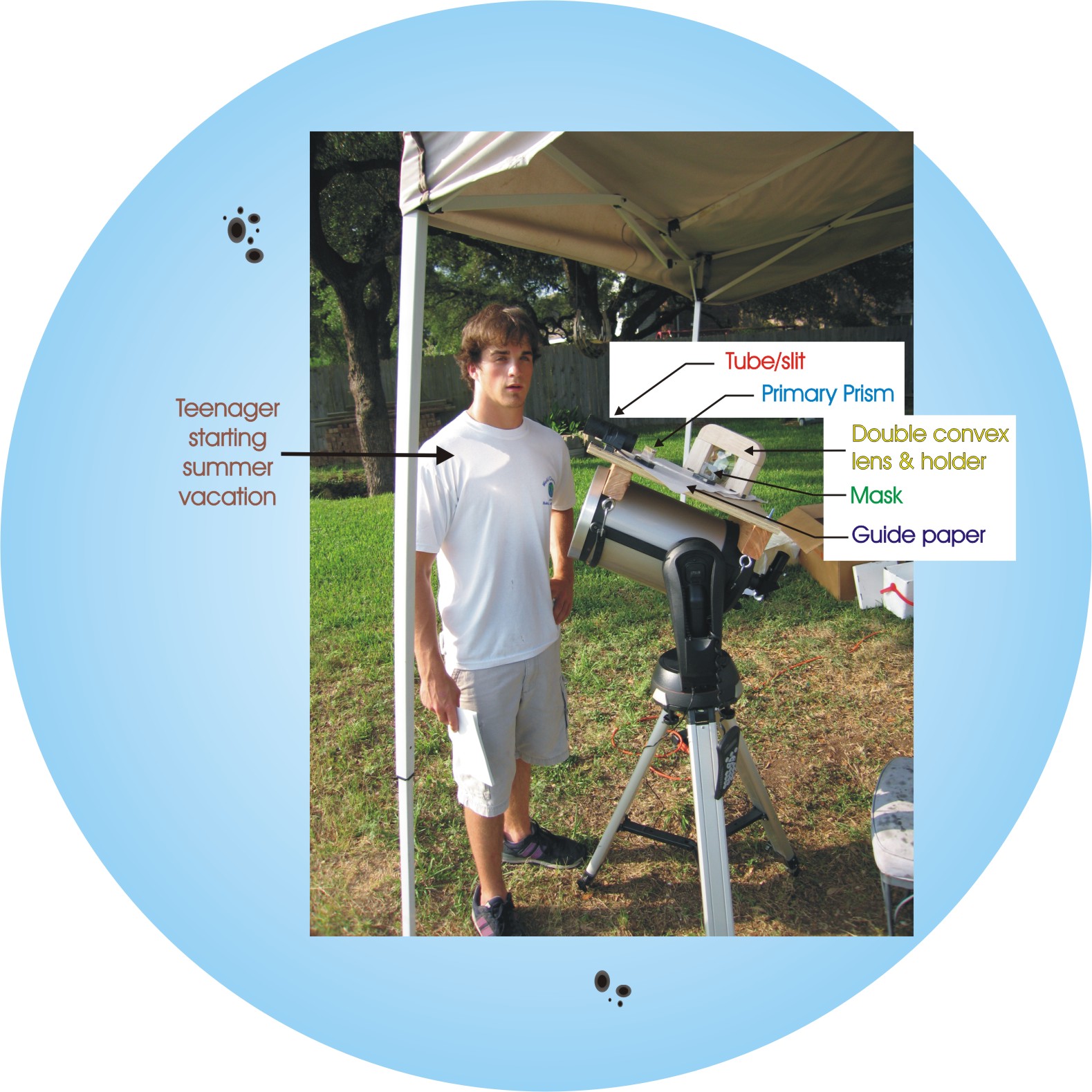
Continuing from the prior article... “The Sun Ain’t Yeller”, cries the heliochromologist.  Undaunted by tradition, dogma, or tens of thousands of erroneous magazine and textbook images of our Sun, heliochromology, a colorful heterodox, is winning the day because the Sun is what it is, color and all, regardless of other’s puerile incognizance. 

The answer is not a vague, subjective one, but an objective one, as sure as red apples are red.  Heliochromology is our path to enlightenment that will bring resolve to this color conundrum -- a subtle polemic that has been dormant to all of astronomy for hundreds, nay thousands, nay nay, tens of thousands of years, perhaps since mankind first discovered the Sun and its daily color metamorphosis. 

We know not who the sagacious sapien may have been who indubitably made the first astronomical discovery of all time – the Sun.

