


Thought I'd weigh in on the is "Is Science a Form of Dance" discussion by turning it on its head. Dance may well be a form of art as well as science - but what about the scientists themselves? Can they express their work through the art form of dance?

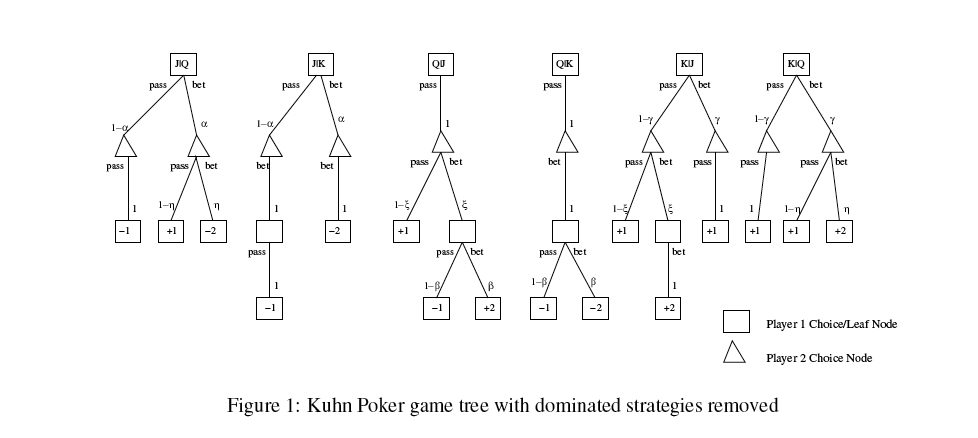
Yesterday I posted the rules of the very cool Kuhn poker. Here's optimal play:

Playing first:
Interestingly, you can either check or bet a King or a Jack—this is poker, after all and in this case bluffing/slow-playing is as good as playing your cards straight. But holding a Queen is tricky: If you bet, your opponent folds with a Jack or raises with a King. Half the time, you win your opponent's one-chip ante, and half the time you lose your ante plus your bet.

This is not good. In fact, it's bad. You're losing twice as many chips as you're winning.

So you check.
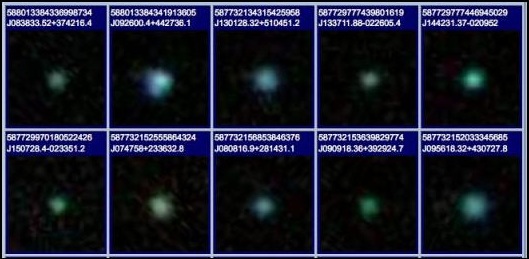
Strange so-called Green Pea galaxies were first discovered in 2007 by citizen scientists and it has now been shown that these extraordinary and extremely compact star cities have low amounts of complex elements after being diluted by streams of gas and strong supernova winds.

Green Pea galaxies were discovered by participants in Galaxy Zoo, which grew out of the need to provide more help to astronomers with a huge number of night sky images produced by the Sloan Digital Sky Survey.
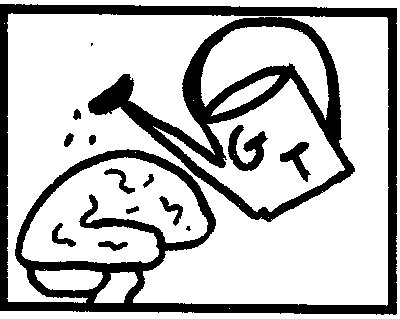
People can learn to control the activity of some brain regions when they get feedback signals provided by functional magnetic resonance brain imaging (fMRI), according to researchers who used fMRI during training sessions with three groups of healthy participants who were asked to assess visual emotional stimuli (negative or neutral pictures).

They were interested in the signals generated by the insula, a brain region implicated in emotion regulation. While performing the test, the investigators provided the subjects with specific, unspecific, or no feedback about the extent of the activation of the insula.
An archaeological team has discovered the oldest Roman baths in Asia Minor - underneath existing Roman baths.  Location:  Sagalassos, Turkey, which was inhabited as a city until the 7th century AD, when it was destroyed by earthquakes. 

Prior to the Sagalassos discovery, the Capito Baths in Miletus, built during the reign of Emperor Claudius (41-54 AD), were the oldest known Roman bathing complex in Asia Minor.
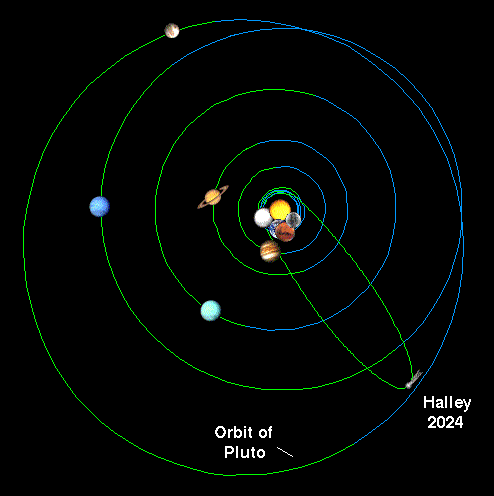
Even though Halley's Comet has a regular orbit it's not an easy task to map its appearances throughout history - and it may be that one of those appearances matches an ancient Greek testimony and has only now been realized, write Daniel W. Graham and Eric Hintz in the Journal of Cosmology, which would make it the first scientific claim about the famous extraterrestrial event.

In 1705, Edmond Halley used Newtonian theory and predicted the return of a comet seen in 1682.  It did return as predicted, in 1758, putting Halley on the stellar map and driving a stake into the evil hearts of competing theories to Newton.  
Two players share a deck composed of three cards: Jack, Queen, and King. The highest card wins. You each ante one. You each get a card. The third card remains unseen. There's one standard round of betting, with a max bet of one chip each, giving the following choices: the first player can check or bet one. Player two can call, fold, check or raise one (as appropriate). If needed, player one can then call or fold (no re-raising).


