Glacier Sticks Out Tongue - Scientists Say Aaaah!
Ice tongues are a fascinating area of study.
They have much to teach us about the life cycles of glaciers.
The CDF collaboration has recently released new results from a search for what is probably the clearest signature of Higgs boson decay: pairs of high-mass photon candidates. I am very glad to see this new analysis out for publication, since so far only DZERO, CDF's competitor at the Tevatron, had
produced results on this particular final state.
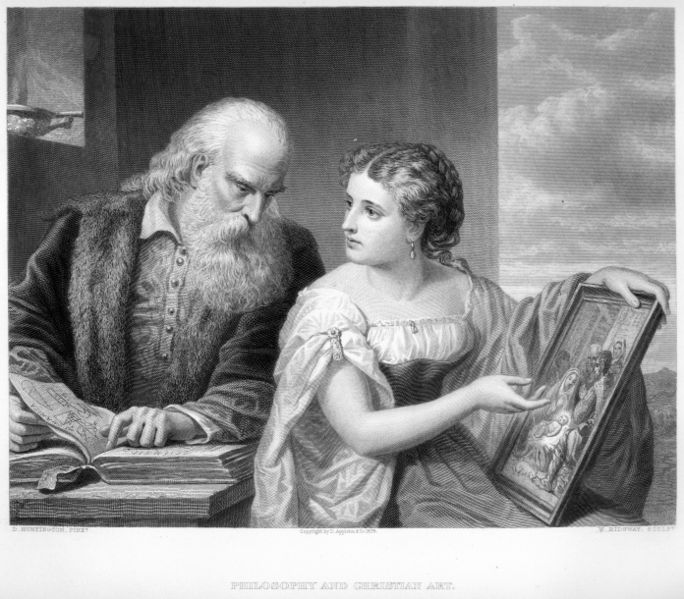
“Is religion a science?” This may seem an odd question with which to start, but this is the very first question Aquinas asks in his monumental Summa Theologica. “Among the philosophical sciences one is speculative the other practical [natural philosophy], nevertheless sacred doctrine [Roman Catholicism] includes both; as God, by one and the same science, knows both Himself and His works.” For Aquinas, not only is theology both a speculative and natural philosophy but it is also superior to both, in as much as it is guided by divine knowledge, which cannot be misled, and has as its end ultimate bliss, towards which all other sciences strive too.
Here are the top ten science headlines ripped, raw and bleeding, from this month's huge AAAS uber-science meeting. The
National Association of Science Writers sponsored 10 undergraduate science journalists. Here is their coverage, arranged using my own arbitrary ranking from harder science down through the squishier marshes of policy and ending at the meta-topic of science education. (Or follow this
this link for the full stories.)
Comp SciSimulations make earthquake hazards less shaky ELIZABETH STOREY
Migraine sufferers have long complained about how their headaches worsen with bright light, and in case you ever doubted their complaints, Rami Burstein and other researchers from Harvard Medical School and the Moran Eye Center at the University of Utah recently
made a giant step in understanding the light-to-headache mechanism in
Nature Neuroscience. They found neurons in the rat thalamus sensitive to both light and to the dura (the membrane surrounding the brain).