



Scientists of Helmholtz Zentrum München, led by Professor Martin Hrabé de Angelis, director of the Institute of Experimental Genetics, have developed a new mouse model with a genetic mutant in which a single base of a specific microRNA seed region has been altered. Mice carrying this miR-96 mutation suffer progressive hearing loss as they get older.    Moreover, if they carry two of these mutants, their sensory hair cells are impaired from birth on.
Most people are expert readers, but it is something of an enigma how our brain achieved expertise in such a recent cultural invention which requires a cognitive interface between vision and language.

The first alphabetic scripts are thought to have been invented only around four to five thousand years ago so it is unlikely that enough time has elapsed to allow the evolution of specialized parts of the brain for reading. 

While neuroimaging techniques have made some progress in understanding the neural underpinning of this essentially cultural skill, the exact unfolding of brain activity has remained elusive. 
The theory that the Chicxulub crater holds the clue to the demise of the dinosaurs and 40 percent of all species 65 million years ago is challenged in a paper published in the Journal of the Geological Society.  The Chicxulub crater, discovered in 1978 in northern Yucutan and measuring about 112 miles in diameter, lies under a km of debris and records a massive extra-terrestrial impact by an object 10-20 km in size.

SAN DIEGO and IRVINE, California, April 27 /PRNewswire/ --

- Agreement Ends Litigation Between the Companies Worldwide -

SINGAPORE, April 27 /PRNewswire/ --

- New Entry-Level WiMAX System Ensures Rapid, Cost-Effective Service Delivery

Bridgewater Systems (TSX: BWC), the mobile personalization company, today introduced the Bridgewater(R) ServiceMAX 500, a service control and subscriber data management system that enables WiMAX(TM) operators to rapidly and cost effectively launch mobile broadband and Voice over IP services. Bridgewater also announced today that it has been selected by Tatung Infocomm for its mobile WiMAX deployment in Taiwan.

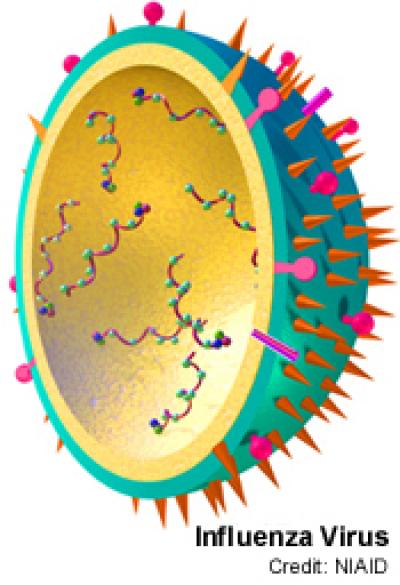
On April 21, 2009, CDC reported that two recent cases of febrile respiratory illness in children in southern California had been caused by infection with genetically similar swine influenza A (H1N1) viruses. The swine flu viruses contained a unique combination of gene segments that had not been reported previously among swine or human influenza viruses in the United States or elsewhere (1).

Neither child had known contact with pigs, resulting in concern that human-to-human transmission might have occurred.
Scientists have studied gamma oscillations, high-frequency brain waves, for over 50 years in the belief that they are crucial to understanding consciousness, attention, learning and memory. Now researchers have found a way to induce these waves by shining laser light directly onto the brains of mice.

The work takes advantage of a newly developed technology known as optogenetics, which combines genetic engineering with light to manipulate the activity of individual nerve cells. The research helps explain how the brain produces gamma waves and provides new evidence of the role they play in regulating brain functions — insights that could someday lead to new treatments for a range of brain-related disorders.
Two California children who had not had contact with pigs recently recovered from infections with "unique" swine flu/swine influenza viruses, raising concern about possible human-to-human transmission and putting health authorities on alert, the Centers for Disease Control and Prevention (CDC) reported.

The two cases were in a 10-year-old boy in San Diego County and a 9-year-old girl in neighboring Imperial County, but they are apparently unrelated, the CDC said in an Morbidity and Mortality Weekly Report (MMWR) Dispatch report April 21st. 
Here is the concluding part (for the first part see here) of a discussion of a few subtleties involved in the extraction of small new particle signals hiding within large backgrounds. This is a quite common problem arising in data analysis at particle physics experiments, but it is not restricted to that field. Quite on the contrary: narrow Gaussian signals are commonplace in many experimental sciences, and their identification and measurement is thus an issue of common interest.
A Brief History of the English Language Part 3

The historical development of English is an excellent model of how a grammar naturally develops.  I am trying to capture some of that history in this short series.  Part of the problem of understanding how language works evaporates completely if one can see the beauty in a flow of words, the magic in a few blots of ink.

Part 1 briefly covered the period from the 5th century CE to the 14th century.
Part 2 describes Chaucer's influence on the development of English.

