






As poets, songwriters and authors have described, our memories range from misty water-colored recollections to vividly detailed images of the times of our lives.

Now, a study led by researchers at Beth Israel Deaconess Medical Center (BIDMC) and Boston College offers new insights into the specific components of emotional memories, suggesting that sleep plays a key role in determining what we remember – and what we forget.

Reported in the August 2008 issue of the journal Psychological Science, the findings show that a period of slumber helps the brain to selectively preserve and enhance those aspects of a memory that are of greatest emotional resonance, while at the same time diminishing the memory's neutral background details.

What do a tree and the Eiffel Tower have in common?

According to a Duke University engineer, both are optimized for 'flow.' In the case of trees, the flow is of water from the ground throughout the trunk, branches and leaves, and into the air. The Eiffel Tower's flow carries stresses throughout the structure without collapsing under its own weight or being downed by the wind.

For most engineers, the laws governing fluid and solid mechanics like these examples are like oil and water – they just don't mix.

A theory developed by Adrian Bejan, J.A. Jones Professor of Mechanical Engineering at Duke's Pratt School of Engineering and colleague Sylvie Lorente, professor of civil engineering at the University of Toulouse, France, explains how these disparate forces can co-exist within the same theory.

An automobile powered by petroleum on the freeway and by electricity in town uses considerably less energy. A hybrid propulsion system that switches over to generator operation when the brakes go on, producing electric current that is temporarily stored in a battery, yields tremendous savings, particularly in urban traffic.

But up to now, hybrid technology has always had a storage problem. Scientists from three Fraunhofer Institutes are developing new storage modules in a project called "Electromobility Fleet Test."

The pilot project was launched by Volkswagen and Germany's Federal Ministry for the Environment BMU together with seven other partners. The Fraunhofer Institutes for Silicon Technology ISIT in Itzehoe, Integrated Circuits IIS in Nuremberg, and Integrated Systems and Device Technology IISB in Erlangen will be pooling their expertise for the next three years. The researchers are developing an energy storage module based on lithium-polymer accumulator technology that is suitable for use in vehicles.

As lithographic materials and strategies come close to fundamental technical limits, increase performance and size could become prohibitively expensive.

Further advances will require a new approach that is both commercially viable and capable of meeting the demanding quality-control standards of the industry.

In a collaborative effort between academic and industry, chemical and biological engineering professors Paul Nealey and Juan de Pablo, and other colleagues from the UW-Madison NSEC partnered with researchers from Hitachi Global Storage Technologies to test a promising new twist on the traditional methods. In the Aug. 15 issue of Science, the team demonstrates a patterning technology that may revolutionize the field, offering performance improvements over existing methods even while reducing the time and cost of manufacturing.

Have you ever looked at someone and known immediately not to trust them? Have you ever seen someone's earrings and thought to yourself, 'they've probably had way more sexual partners than I could count on two hands?' More importantly, do you trust these sort of split-second judgments? From implications in politics and economics, to simply testing your own split-second judgments of peoples' characteristics on WhatsMyImage.com, the study of our judgments and first-impressions offers a relevant and sometimes surprisingly fun look into the complexity of the brain. Alexander Todorov, an assistant professor of psychology and public affairs at Princeton University, heads the Social Cognition Lab that seeks to explore these topics. Their lab asks, “How do we form first impressions?” Remind you of your high school gym teacher? Click to play a video of how Todorov’s lab alters “face space” to vary the expressions characteristic of a dominant person.

DENVER, August 13 /PRNewswire/ --

- One in Four Dogs Dies of Cancer

- The Number One Cause of Death in Dogs Over the Age of Two

Dogster.com, the world's most popular and comprehensive Web site devoted to the health and happiness of dogs, has joined Morris Animal Foundation (MAF) in its global effort to find a cure for canine cancer. Dogster will donate US$2 for every new subscription or subscription extension, through September 30. To subscribe go to http://www.dogster.com, scroll down on the home page to "site updates" and the help cure canine cancer link. By subscribing, dog lovers will get access to tons of insightful and inspiring dog-centric content and directly help save their dog's life.

EDMONTON, Canada, August 13 /PRNewswire/ --

- Milestone Triggers US$10 Million Payment From Eli Lilly and Company

BioMS Medical Corp. (TSX: MS), a leading developer in the treatment of multiple sclerosis (MS), today announced that the independent Drug Safety Monitoring Board (DSMB) for the MAESTRO-01 trial has conducted the scheduled interim analysis of efficacy and safety and has recommended that the trial continue to completion. MAESTRO-01 is the pivotal phase II/III Canadian and European study of dirucotide (MBP8298) in patients with secondary progressive MS.

To some on the fringes, the only good planet is one without people. To some pseudo-environmentalists, a good planet is one where theirs is the only SUV. To millions more, nature is a way to escape the rigors of city life and enjoy the outdoors without being intrusive.

Ecotourism is big business these days. Convincing society that nature's beauty should be preserved and enjoyed has convinced more people than ever they should actually enjoy it.

But an examination of Californian forests says that hiking, bird-watching and other low-impact activities are linked to a sharp drop in carnivores like bobcats and coyotes. In other words, if you really care about Mother Earth you should leave nature to conservationists who get paid to monitor wildlife and instead walk around the local mall.

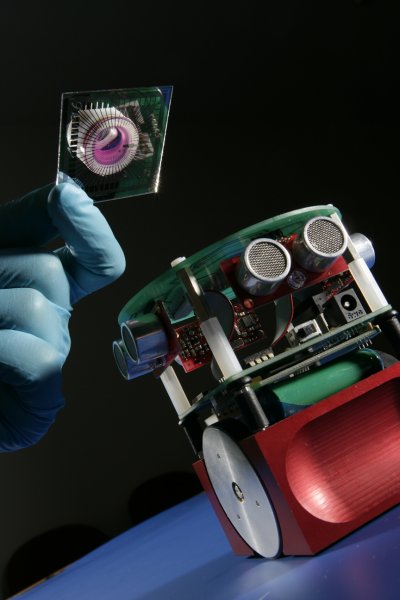
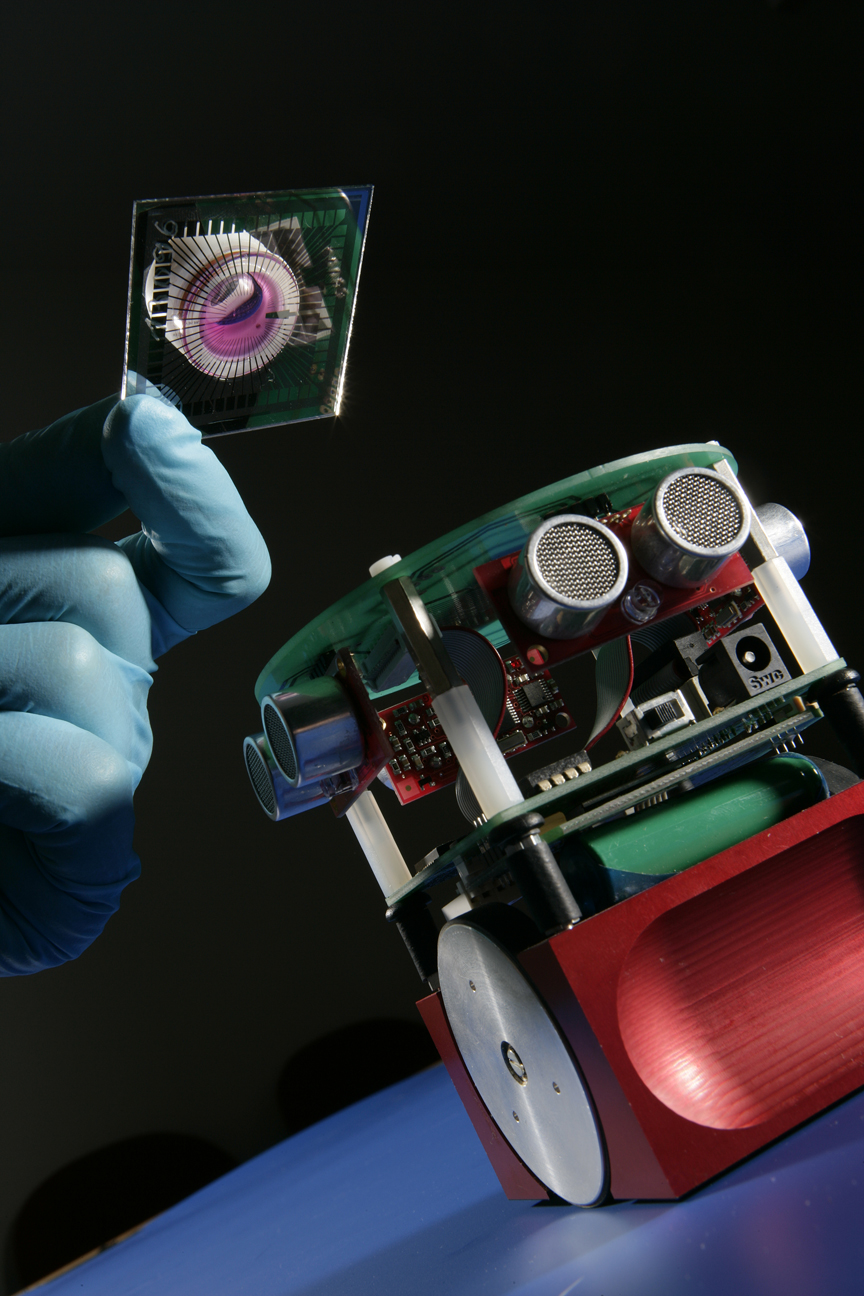
A multidisciplinary team at the University of Reading has developed a robot which is controlled by a biological brain formed from cultured neurons. This cutting edge research is the first step to examine how memories manifest themselves in the brain, and how a brain stores specific pieces of data.

The key aim is that eventually this will lead to a better understanding of development and of diseases and disorders which affect the brain such as Alzheimer's Disease, Parkinson’s Disease, stoke and brain injury.

The robot’s biological brain is made up of cultured neurons which are placed onto a multi electrode array (MEA). The MEA is a dish with approximately 60 electrodes which pick up the electrical signals generated by the cells. This is then used to drive the movement of the robot.

WELLESLEY HILLS, Massachusetts, August 13 /PRNewswire/ --

Joseph F. Finn, Jr., C.P.A. ("Finn"), Assignee of the assets of Spherics, Inc. ("Spherics") for the benefit of creditors, announced today that all pharmaceutical intellectual property will be sold at a sealed bid auction on October 10, 2008.

One of the pieces of intellectual property for sale is its lead product, SRx-502, a once-a-day version of a branded drug that currently has more than US$2 billion in sales despite twice daily dosing and an unfavorable AE profile. A clear clinical pathway for SRx-502 has been defined by the FDA for a 505(b)(2) regulatory submission. A successful bidder may make the NDA submission in 2Q 2009 with the remaining clinical trials expected to cost US$7 million.


