



Quantum mechanics can't explain consciousness and I am going to explore why.

The reason I bring this up is that many people seem to be worried that the mounting evidence that the brain generates the mind implies that free will can not exist. Of course, most of us feel strongly that we do have free will. Various arguments are put forth to "save" free will. (I am not going to tackle the claim that it needs saving in this post.) One recent approach has been to use the uncertainty inherent in quantum mechanics as a potential location for free will. John Searle has observed that this only gives us randomness, not free will, but that doesn't seem to reduce the appeal of such an approach.

Last week I had the pleasure of getting interviewed by Janet Babin at the WHYY studio in Philly. Janet is putting together a piece on Open Notebook/Open Source Science for her Marketplace series on NPR.

It was encouraging to see how much interest is being generated on this topic lately, especially in the popular media.

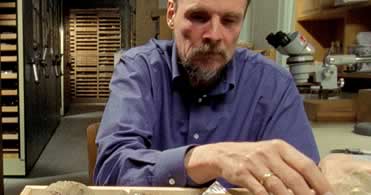
You sometimes hear that blind people have disadvantages. Don't say it to Geerat Vermeij. He got into graduate school at Yale after proving to the faculty he could identify shells through their shape and feel - using samples at random from their collection.

Vermeij, now 60, contracted a rare childhood form of glaucoma and has been blind since age 3. He discovered his love of shells attending school in New Jersey at age 9, where his family had moved because they liked that state's policies on educating the blind more than their native Holland.

"I thought of them as beautiful works of art," he said.

Now Vermeij is best known for his work highlighting the impact of competition among species in evolution.

At first glance, one might think Northeastern University junior Tanya Cashorali was bent on outshining the competition. At only 21-years-old, her achievements include three co-op jobs with top cancer scientists, one grant-funded study on tumor development, and numerous presentations to world-renowned doctors.

A newly discovered small molecule called IQ-1 plays a key role in preventing embryonic stem cells from differentiating into one or more specific cell types, allowing them to instead continue growing and dividing indefinitely, according to research performed by a team of scientists who have recently joined the stem-cell research efforts at the Keck School of Medicine of the University of Southern California.

What is the very best way to learn a complex task? Is it practice, practice, practice, or is watching and thinking enough to let you imitate a physical activity, such as skiing or ballet? A new study from Brandeis University published this week in the Journal of Vision unravels some of the mysteries surrounding how we learn to do things like tie our shoes, feed ourselves, or perform dazzling dance steps.

"What makes one person clumsy and the next person a prima ballerina is a combination of talent and practice," explains study co-author Robert Sekuler a neuroscientist at Brandeis" Volen Center for Complex Systems. "We are trying to determine what strategies will optimize imitation learning, which is crucial for acquiring many of the skills used in daily life.

Suspicion and mistrust of Western medicine led Muslim religious leaders in three northern states of Nigeria to call for the 2003 boycott of the national polio vaccine campaign, according to a historical analysis in PLoS Medicine. The boycott led to fresh outbreaks of polio in Nigeria.

Ayodele Samuel Jegede (University of Ibadan, Nigeria), author of the analysis, says that the boycott needs to be considered in its proper historical and political context.

"The polio vaccination boycott," says Jegede, "should not be considered in isolation, but rather in the context of the history of orthodox health services in northern Nigeria.

Psychiatric researchers at The Zucker Hillside Hospital campus of The Feinstein Institute for Medical Research have uncovered evidence of a new gene that appears to increase the risk of developing schizophrenia, a disorder characterized by distorted thinking, hallucinations and a reduced ability to feel normal emotions..

Working in conjunction with researchers at the Harvard Medical School Partners Center for Genetics and Genomics in Boston, MA, the Zucker Hillside team utilized a cutting-edge technology called whole genome association (WGA) to search the entire human genome in 178 patients with schizophrenia and 144 healthy individuals.

Imagine the power of knowing the three-dimensional structures of all proteins. The 3D-structure can provide information about critical protein-protein interactions both from a global perspective as well as all the way down to the level of minuscule molecular and biochemical detail. In much the same way, structural information can reveal a lot about the protein’s evolutionary relationships and functions.

If you own a birdbath, chances are you’re hosting one of evolutionary biology’s most puzzling enigmas: bdelloid rotifers. These microscopic invertebrates—widely distributed in mosses, creeks, ponds, and other freshwater repositories—abandoned sex perhaps 100 million years ago, yet have apparently diverged into nearly 400 species. Bdelloids have remained an enduring enigma in part because biologists are still debating whether the species actually exist as true evolutionary entities. And if they do, what forces determine how they diverge? In the traditional view of species diversification, interbreeding promotes cohesion within a population—maintaining the species—and barriers to interbreeding (called reproduction isolation) promote species divergence.

