Dr. Paul Offit is the Hillary Clinton of the autism world. Or is he? It seems really unfair that a well-respected pediatrician and infectious disease expert who has devoted his career to saving lives is the recipient of the vitriol that places like Age of Autism and people like its editors and followers heap on him, all because he has the courage to stand up to their intimidating tactics and speak out honestly about vaccines. He's one of the first to admit that vaccines have caused damage; he writes openly and honestly about the live polio vaccine causing polio, about Cutter laboratories.
I enjoyed a drink one time with a fellow who was, even for science blogging, left of left. I won't name names because it doesn't matter, he is a talented writer and a good guy but I always feel like he loves politics more than science and his persistent belief that Republicans/conservatives/right wing neo-cons/Nazis/(insert your favorite term here) are anti-science and progressives are not seemed rather odd. But I have written about the
Democratic War On Science many times.
The comments thread for an
article that I wrote a couple of weeks ago has suddenly been swamped by the replies of a young-earth creationist. Perhaps I should have expected it, with an article about hoaxed fossils. He presents an orgy of anecdotes that he claims (I assume it's a he) debunks my evolutionist agenda.
A week ago a meeting was held in Chamonix to discuss in detail the schedule for the near future of the Large Hadron Collider, and to take a decision on the schedule, in particular for 2012.
Yesterday morning I peeked., just a small peek, at
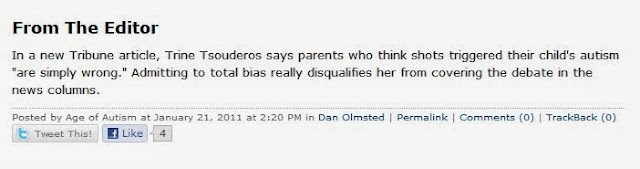
Age of Autism, and saw this:
"Call it entropy [..] nobody knows what entropy really is, so in a debate you will always have the advantage.” -- Von Neumann to Shannon.
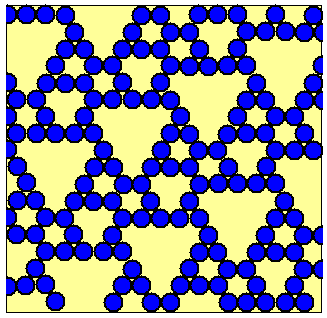
Have a look at below picture. You see a binary pattern. This pattern is formed by a hexagonal pattern of empty (yellow) spots and blue disks. The pattern repeats. If you carefully inspection the figure, you will discover that the repeating unit consists of 31 spots (with 15 of these empty, and 16 occupied). Let's consider a simple question:
How many bits do you need to fully specify the image displayed?