


President Obama's director of the National Economic Council, Lawrence Summers, made no friends among women when, as president of Harvard, he tried to have a discourse about gender differences in the higher levels of math-intensive fields.    He quickly learned that speculation and conjecture are best left to philosophy undergraduate classes and actual women in academia don't much care what he thinks about their abilities.
New research from a four-year study shows that 'gender bending' chemicals which find their way from human products into rivers and oceans can have a significant impact on the ability of fish to breed, which could have important implications for ecosystem health and possibly humans.

Endocrine disrupting chemicals (EDCs) disrupt the ways that hormones work in the bodies of vertebrates, including humans.    They can be found in everything from female contraceptive drugs and hormone replacement therapy pills to cleaning soap - most well studied EDCs are those that mimic estrogen.
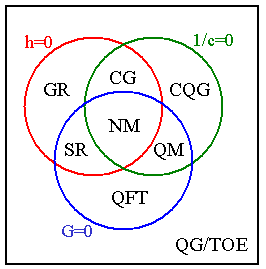
Physical reality is composed of properties like distance, duration, velocity, area, volume, mass, energy, and temperature. To quantify these properties you need to measure them. And the act of measuring boils down to comparing against an agreed yardstick, a unit of measurement such as a foot, a gram, etc. 

Do you need a dedicated yardstick for each quantifiable property?

Would the answer to this question be 'yes', then physics as we know it, would not be possible. We would not be able to relate the various properties to each other, physics laws would not exist. Fortunately, the answer to the question is a clear 'no'. We need far fewer units than one might expect based on the number of physical properties. 
You may not know the name Hammer Films, but if you have watched movies at all you have probably heard of Peter Cushing and Christopher Lee.    In 1957 they appeared in a British 'horror' movie called THE CURSE OF FRANKENSTEIN and it put both of them, and the studio, on the cultural map.

