
Smell in mammals turns out to be more complex than we thought. Rather than one receptor family exclusively dedicated to detecting odors, a study in mice reports that a group of neurons surrounding the olfactory bulb use an alternative mechanism for catching scents. These "necklace" neurons, as they're called, use this newly discovered olfactory detection system to respond to odors that elicit instinctive responses, such as pheromones and the smell of seeds and nuts. Harvard researchers report the finding May 26 in Cell.

Malnourished children are most likely to die from common infections, not starvation. New experimental evidence, reviewed May 26 in Trends in Immunology, indicates that even with a healthy diet, defects in immune system function from birth could contribute to a malnourished state throughout life. Researchers speculate that targeting immune pathways could be a new approach to reduce the poor health and mortality caused by under- and overnutrition.

Earlier this month, the U.S. Energy Information released a report projecting that by 2040, world energy consumption will have grown by 48% from 2012 levels.  

That sounds like a terrific advancement for developing nations.  We worry about water in other countries, we worry about food, we worry about education and culture. Every single one of those is resolved with affordable energy. Energy is the great equalizer and America's second most important strategic resource after, obviously, food. 
The news that the Department of Defense had found a woman in Pennsylvania with a strain of E. coli carrying the gene mcr-1, the first time plasmid-mediated resistance to colistin (MCR) has been found in the United States, should have brought calls to action, because MCR creates resistance against colistin, a powerful antibiotic seldom prescribed due to side effects that remains effective as a last resort.

Instead it brought political posturing. Democratic Rep. Louise M. Slaughter (NY-25) immediately demonized farmers and drug companies - again.

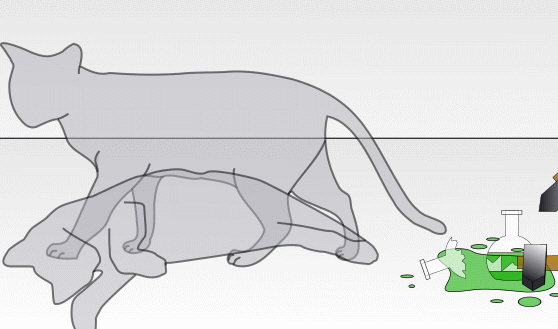
Through new experiments involving the famous Schrödinger cat state paradox, researchers have shown that a "quantum cat" can be both alive and dead, and in two places at once.

The results, which involve inducing a large number of photons to have matching states (or to become entangled), show the ability to manipulate complex quantum states, with applications for computation and long-distance communication. They also represent perhaps the first time scientists have been able to achieve such quantum coherence at a macroscopic scale. 

A research team co-led by a scientist at New Zealand's University of Otago has sequenced the first complete mitochondrial genome of a 2500-year-old Phoenician dubbed the "Young Man of Byrsa" or "Ariche".

This is the first ancient DNA to be obtained from Phoenician remains and the team's analysis shows that the man belonged to a rare European haplogroup -- a genetic group with a common ancestor -- that likely links his maternal ancestry to locations somewhere on the North Mediterranean coast, most probably on the Iberian Peninsula.

The findings are newly published in the prestigious international journal PLOS ONE.

Meerkats live in groups of up to 50 individuals, yet a single dominant pair will almost completely monopolise reproduction, while subordinates help to raise offspring through feeding and babysitting. Since only a small minority of individuals ever get to be dominants, competition for the breeding role is intense in both sexes and females are unusually aggressive to each other.

Within groups, subordinate females are ranked in a hierarchy based on age and weight, forming a "reproductive queue". When dominant females die, they are usually replaced by their oldest and heaviest daughter, though younger sisters sometimes outgrow their older sisters and can replace them in breeding queues.

An international team of scientists has identified a common phenomenon in galaxies that could explain why huge numbers of them turn into cosmic graveyards.

Galaxies begin their existence as lively and colourful spiral galaxies, full of gas and dust, and actively forming bright new stars. However, as galaxies evolve, they quench their star formation and turn into featureless deserts, devoid of fresh new stars, and generally remain as such for the rest of their evolution. But the mechanism that produces this dramatic transformation and keeps galaxies turned off, is one of the biggest unsolved mysteries in galaxy evolution.

In an article published online ahead of print on May 25, 2016 in Nature, investigators at the Medical University of South Carolina (MUSC) report that, during sensory stimulation, increases in blood flow are not precisely "tuned" to local neural activity, challenging the long-held view that vascular and local neural responses are tightly coupled.

Many brain-imaging techniques that rely on changes in the flow and oxygenation of blood--including functional magnetic resonance imaging (fMRI)--assume that vascular changes reflect a proportional change in local neural activity.

During and after chemotherapy, many cancer patients describe feeling a mental fog, a condition that has been dubbed "chemo brain." Why this happens is unclear, but researchers have found a new clue to understanding this syndrome. A study in the journal ACS Chemical Neuroscience reports that chemotherapy in rats affects their chemical messengers dopamine and serotonin, which are associated with cognition.

