

Scientists at the Gladstone Institutes have invented a new way to create three-dimensional human heart tissue from stem cells. The tissue can be used to model disease and test drugs, and it opens the door for a precision medicine approach to treating heart disease. Although there are existing techniques to make three-dimensional tissues from heart cells, the new method dramatically reduces the number of cells needed, making it an easier, cheaper, and more efficient system.

How people think and feel about their lives depends on multiple factors, including genes. In a paper published in Nature Genetics, a multi-institutional team, including a researcher from Baylor College of Medicine, reports that they have found genetic variants associated with our feelings of well-being, depression and neuroticism.

This is one of the largest studies on the genes involved in human behavior. More than 190 researchers in 140 institutions in 17 countries analyzed genomic data from nearly 300,000 people.

A YouGov poll found that anti-GMO beliefs are a sign of being less educated. It is something the science community has always known but organic industry trade groups such as Organic Consumers Association, U.S. Right To Know, and SourceWatch try to claim the opposite - that the customers of their clients are super-smart.

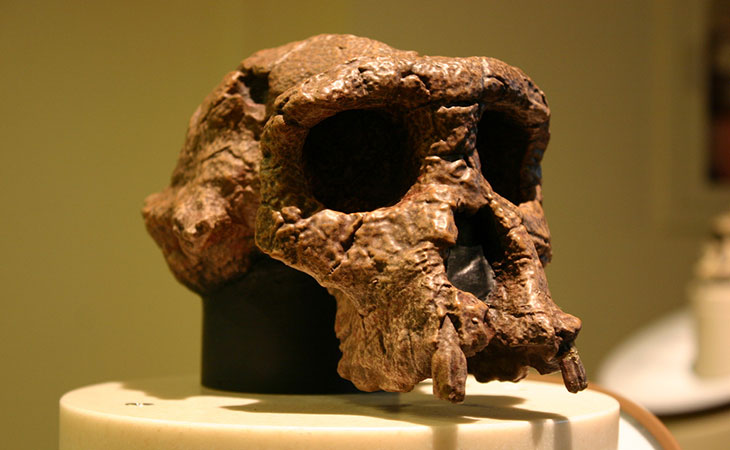
Inside Science -- How can you tell how a creature walked when all that you have is the head?

For many years, scientists looked to the foramen magnum – the large hole at the base of the skull where the brain connects to the spine – to find out. They believed it showed if an early human was a biped that walked on two legs, or a quadruped that walked on four. But a recent study published in the Journal of Human Evolution calls this into question.

Renewable energy may offer the imagery of a 'greener alternative' to traditional energy sources, but that hasn't really survived in the wild. The moment subsidies dry up, so do corporations reliant on government funding. And mounting evidence suggests that renewable energy infrastructure and the power transmission lines needed to serve them may impact avian populations, according to lead editor Jennifer Smith, a post-doctoral research associate at the Virginia Polytechnic Institute&State University writing in The Condor: Ornithological Applications.

The International Agency for Research on Cancer got a skeptical look from journalists and the general public after epidemiologists in the UN group declared that sausage is as dangerous as cigarette smoking, plutonium, mustard gas and asbestos.    

That doesn't pass the smell test and everyone can see it. Obviously those things are riskier than an Oscar Mayer bologna sandwich. The problem is that most people can't recognize IARC's other bizarre claims as being just as irrelevant to the real world.

Results of the Wellcome Trust funded trial of the experimental anti-Ebola drug TKM-130803 have been published today (April 19) in PLOS Medicine. Using a novel approach designed to get rapid indications of a drug's effectiveness, the trial showed that at the dose given the drug did not improve survival compared to historic controls.

CAMBRIDGE, MA -- Jeffrey Grossman thinks we've been looking at coal all wrong. Instead of just setting it afire, thus ignoring the molecular complexity of this highly varied material, he says, we should be harnessing the real value of that diversity and complex chemistry. Coal could become the basis for solar panels, batteries, or electronic devices, he and his research team say.

The presence of certain bacteria in the mouth may reveal increased risk for pancreatic cancer and enable earlier, more precise treatment. This is the main finding of a study led by researchers at NYU Langone Medical Center and its Laura and Isaac Perlmutter Cancer Center to be presented April 19 in New Orleans at the annual meeting of the American Association for Cancer Research.

Pancreatic cancer patients are known to be susceptible to gum disease, cavities, and poor oral health in general, say the study authors. That vulnerability led the research team to search for direct links between the makeup of bacteria driving oral disease and subsequent development of pancreatic cancer, a disease that often escapes early diagnosis and causes 40,000 US deaths annually.

The difficulty in subduing the pandemic strain of drug-resistant E. coli, called H30, may go beyond patient vulnerability or antibiotic resistance. This form of the disease-pathogen may have an intrinsic ability to cause persistent, harmful, even deadly infections.

The bacterium E. coli comes in many different varieties. Many strains live unobtrusively in the gut or innocuously in the environment. Some strains can cause diarrhea. Others can invade the urinary tract, the blood stream, or other parts of the body to provoke varying degrees of illness, from mild to serious and sometimes fatal.

