




If you are into Nuclear Physics there is very good chance you know about nuclear electromagnetic moments. Actually, nuclear electromagnetic moments has been the field of my specialty from the beginning of my scientific career. This is also why my blog in science20.com was named "Moment Zero" and not because there was some zero-time singularity I broke into writing about scientific stuff (not that I have been very active in here either!). The term nuclear electromagnetic moments 90% of the time refer to the magnetic dipole and the electric quadrupole moment. Each of these physics observables have something important to say about the nucleus.

Methane hydrates are a kind of ice that contains methane, and that
form at certain depths under the sea or buried in permafrost. They can also form in pipelines that transport oil and gas, leading to clogging. Yet methane hydrates are nearly impossible to study because it is very hard to get samples, and the samples themselves are highly unstable in the laboratory.

A team of scientists from Norway, China and the Netherlands has now shown how the size of grains of the molecules that make up the natural structure of methane hydrates determines how they behave if they are loaded with weight or disturbed.

Public health policies targeted at smokers may actually have the opposite effect for some people trying to quit, according to a paper which indicates that stigmatizing smoking can, in some cases, make it harder for people to quit because they become angry and defensive and the negative messages lead to a drop in self-esteem.

In the 1970s, scientists used genetic modification to insert the gene for human insulin production into yeast and bacteria cells. They turned those cells into tiny insulin factories, meaning insulin no longer had to be created from animal pancreases, which created allergy issues. This was a breakthrough for science and two generations of people have benefited from this GMO insulin.

Human embryonic stem cells (hESCs) technology has been around since the late 1990s and became a political football in the early 2000s when President George W. Bush made federal funding for it available for the first time, but limited it to existing lines, which made the NIH happy but was quickly pounced on by his opponents as a "ban."

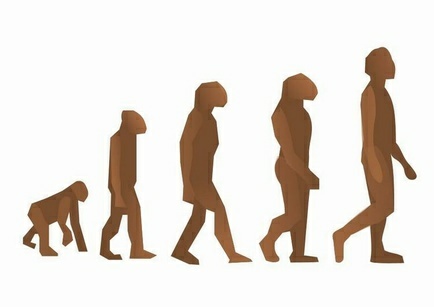
Living hominoids are a group of primates that includes the small-bodied apes (the lesser apes, or gibbons and siamangs, which constitute the family Hylobatidae) and the larger-bodied great apes (orangutans, gorillas and chimpanzees), which, along with humans, belong to the family Hominidae.

All extant hominoids share several features, such as the lack of external tail, an orthograde body plan that enables an upright trunk position, and several cranial characteristics. All these features might have been present in the common ancestor of hominids and hylobatids that, according to molecular data, would have lived about 15-20 million years ago.

38 percent of state public health workers plan to leave the public health workforce by 2020 but it isn't just retirement, they want to get out of a health care system that is even more micromanaged and financially motivated that when HMOs and insurance companies were the big problem - government control. 

The article in Journal of Public Health Management and Practice (JPHMP) is based on the Public Health Workforce Interests and Needs Survey (PH WINS), the largest-ever study of the public health workforce.  

Vitamin D supplements have been linked tp everything but improved exercise performance in 2015 - and a preliminary study presented today at the Society for Endocrinology annual conference in Edinburgh took care of that. Plus claiming this supplement will lower the risk of heart disease.

Vitamin D, which is both a vitamin and a hormone, helps control levels of calcium and phosphate in the blood and is essential for the formation of bones and teeth. Sources of Vitamin D include oily fish and eggs, but it can be difficult to get enough through diet alone. Most people generate vitamin D by exposing their skin to ultraviolet B rays in sunlight.

For millennia, Greenland's ice sheet reflected sunlight back into space but satellite measurements in recent years suggest the bright surface is darkening, causing solar heat to be absorbed and surface melting to accelerate.

Some studies suggest this "dirty ice" or "dark snow" is caused by fallout from fossil fuel pollution and forest fires; soot or dust.

But a new study says the readings are just degrading satellite sensors and the ice sheet hasn't lost as much reflectivity as previously thought, and that black carbon and dust concentrations haven't increased significantly and are thus not responsible for darkening on the upper ice sheet.

A team of astronomers is proposing that huge spiral patterns seen around some newborn stars, merely a few million years old (about one percent our sun's age), may be evidence for the presence of giant unseen planets. This idea not only opens the door to a new method of planet detection, but also could offer a look into the early formative years of planet birth.

Though astronomers have cataloged thousands of planets orbiting other stars, the very earliest stages of planet formation are elusive because nascent planets are born and embedded inside vast, pancake-shaped disks of dust and gas encircling newborn stars, known as circumstellar disks.


