



The U.S. Supreme Court just released a groundbreaking decision about the ability to patent genes – the assembly instruction for life.  

Amid much discussion about potential implications for the biotech industry, a separate, extremely troubling aspect of this decision has largely slid under the radar: one of the SCOTUS Justices dissented with basic science saying he is "unable to affirm... knowledge or even my own belief" in high school biology
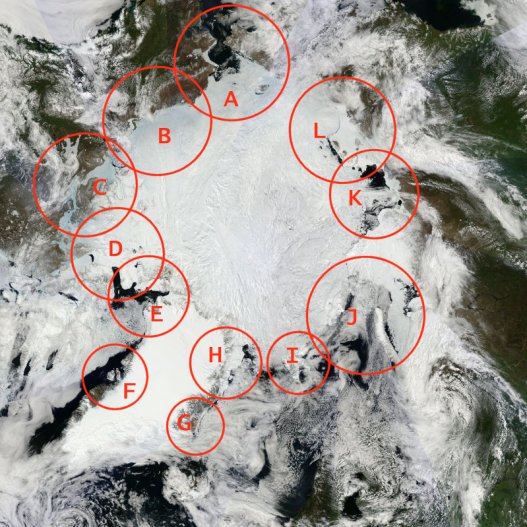
Around The Arctic June 2013


The Arctic is currently primed for rapid and extensive ice loss, unless we see some very unusual weather conditions this Summer.

The state of the ice can be seen in the following series of satellite images from NASA's Earth Observing System Data and Information System - EOSDIS.  EOSDIS produces near real-time data and makes images such as the Arctic mosaic and the Near Real Time (Orbit Swath) Images available on the web.

In several posts the question of biological costs is invariably mentioned in discussing evolution.  These costs are normally of the metabolic or fitness type.  Metabolic costs are associated with the existence of a particular trait and the energy necessary for the trait's existence, while fitness costs are those that have an impact on the organism's ability to survive and reproduce (1).

In most instances, these concepts are taken from economic analogies, yet, like economics, the concept of cost is meaningless without a context.  The two defining elements that must be considered are value and affordability.

In the last two generations, the designation 'spiritual but not religious' has become popular. It's hard to know what it means - atheists and religious people are at least taking some sort of stand - but one thing sociologists say they do know: Young adults who deem themselves "spiritual but not religious" are more likely to commit both violent and property crimes than young people who self-report religious belief ("religious and spiritual" or "religious but not spiritual").

Parasites comprise a large proportion of the diversity of species in every ecosystem but they are rarely included in analyses or models of food webs.  Would it make a difference?

A new paper says that
including parasites does alter the structure of food webs, but that most changes occur because of an increase in diversity and complexity, rather than from unique characteristics of parasites.

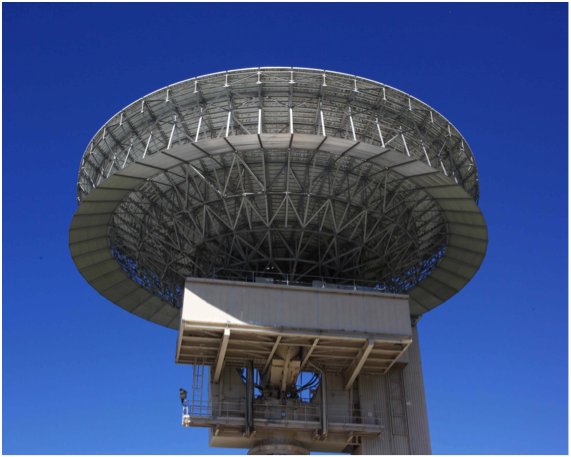
If you want to make sure your extra-terrestrial efforts can survive a nuclear attack, working inside the Jamesburg Earth Station on, fittingly, ComSat Road, just outside Carmel, California, is a fine choice. A short drive to Pebble Beach and Spyglass golf courses means it is not a bad way to spend your weekends either.

If you enjoyed seeing Neil Armstrong walking on the Moon, Jamesburg is one of the dishes you can thank. But the 10-story high antenna went out of service in 2002. The land was sold to a gentleman who wanted a vacation home - the coolest Cold War vacation home ever, if you ask me, with blueprints and cinder block walls and a room the size of a football field.
David Brin first wrote this in 2006, summarizing a controversy that was then emerging among members of the community engaged in SETI, the Search for Extra-Terrestrial Intelligent civilizations. Since I am covering a new effort at METI - Messaging Extra-Terrestrial Intelligent civilizations - going online next week, he sent me this in our email exchanges and agreed to repost it here and provide a follow-up addendum at the end - Hank

If you watch musicals from the 1950s or teen comedies from the 1990s, you find a lot of movies with different titles but the themes and plotlines barely change; two friends competing for a girl in the former or some teen wants to improve another teen, who becomes really popular, in the latter.

It's not that Hollywood lacks imagination, we are naturally drawn toward a specific set of universal narratives within cultural products, says a new paper. We have evolved to like stories about Superman saving strangers or Brad Pitt fighting zombies. 

A new statistical estimate projects that the world population could reach nearly 11 billion by the end of the century, according to a United Nations report issued June 13 - about 8 percent more than their previous projection of 10.1 billion, issued in 2011.


