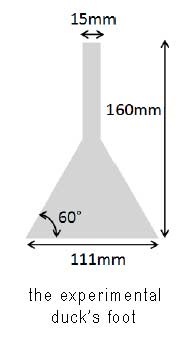

What is the optimum stroke angle for a duck’s foot when paddling? 

Although a duck may already intuitively know the answer, the question has now been clarified for us humans as part of a recent research project undertaken at the prestigious California Institute of Technology (Caltech), in the US.

Research Scientist and Post Doctoral Scholar Dr. Daegyoum Kim performed the study along with professor Morteza Gharib. The team employed a range of experimental setups with mechanical flappers, clappers and paddlers in tanks of fluid which was seeded with silver-coated glass microspheres and illuminated by an Nd:YAG laser.

Why did saber-toothed cats, hyenas, an extinct 'bear-dog', ancestors of the red panda and several other carnivores die under unusual circumstances in a Spanish cave near Madrid approximately 10 million years ago?

Different scenarios have been floated for why an unusually large concentration of healthy adult carnivores died in this cave during the Late Miocene, a location known now as Batallones-1 fossil site, Madrid Basin, Spain; accidental falls into the cave, maybe the animals died in other locations and were washed into the cave, everything but mass suicide. 

Yet those scenarios would mean mean herbivores also got trapped.  And not just healthy adults.

The downside to concerns about manure contaminating ground water is that, as manure pit storage to protect water has increased, so have fatalities due to toxic gas buildup.

Researchers estimate that about 10 people die each year in North American animal-manure pits. That doesn't sound like a lot but the number of manure storage facilities on farms is steadily growing, because the average farm size is increasing, the number of farms is decreasing and that will mean more manure pits. These deaths are entirely preventable, it was just not a problem in the past, so Penn State's College of Agricultural Sciences have published a standard for ventilation in confined animal-manure storage facilities used at large livestock operations.

Synthetic surfaces, popularly called Astroturf since the Houston Astrodome made it famous, were introduced in the 1960s to reduce strain on the playing surface and thus reduce field maintenance.

But it was linked to an increase in injuries, one example in football parlance being "turf toe". 

Third generation artificial surfaces behave more like grass and soil but continue to be associated with injuries to the foot, ankle, toe, knee and even concussions. Characteristics of the play surface directly affect how much energy is absorbed by the athlete upon impact and that means shoes are important.

A tiny fossil, the nearly complete skeleton of a bird that would have fit in the palm of your hand and weighed less than an ounce, offers clues to the precursors of swift and hummingbird wings. The fossil
discovered in Wyoming
is unusual in having exceptionally well-preserved feathers, which allowed the researchers to reconstruct the size and shape of the bird's wings in ways not possible with bones alone.

The paleontologists spotted the specimen, which was collected at the Green River Formation, while they were working at the Field Museum of Natural History in Chicago and named it Eocypselus rowei, in honor of John W. Rowe, Chairman of the Field Museum's Board of Trustees.

Are 'smart' objects the future?

People certainly like so-called smart phones, and almost every home in America has a computer, and making everything 'smart' might be a future trend, say humanities scholars at Penn State University.

 As sensors and computers increasingly become smaller and cheaper, smart objects will appear in more homes and offices and not be hidden or shielded from interacting with people, according to the researchers. For example, smart refrigerators could talk or send tweets to signal when certain food items are almost out, or when expiration dates are nearing.

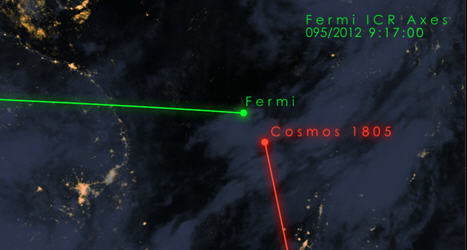
Imagine being the project scientist for a NASA experiment and getting an email telling you that a 3,100 lb. defunct spy satellite dating back to the Cold War might crash into your baby?

That's what happened to Julie McEnery of NASA's Fermi Gamma-ray Space Telescope,  which maps the highest-energy light in the universe, a year ago. When she checked her email on March 29th, 2012,  she had an automatically generated report from NASA's Robotic Conjunction Assessment Risk Analysis (CARA) saying that in about a week Fermi might be hit by Cosmos 1805. 

In America, only two political parties can win the presidency. For that reason the two parties tend to have a 'big tent' mentality and embrace a lot of fringe members in return for votes. The perfect shouldn't be the enemy of the good, the saying goes.

Due to that structure, and that a tiny percentage of 'swing voters' determine a winner, the opposing sides tend to vilify and stereotype each other as much as possible, including in ways that are tailored to the audience. For example, Democrats hate business and are anti-science, while Republicans hate minorities and are anti-science. 

Wait, they're both anti-science? Sure, just about different things. 

In the modern regulatory environment, start-ups and smaller companies tend to be less well-known. The costs are increasingly high and its hard to get venture capital funding without  knowing how long it can take to clear government hurdles so if things look promising, companies are acquired instead. 

But some are sticking it out and they are trying to gain momentum as they advance their technologies and produce significant clinical data on the road to eventual commercialization of their technologies.