A concrete marker to condemn the assassination of Julius Caesar has confirmed that the legendary statesman and general was stabbed right at the bottom of the Curia of Pompey while he sat, presiding over a meeting of the Senate. Currently, the remains of this building are located in the archaeological area of Torre Argentina, right in the historic center of the Roman capital.
Caesar's adopted son and successor, Augustus, ordered the structure created to protest the death of his father. The classical texts had stated Julius Caesar was stabbed in the Curia of Pompey on March 15th of the year 44 B.C. but it lacked material evidence.
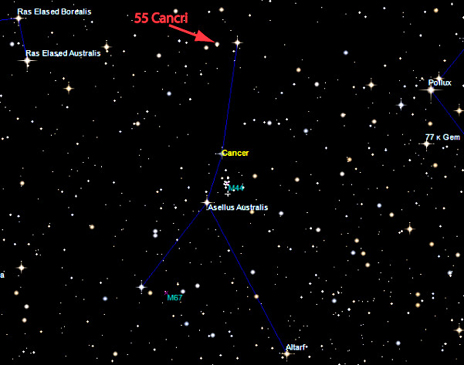
A rocky planet twice Earth's size, called 55 Cancri e, that orbits a nearby star is likely a diamond planet, according to new research.
55 Cancri e has a radius twice Earth's and a mass eight times greater, making it a "super-Earth." It is one of five planets orbiting the sun-like star, 55 Cancri, that is located 40 light years from Earth yet visible to the naked eye in the constellation of Cancer. The planet orbits at hyper speed; its year lasts just 18 hours, in contrast to Earth's 365 days. It is also blazing hot, with a temperature of about 3,900 degrees Fahrenheit, researchers said, a far cry from a habitable world.
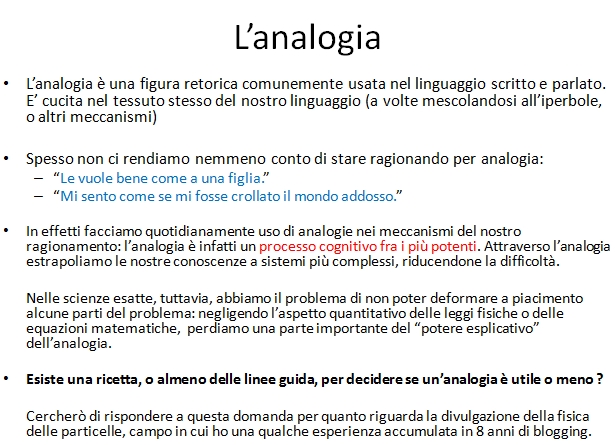
Yesterday I spent a very interesting day at
Comunicare Fisica 2012, a conference held in TORINO which brought together researchers, high-school teachers, journalists and other professionals working in the field of the popularization of science. The session in the afternoon dealt with the use of the web 2.0, and of course among the topics discussed in the talks was the use of blogs.
I’ve been meaning to write a column on steady-state economics for some time. Last year, I even did some preliminary research, before getting caught up in topical current events instead. Then, last week, I returned to my internet perusal, again typing in my search phrase, “zero growth economy.” To my consternation, the results had changed dramatically. While the radically different economic philosophy I was after still topped the list, many of the recent hits came from news articles reporting on the dire economic straits of Europe, the United States, and even China.
Recently, some people subjected themselves to perhaps the most annoying study of 2012; they had to sample and pick the most irritating noises in the world, and they did it for science.
Researchers used functional magnetic resonance imaging (fMRI) to examine how the brains of 13 volunteers responded to a range of sounds. Listening to the noises inside the scanner they rated them from the most unpleasant to the most pleasing. Scientists were then able to study the brain response to each type of sound and they believe they have found the interaction between the region of the brain that processes sound, the auditory cortex, and the amygdala, which is active in the processing of negative emotions when we hear unpleasant sounds.
Scientists have used a three GeV synchrotron radiation facility to visualize an interaction between gluten and T-cells in the human immune system, providing insight into how celiac disease is triggered. And it will lead to a vaccine, they believe.
An increasingly diagnosed chronic inflammatory disorder, celiac disease affects the digestive process of the small intestine. When a person with celiac disease consumes gluten, a protein found in wheat, rye and barley, their immune system triggers T-cells to fight the offending proteins, which damages the small intestine and inhibits absorption of important nutrients into the body. There are no treatments, apart from making sure to eat no foods with gluten.
Science based creationism has arrived and is fashionable: Established academics and NASA scientists claim that evolution is merely a deception, the fossil record planted; darlings of “new-atheists” get away with basically saying that the universe is made for humans; arXiv is not above promoting considerations of we-are-in-a-simulation scenarios that are hidden variable realities blatantly inconsistent with quantum mechanics.
Can researchers improve the quality of matter akin to that found in plasma screens? A new study improves the understanding of plasma sources, where a certain portion of the particles are ionized.
Under certain circumstances, plasma tends to form structures - filaments of electric discharge that are like mini-lightning. Researchers recently investigated barrier discharge, which features at least one electrical insulating material within the discharge gap that acts as an electrically insulating barrier and can be used as a plasma source. They investigated the transition from a highly ordered filament pattern, which is arranged hexagonally, to a disordered system due to the reduction of the externally applied voltage.
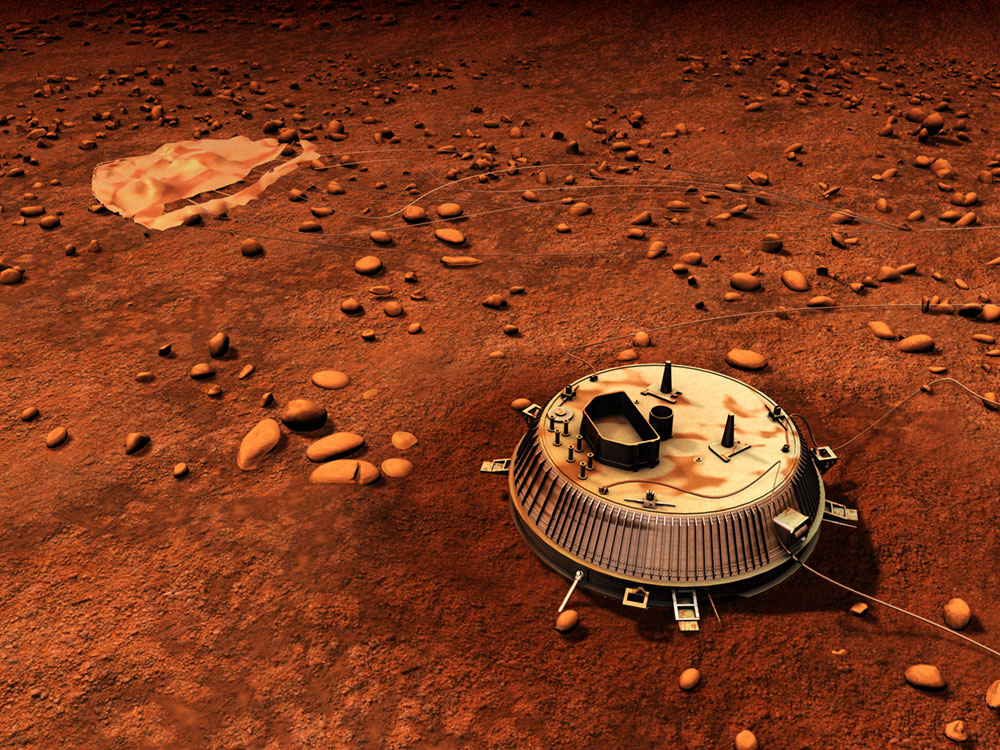
In January, 2005, ESA’s Huygens probe bounced, slid and wobbled its way to rest for 10 seconds after touching down on Saturn’s moon, Titan. As you can imagine, that tells scientists quite a bit about the nature of that moon’s surface.
They reconstructed the chain of events by analyzing data from a variety of instruments that were active during the impact, in particular changes in the acceleration experienced by the probe. The instrument data were compared with results from computer simulations and a drop test using a model of Huygens designed to replicate the landing and the analysis revealed that, on first contact with Titan’s surface, Huygens dug a hole 12 cm deep before bouncing out onto a flat surface.
Unless you are a microbiologist, you probably don't want to think about all of the things that are happening in your mouth right now.
One thing you share with microbiologists is incomplete knowledge regarding what determines the specific types of microorganisms that live there. Is it genes that decide who lives in your microbial village, or your environment? In a new paper, researchers contend that environment plays a much larger role in determining oral microbiota than biology, a finding that sheds new light on a major factor in oral health.