Implemented in 2006, Medicare prescription drug benefit (Part D) spent $65.8 billion for prescription drugs in 2011, according to the Congressional Budget Office. But Medicare beneficiaries are overpaying by hundreds of dollars annually because of difficulties selecting the ideal prescription drug plan for their medical needs, an investigation by the University of Pittsburgh Graduate School of Public Health reveals. Their work also could be useful in designing health insurance exchanges, which are state-regulated organizations created under the Affordable Care Act ("Obamacare") to offer standardized health care plans.
The 100 Year Spaceship Symposium, an international event advocating human expansion into other star systems, has some crucial hurdles to overcome. Basically, interstellar travel will depend upon extremely precise measurements of every factor involved in the mission, which isn't possible yet. But a University of Missouri researcher thinks he has found the solution to a puzzle that has stumped astrophysicists for decades.
Researchers have found what they say is the only fossil ever discovered of a spider attacking prey caught in its web – and it dates back 100 million years.
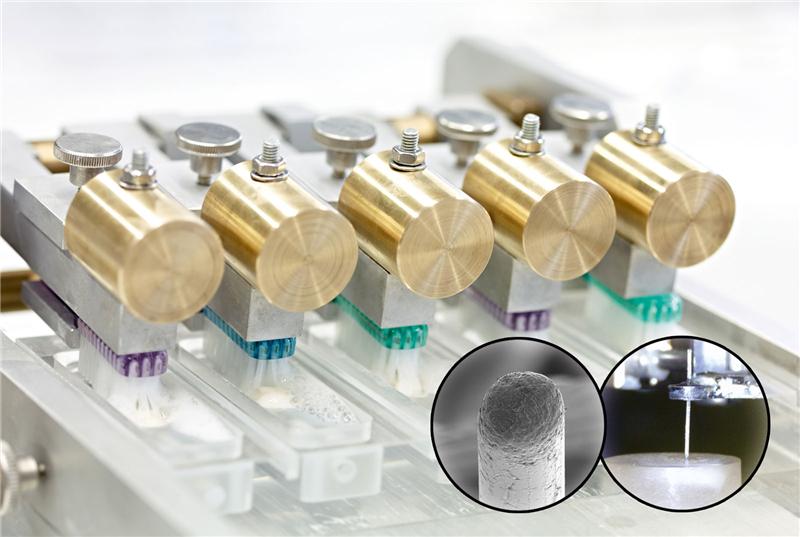
Solar cells can convert up to three-quarters of the energy contained in the Sun‘s spectrum into electricity, yet the infrared spectrum is entirely lost in standard solar cells.
Around a quarter of the Sun’s spectrum is made up of infrared radiation which cannot be converted by standard solar cells; that heat radiation is lost. One way to overcome it is to use black silicon, a material that absorbs nearly all of the sunlight that hits it, including infrared radiation, and converts it into electricity. But how is this material produced?
Gamblers interpret near-misses as frustrating losses rather than near-wins, and that frustration stimulates the reward systems in the brain to promote continued gambling, which may contribute to addictive gambling behavior.
Analyses to date have shown that near-misses support persistent gambling and activate brain areas that reinforce certain behaviors. If near-misses are seen as near-wins, then they should be pleasurable. If, however, near-misses are highly frustrating losses, then they should be unpleasant. Dixon and team set out to shed light on this debate.
Everyone buys toothpaste and so they come in shapes and flavors, as pastes and gels, some guard against tooth decay or protect teeth from acid attack, while others that are designed for sensitive teeth. But which toothpastes clean well? Which preserve the tooth enamel? A new evaluation method sheds light on the subject.
Researchers have identified a key factor responsible for declining muscle repair during aging, and discovered how to halt the process in mice - using a common drug.
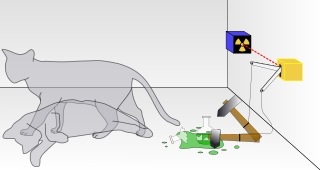
Well, kind of.
David Wineland and
Serge Haroche have not endangered any living beings. That is to say: probably not in their physics experiments.
Yet, although they stayed at a safe distance from bringing life form into quantum superposition, both physicists have thoroughly explored the schizophrenic world of the quantum, and opened the door to the direct observation and manipulation of quantum superpositions. By cleverly exploiting the fundamental interaction between light and matter, the two quantum optics experts have managed to pull off a range of experiments in which Schrödinger's cat states lead to bizarre results.
Bumbling coverage on phthalates underscores how activist journalism endangers ‘public science’
Last year, campaigning journalist Susan Freinkel noted that she wrote her anti-chemical book, Plastics: A Toxic Love Story, because she was shocked about how much modern society relied on plastics. In her  mind, “synthetic materials” equated with poor health, pollution and western gluttony.
There may be good news for the blood donation business; the shelf life of blood has perhaps gotten longer.
In a finding that runs counter to commonly held beliefs about fresh blood being better, a randomized clinical trial shows that acutely ill premature babies who received fresher blood did not fare better than those who received the current standard of care. There was no difference between the two approaches with respect to major organ injury, mortality and infection.