Drought across the United States has reduced substantially the expected yield of corn and soybean fields for the fall 2012 U.S. harvests. With reduced yield, prices have risen rapidly for these crops that are widely-used food and feed ingredients, huge international agricultural trade commodities, and important food aid essentials.
Since the early 1970s, all aspects of academia have skewed left.  With that political shift, the confidence that scientists are neutral arbiters for the public good has also declined on both sides.

More Republicans than Democrats think the fix is in regarding a green 'agenda' and global warming whereas more Democrats than Republicans think scientists are shills for Big Ag, Big Pharm, etc. regarding food and vaccines.  Basically, science can't win but there was a time when being an academic, and certainly a scientist, was impressive and not a presumption about a political world view. Getting into the political muck - and plenty of advocates for science recommend doing more of it, not less - has been a bad thing for credibility.
If you are flying an airplane and detect an unusual odor in a confined space 5 miles up in the air, what can it be? Burritos for lunch?   

Not this time. The foul smell with traces of sulfur in the cockpit came from none other than the Grímsvötn volcano that was spewing gas and ash from southeast Iceland. Sulfur dioxide often indicates volcanic ash, and the presence of ash in the atmosphere can endanger jet engines. Once landed, Captain Klaus Sievers used data from the MetOp satellite via the Support to Aviation Control Service – SACS – to confirm that it was high-altitude sulfur dioxide.
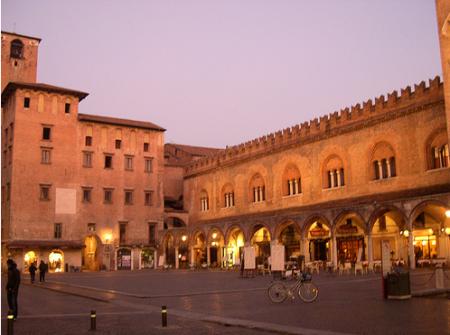
On Friday evening I will be talking in the wonderful Piazza Mantegna, in downtown Mantova (see picture below). It is an event organized by Festivaletteratura (literature festival), where I will be armed with blackboard and chalks, plus a mike, and where I will explain the way a discovery of a new particle comes about.

On Saturday instead I will be at the aula magna of the Mantova University, where in company with Gian Francesco Giudice (a CERN theorist) I will discuss the Higgs boson discovery and the aftermath. That is a more "serious" event and we will be discussing in front of a paying audience. I hear that the event is already sold out, so it will (should) be interesting!
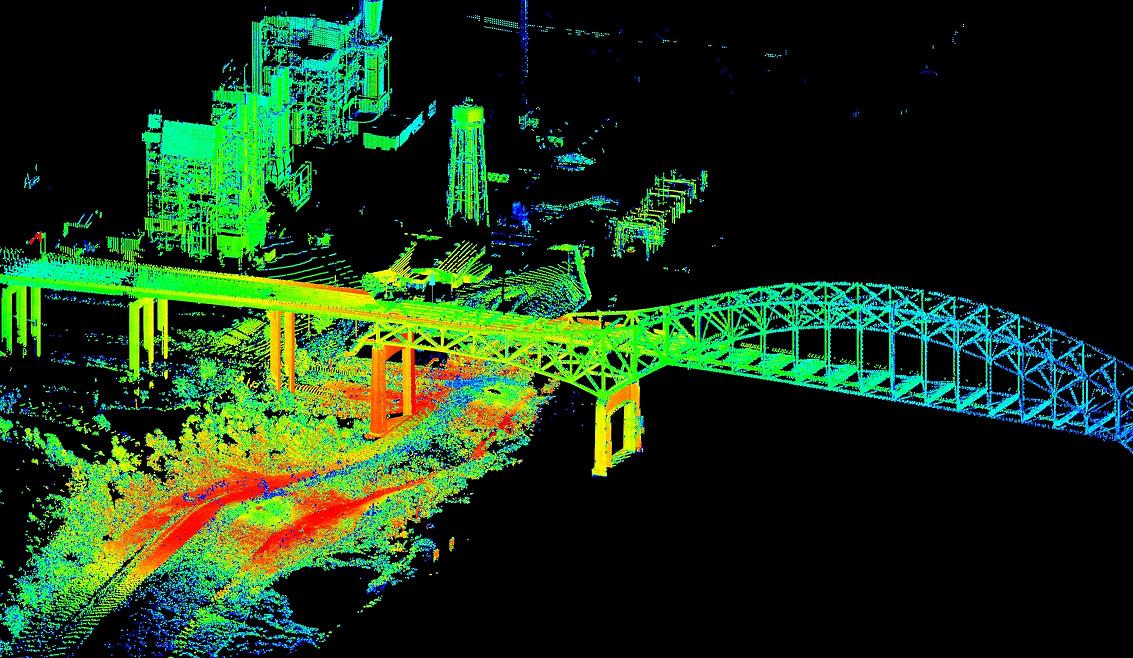
Hurricane Isaac may have disappointed the news networks and the federal government - it was declared a state-of-emergency before the first rain drop fell and Sean Penn was not roaming the streets of New Orleans with a shotgun to prevent Republican-created zombies - but it was a good test run for some new technology; “terrestrial lidar” or “T-lidar”.
Soil bacteria and bacteria that cause human diseases have recently swapped at least seven antibiotic-resistance genes, according to researchers at Washington University School of Medicine in St. Louis.

Most of the antibiotics used to fight illness today originated from the soil. Bacteria use the antibiotics, in part, as weapons to compete with each other for resources and survival. Scientists have long acknowledged that gives environmental bacteria an evolutionary incentive to find ways to beat antibiotics.
It used to be that a species name was only official if it was printed in a journal - and the print was quite literal, it had to be a print journal.

I've been feeling a bit inspired about our prospects in space, lately.  Foremost (of course) by the incredible competence displayed by the makers of the Curiosity probe that landed on Mars, last week, and the JPL controllers and the citizenry that backed such a wonderful venture.  

The physicist John Archibald Wheeler wrote in 1984:

...the most revolutionary discovery in science is yet to come! And come, not by questioning the quantum, but by uncovering that utterly simple idea that demands the quantum.” Wheeler, 1984 [1]

Here is where a “modal realist version of Einstein”, while contemplating the Einstein-Podolsky-Rosen paradox involving the infamous Alice and Bob characters, could have stumbled onto Wheeler’s “utterly simple idea that demands the quantum”:

“Ears are a particularly appealing approach to noncontact biometrics because they are relatively constant over a person’s life and are unaffected by expressions, unlike faces.”