A contaminated river and a polluted sky are proof that environmentalism isn't just for the rich any more, say sociologists.
Obviously it never was, in many countries. In the developed world, people in the country actually care more about the environment than rich urbanites, but in the developing world the practical takes precedence over policy. The poor can't afford to protect the environment.
A new survey says that may be true in the country but in the city it is another matter. People living in China's cities who say they've been exposed to environmental harm are more likely to be green, recycling or reusing grocery bag. It also says the poor would sacrifice economic gain to protect their environment.
With the Supreme Court decision to uphold mandatory health insurance purchasing under the Affordable Care Act, it's going to get more expensive. But for thousands of years people were able to go into the woods and get health care for free, so all is not lost. Maybe they can even get a rebate for using nature.
Natural remedies may not be as effective as their synthetic pharmacological cousins but a Harvard post-doc says there may be economic benefits people could receive by relying on such traditional cures. If that feels like 'ketchup is a vegetable' sweet lemons rationalization, you are not alone.
The brain is like a muscle; it can get into a routine. But mixing up the workout a little is healthy in both cases. In the brain, however, it isn't without difficulties.
Learning a new task when rules change can be a surprisingly difficult process and entail repeated mistakes, according to a new study. Take a US driver and put them in England where they suddenly have to drive on the left side of the road. The brain, trained for right-side driving, becomes overburdened trying to suppress the old rules while simultaneously focusing on the new rules - putting them on a moped if they are used to driving a car would make it even worse.
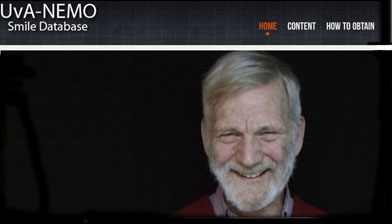
What exactly happens to your face when you smile spontaneously, and how does that affect how old you look? Computer scientists from the University of Amsterdam's Faculty of Science recorded the smiles of hundreds of visitors to the NEMO science centre in Amsterdam, creating the most comprehensive smile database ever.
The computer scientists behind the project say that you look younger when you smile - if you are over forty. If you are under forty, you should look neutral if you want to come across younger. And be cold and distant and act a little broken inside if you want to date a stripper.
A giant human sculpture has been unearthed at the Tayinat Archaeological Project excavation site in southeastern Turkey.
The head and torso of the human figure is intact to just above its waist and stands approximately 5 feet tall, so it likely had a total body length of 10 to 12 feet. The figure's face is bearded, with beautifully preserved inlaid eyes made of white and black stone, and its hair has been coiffed in an elaborate series of curls aligned in linear rows. Both arms are extended forward from the elbow, each with two arm bracelets decorated with lion heads. The figure's right hand holds a spear, and in its left is a shaft of wheat. A crescent-shaped pectoral adorns its chest.
Livestock is an essential part of the human diet and farm productivity is dependent on animals being healthy, which depends on adequate nutrition. Existing evidence shows that livestock feed can be improved by the use of feed additives which improve diet and health but also increase milk yields, suppress the oestrus (female reproductive) cycle or improve digestion in livestock. When properly used in a well-managed environment, many of these additives can substantially improve performance and farm profitability.
The latest issue of
Philosophy Now features an interesting collection of articles on human enhancement, with articles arguing that the approach is “essential” to humans in order to avoid catastrophes, that it can be used to extend youthfulness, and so on. There are also a couple of essays that are more cautious about the likely success, and even perils, of enhancement, so the full package (five entries) makes for stimulating reading.
I recently came across an article entitled "
Synthetic biology: 'playing God' is vital if we are to create a better future for all".
As you can imagine, the article itself is primarily focused on the advance of science and the counter-arguments that are often viewed as being "anti-science". Many of the comments support this view by arguing that we have been "playing God" since we domesticated the first animal, or planted the first food plant (1).
One of the primary issues is what this phrase of "playing God", actually means and the article addresses that point (2).
Having cancer takes a toll on the body but the emotional strains are considerable. The stresses of undergoing treatment, along with the impact it has on relationships with family and friends, can be overwhelming and it's common for people with cancer to need help learning how to cope with the many emotions that emerge after receiving a diagnosis.
When someone is in the middle of a grueling treatment regimen and still trying to mentally process the fact that they have cancer, it can be hard to feel as if anyone understands what they are going through. Toward that, the National Cancer Institute has created easy-to-understand information about ways to cope with cancer.
Here are some web-based "Coping with Cancer" resources that may be of interest:
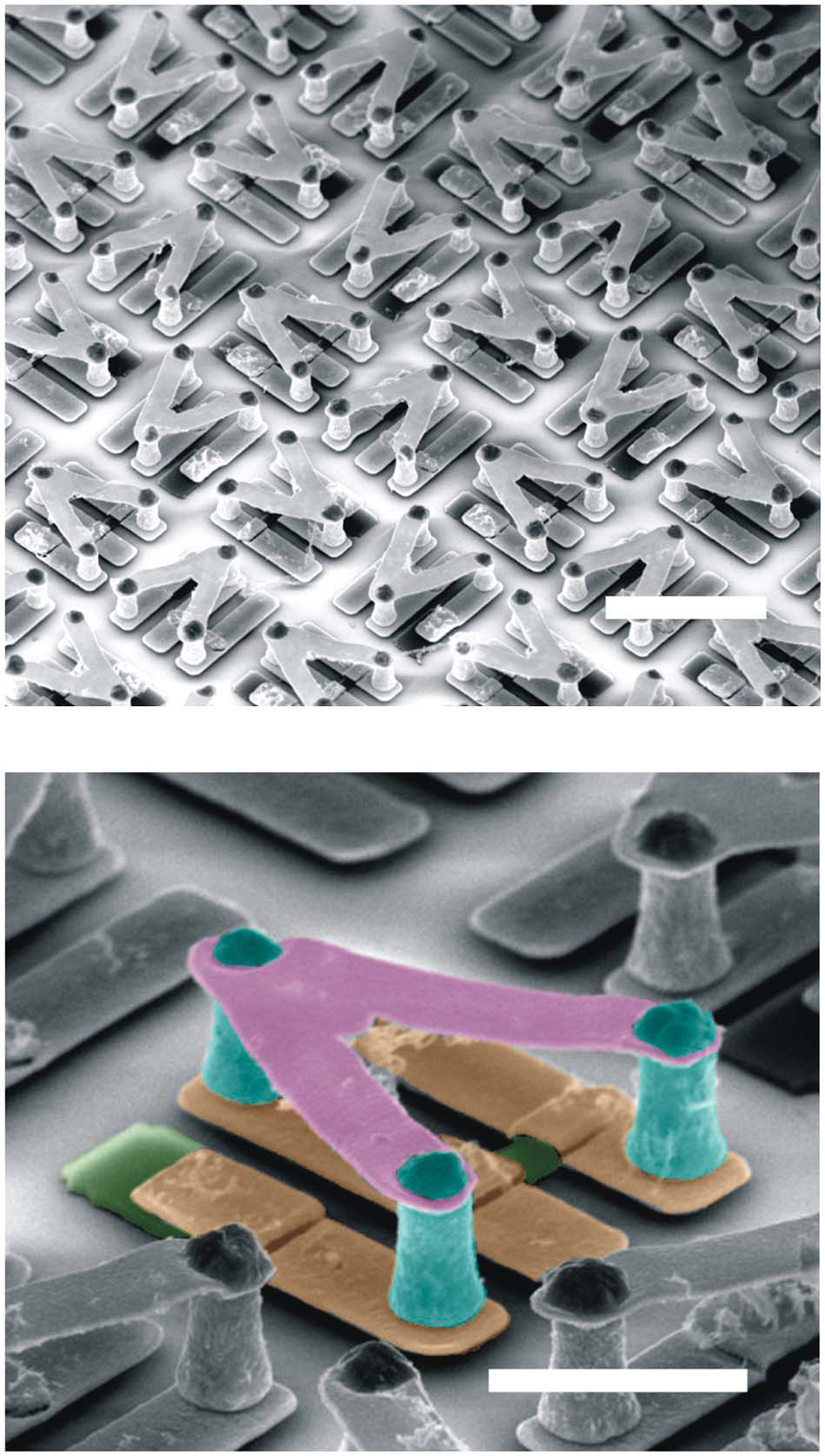
Researchers have created the first artificial molecules whose chirality can be rapidly switched from a right-handed to a left-handed orientation with a beam of light.
Chirality is the distinct left/right orientation or “handedness” of some types of molecules, meaning the molecule can take one of two mirror image forms. The right-handed and left-handed forms of such molecule are called “enantiomers” and can exhibit strikingly different properties. One enantiomer of the chiral molecule limonene smells of lemon, the other smells of orange. The ability to observe or even switch the chirality of molecules using terahertz (trillion-cycles-per-second) electromagnetic radiation is a much coveted asset in the world of high technology.