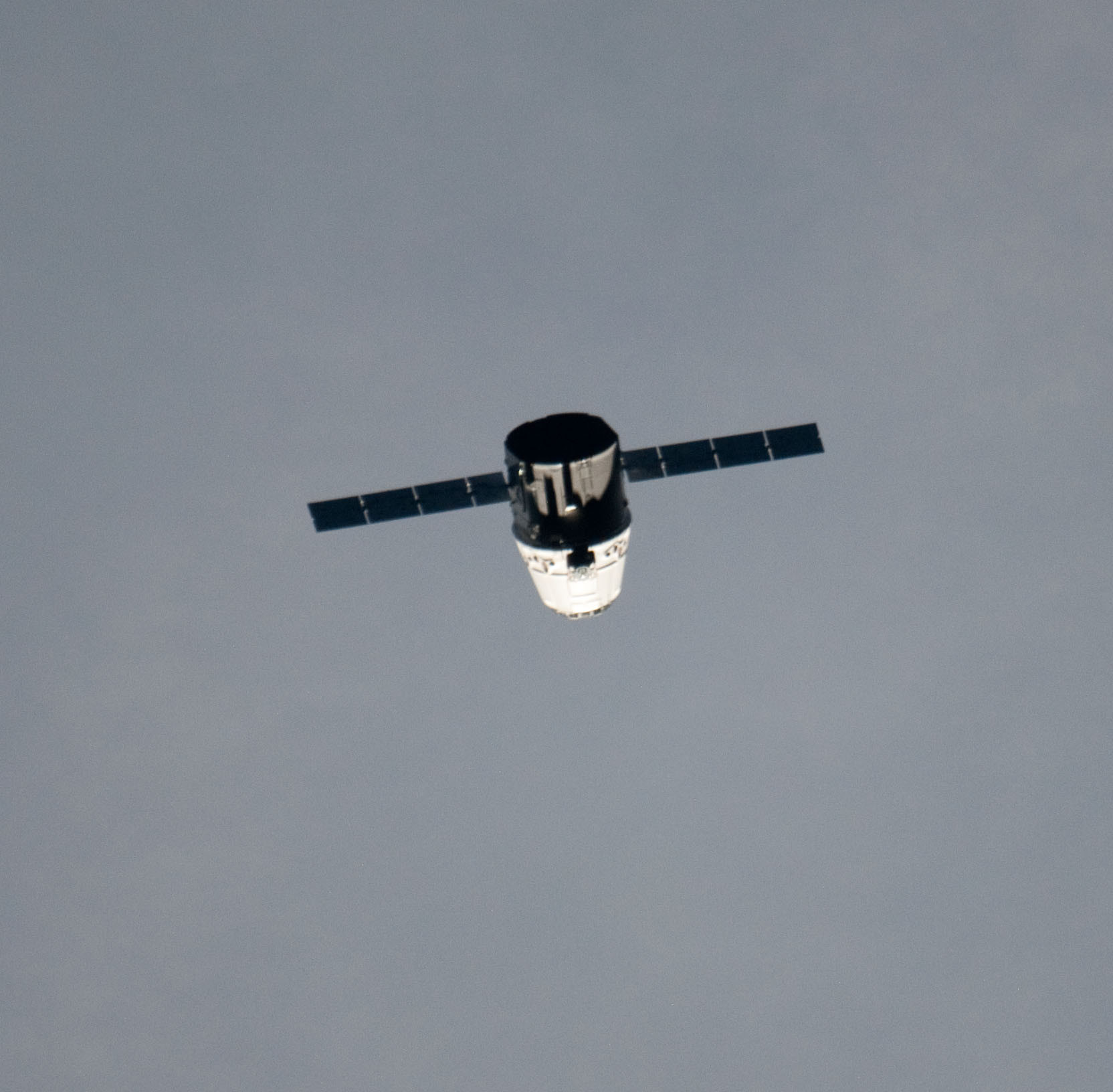
Today's primer: orbital mechanics, or how we have to manuever to catch debris. There's a lot of debris in low earth orbit, ranging from paint chips and spare bolts to a heavy toolbox up through entirely dead satellites. It's tracked, it's plentiful, it was even featured in Wall-E. How is it a satellite in orbit runs into debris?

Dear readers, your input is appreciated. Please read the following quotes and let me know what are your thoughts on the matter in the comments thread. You need not leave your name if you wish to remain anonymous, but I'd appreciate it if you mentioned your degree of education and whether you are/were/will be a scientist.
Quote 1:
Measuring the value and the impact of a scientist on her field of research using as data her scientific papers, the number of citations these papers got, and the prestige of the scientific journals where these were published is no easy matter.
Grading Researchers: The H-Index
There is a large body of literature on how best to account for all these factors together: the discipline is called "scientometrics". Of course, the goal is to summarize the productivity of a scholar in a single number; possibly one with at most double digits, since decision-makers who hire or fund are usually incapable of handling more complex data. One notable attempt is the Hirsch Index, proposed in 2005 by a physicist, Jorge Hirsch.
The fourth FQXi essay contest is underway. There is a lot questionable about FQXi and what it at times supports, but this year’s topic is just so clearly up my alley that I simply cannot resist:
Which of Our Basic Physical Assumptions Are Wrong?
The deeper we look into the universe, the deeper we look back in time. When in the night sky you see planets like Jupiter and Saturn, you look about an hour back in time. Look at the stars, and you are looking back in time anywhere from years to several centuries. Bring a binocular to a dark site and you will be able to see galaxies millions of years back in time. Get
a decent telescope to the same site and you look even further back.
The Square Kilometre Array telescope will be the world’s largest and most sensitive radio telescope, but it had a bit of a problem most big science projects do not have; multiple countries wanted to host it.
The ribosome is the cell's protein-building workbench and ribonucleic acids, the molecules we call RNA, are key tools perform a host of vital functions in cells.According to a new analysis, even before the ribosome's many working parts were recruited for protein synthesis, proteins also were on the scene and interacting with RNA. This finding challenges a hypothesis about the early evolution of life.
More than 600 million people could be fed each year by halting the spread of fungal diseases in the world's five most important crops - rice, wheat, maize, potatoes and soybeans
Recent data further suggests that in 70% of cases where infectious disease causes the extinction of a type of animal or plant, an emerging species of fungus is behind the problem.
Molecules containing large chains of carbon and hydrogen, which happen to be the building blocks of all life on Earth, have been found in meteorites from Mars but scientists have been unsure how this organic carbon was formed and even disagreed on whether or not it came from Mars.
A new paper shows evidence that this carbon did originate on Mars - but don't call the folks at SETI just yet, it isn't biological.
Is it cheaper to privatize deliveries? Sure is, that is why UPS and FedEx are doing well and the US Post Office is now advertising that companies should send more junk mail and waste natural resources.(1)