Men are generally more reluctant to try vegetarian products and a new study in the Journal of Consumer Research says that is influenced by a strong association of meat with masculinity.
"We examined whether people in Western cultures have a metaphoric link between meat and men" write the authors. And they concluded there was a strong cultural connection to meat - especially muscle meat, like steak.
Evolutionary psychologists would likely disagree, as do unbiased dietary scientists.
Perhaps it was the title:
‘Acquired preferences for piquant foods by chimpanzees.’ but whatever the reason,
Paul Rozin, Professor of Psychology at the University of Pennsylvania, found it very difficult to get his research paper published.
The work had been inspired by observations the professor had made whilst in Mexico, when he noticed that -
“…virtually everyone in a Mexican village over 5 or 6 years of age liked the burn of chili pepper, but that none of the animals in the village showed a preference for it, even though they ate the pepper daily as they consumed the leftovers of the day in the garbage”
Around election season, in whatever country you are in (assuming you have elections) you can tell True Believers in their earnest politics truly wish the other side could be labeled as having defective brains and genetics and therefore be cured - or at least sterilized.
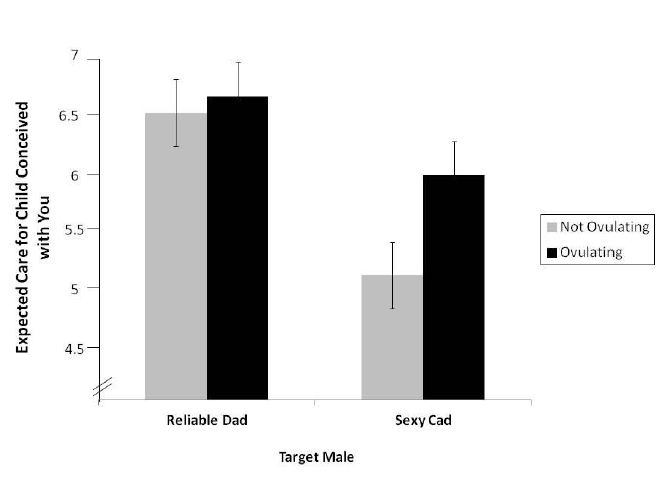
Females like the bad boys when they are young, we all know that colloquially - and even more so when they are ovulating, say a group of social and evolutionary psychologists.
A group of studies says that salmon raised in man-made hatcheries can harm wild salmon through competition for food and habitat. Salmon, which survived millions of years of evolution, are in danger from...salmon.
The studies provide new evidence that fast-growing hatchery fish compete with wild fish for food and habitat in the ocean as well as in the rivers where they return to spawn and even raises questions about whether the ocean can supply enough food to support future increases in hatchery fish while still sustaining wild salmon.
My very first mentor in cephalopod research was Eric Hochberg at the Santa Barbara Museum of Natural History. I think I was seventeen when he welcomed me into the museum's secret catacombs (at least, that's how I thought of them) of preserved specimens. Awe washed over me as I stared at shelves upon shelves of jarred octopuses.
Eric introduced me to the California pygmy octopus, Octopus micropyrsus, which would proceed to fascinate me for the rest of my undergraduate career. I saw more of them in jars than I ever did alive, though I kept doggedly digging through kelp holdfasts trying to find them. Reclusive little beasts.
A short while ago we carried a strange claim from a group of ethicists at Oxford. Not only should abortion be okay,
actual children should be aborted even after they are born.
They're ethicists so they can be dismissed rather quickly. Tomorrow they are just as likely to be arguing there should be no abortion at all if you can't abort newborns. Yet there is growing concern that the government doing more things for more people in the best interests of overall society is leading to a resurgence in the social authoritarian rationalizations that gripped the country (and really, the world) the last time progressives held any power.
Things would seem to be good in China. They are the only world economy not in a financial demilitarized zone, things are booming.
Yet more money is not making people there happier. They're actually less happy today than shortly after the Tiananmen Square protest in Beijing was crushed by the military, says economist Richard Easterlin, researcher in "happiness economics" and namesake of the Easterlin Paradox.
Researchers have uncovered a new way to stimulate activity of immune cell opiate receptors, leading to efficient tumor cell clearance - their pharmacological approach can activate the immune cells to prevent cancer growth through stimulation of the opiate receptors found on immune cells.
More than 150 years ago, immigrant Chinese fishermen launched sampans into the chilly waters of Monterey Bay to capture squid. The Bay also lured fishermen from Sicily and other Mediterranean countries, who brought round-haul nets to fish for sardines.
This was the beginning of the largest fishery in the western hemisphere – California’s famed ‘wetfish’ industry, named for the fish that were canned wet from the sea, that has remained imprinted on our collective conscience by writers like John Steinbeck.
Who doesn’t remember Cannery Row?