Here's an astronomy puzzles: Rather than occupying orbits at regular distances from a star, giant gas planets, like Jupiter and Saturn in our solar system, appear to prefer to occupy certain regions in mature solar systems while staying clear of others, which results in “planet pileups” and “planet deserts."
Researchers identified high-energy radiation from baby sun-like stars as the likely force that carves gaps in protoplanetary disks, the clouds of gas and dust that swirl around young stars and provide the raw materials for planets. The gaps then act as barricades, corralling planets into certain orbits.
If you are freezing eggs or ovarian tissue to delay childbearing for social reasons, society should reply 'thanks, but no thanks', according to a recent analysis.
It appears that a small cabal of billionaires -- those who got rich through innovation and who feel loyal to the future -- are about to to fund a new effort worth some excitement and attention
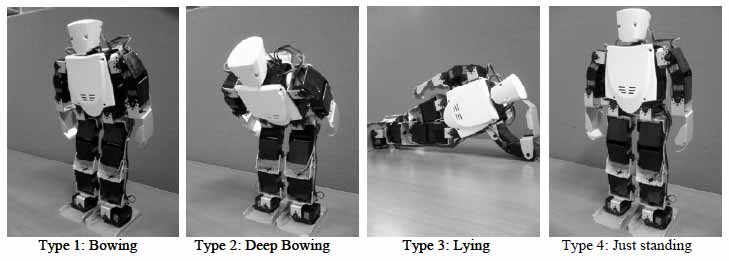
Should robots behave politely? Because, to some, it’s a given that in the not-too-distant future large numbers of people will be interacting with robots (domestic, public, corporate and perhaps even law-enforcement/military) on a frequent basis.
ONO-4641, an investigational oral drug, reduced the number of lesions in people with multiple sclerosis (MS), according to the results of a phase two clinical trial to be presented this week at the American Academy of Neurology Meeting in New Orleans.
Tattoos and body piercings are so ubiquitous in western societies that they are more cliché than edgy, but social scientists in France say they may be more than fashion trends - they may be harbingers of doom. Individuals who get them are also more likely to engage in risky behaviors that include substance and alcohol use.
The second-largest mass extinction in Earth's history, the so-called Late Ordovician mass extinction, coincided with a short but intense ice age during which enormous glaciers grew and sea levels dropped.
The Late Ordovician mass extinction occurred about 450 million years ago and was related to climate change, that has been known, but exactly how the climate change produced the extinction has not. A team led by scientists at the California Institute of Technology (Caltech) has created a framework for weighing the factors that might have led to mass extinction and has used that framework to determine that the majority of extinctions were caused by habitat loss due to falling sea levels and cooling of the tropical oceans.
As the London marathon gets underway, there are going to be lots of people getting high- 37,500 according to one recent BBC article. However, this is a different “high” than those individuals who partook, or attempted to, in massive marijuana festivities of April 20th, such as the 2011 University of Colorado demonstration to legalize marijuana that was 10,000 people strong.
In a development that would be bad for the U.S. Department of Energy but good for solar power worldwide, a new process developed by scientists at the University of Cambridge has the potential to drive down the cost of manufacturing solar-grade silicon and boost use of photovoltaic devices.