


RETRACTION: I have decided to retract three blogs (Deriving … 4/5, 5/5, 6/5+1). I was unable to figure out a reasonable statement concerning gauge symmetry. When the blogs were initially written, I focused on the field equations, mainly the Gauss-like law, and ignored the force equations entirely. Finding a solution that works with the the field and force equations were not looked for. A consistent proposal should do all three things (fields, forces, and solutions) with grace. I have concluded it is not possible to achieve these goals with the Lagrangian as written, hence the retraction.
The hypercomplex gravity and unified GEM Lagrange densities was wrong.

There is a certain amount of confusion on the relationship between Einstein's Theory of Relativity and the recent experimental results that seem to point towards neutrinos that are faster than light by an amount of about 7 km/s. So let me try to clarify things by answering to the following question:

If neutrinos travel faster than light by 7 km/s, do we need to modify Relativity?

The answer is a clear-cut "Yes"; let me explain why.

Lorentz invariance, which is embodied in the theory of Relativity, has the unescapable consequence that there exists a precise relationship between a free particle's energy E, its momentum p and its mass m:
Homo Stupidus

Homo Stupidus

Oct 31 2011 | comment(s)

You are in a game with one hundred other players. They don't know you, you don't know them, and you can not communicate with any of them. The game is called 'even/odd(s)' and is explained to you as follows:

"You have the choice between two selections: 'even' or 'odd'. The hundred other contestants face the same choice. You all make your choice simultaneously. If the total group of players select an even number of 'evens' and an odd number of 'odds', those who selected 'odd' will receive $3, and those who selected 'even' will receive $4. However, if the result amounts to an odd number of 'evens' and an even number of 'odds', no-one will receive a penny. Now go ahead and make a choice!"

What is your choice?

What is nothingness? It's a philosophical question, to be sure, but in physics the ground state of the universe can't be described by the absence of all matter, contend some theoretical physicists. There must be a 'quantum vacuum'.

The first theoretical consideration of the spontaneous decay of the quantum vacuum, believed to be a complex state of constantly fluctuating quantum fields with physical properties, dates back to the year 1931, but understanding is still in its infancy.

But it could soon happen that experimentalists are able to witness the spontaneous decay of the vacuum into pairs of particles of matter and antimatter in super strong electric fields. 

Statistical tests and economic forecasting are something of a joke; Paul Krugman is fun because he rants about Republicans in the New York Times but no one would ever actually let him manage money. 

Researchers from the University of Minho in Portugal have discovered that rats exposed before birth to glucocorticoids (GC) not only show several brain abnormalities similar to those found in addicts, but become themselves susceptible to addiction (the glucorticoids, which are stress hormones, were used to mimic pre-natal stress).  But even more remarkable, Ana João Rodrigues, Nuno Sousa and colleagues were able to reverse all the abnormalities  (including the addictive behavior) by giving the animals dopamine (a neurotransmitter/ brain chemical). 
Stress Kills

Stress Kills

Oct 30 2011 | comment(s)

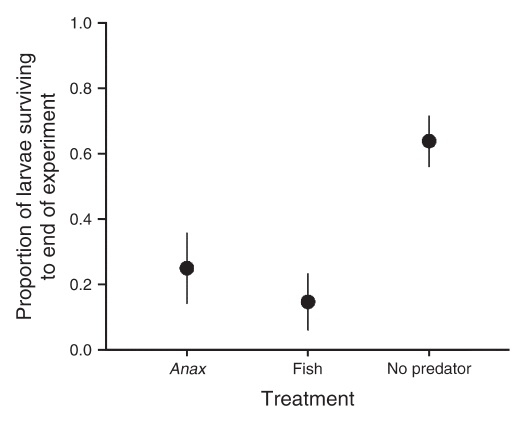
We all know chronic stress isn’t good for you. This seems to be true in all organisms. But can stress kill you? A new study says yes, if you’re a dragonfly larva at least.

Researchers from the University of Toronto investigated the effects of stress on the development and survival of dragonfly larvae, reared in the presence of a predator. These juvenile dragonflies were raised in aquaria that also contained a predator. Important is that this predator had no way to actually attack the larvae.

When we teach, and even communicate with people whom we assume to belong to some sort of common circle with ourselves, we simply assume that our audience knows or at least have heard about certain things.

For example, with people belonging in some sense to physics I would expect that my physics students would at least know about Bessel functions. I was wrong. One has heard the name, the others had not any idea. And they did not know practically how to plot functions on a computer. Two did know sort of, but only using "Origin". And so on. I do not want to complain. They are bright young people and they know lots of things, but not all what I - and most of my colleagues - would expect the students to know.

