




The people with the atom smashers, especially the ones at OPERA (Oscillation Project with E-tR Apparatus) in Italy’s Gran Sasso, announced to likely have a whopping 60 nano second systematic error with some neutrino experiments, but it makes for much better news to question Einstein. The scientists blame journalists for the hype, but of course they prepared everything just so that the press has no reason not to go ahead and make an Einstein spectacle out of it – the BBC promptly obliged.

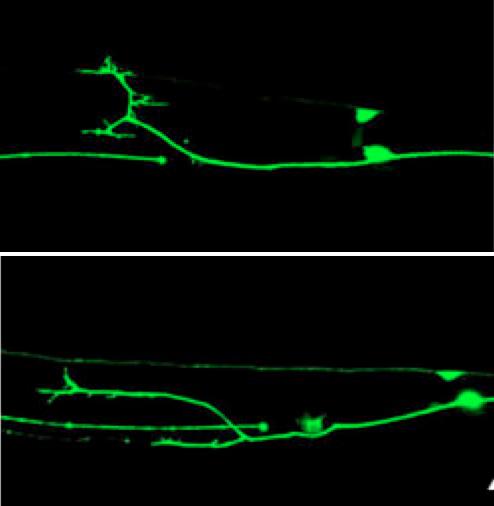
After a thorough two-year investigation, researchers at UC San Diego and the University of Oregon have identified over 70 genes that play a role in the repair of neurons after injury, specifically when it comes to the growth of axons. A massive genetic screening of 654 genes suspected to be involved, resulted in the identification of 70 genes that promote axon growth and 6 that inhibit it.

The National Health Service (NHS), the United Kingdom's public health care systems, wasted $976 million during the years 2000-2009 on synthetic forms of insulin, when the recommended human alternatives, which are considerably cheaper, would have been just as effective, based on an analysis of publicly available data from the four UK prescription pricing agencies. Costs were adjusted for inflation and reported at 2010 prices.

It isn't often I will agree with Club Sierra...I mean Sierra Club - if you have ever been to their offices you will know how easy it is to confuse the terms.

They spend so much time latching onto whatever cause will generate donations it's hard to know if they believe in anything, much less science, and it can make you nuts.  Like Greenpeace, their baffling 'trust scientists when it comes to global warming but scientists are out to kill you with GMOs' stance is, in a nutshell, why progressives (not liberals, not Democrats, progressives) are so goofy in their anti-science beliefs. 
Tuesday evening, Facebook made major changes to its news feed and today the Internet is a hornet’s nest of complaints, protests, and threats. There is a new round of “quit Facebook” memes, and a collective groan of pain from millions of users. Similar dissent occurred when Netflix recently spun off its DVD-by-mail service into a separate company, Qwikster, or earlier this year when dating site OKCupid was purchased by the behemoth Match.com.
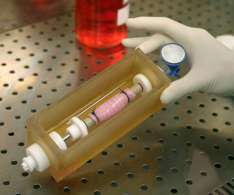
In early July, Karolinska University Hospital issued a press release about a successful trachea transplant using synthetic tissue.  It got mainstream media coverage and it was interesting, I thought, but evolutionary and not revolutionary.  We had covered a Lancet paper on much the same thing in 2008.  But in the course of a correspondence with a media rep she noted something important; not only was this not a traditional transplant, this was not even one where an organ was decellularized and recellularized with the patient's stem cells, it was created for the patient and in just two days.

That meant no immunosuppressive drugs, at $20,000 per year, and no morbidities due to their side effects.
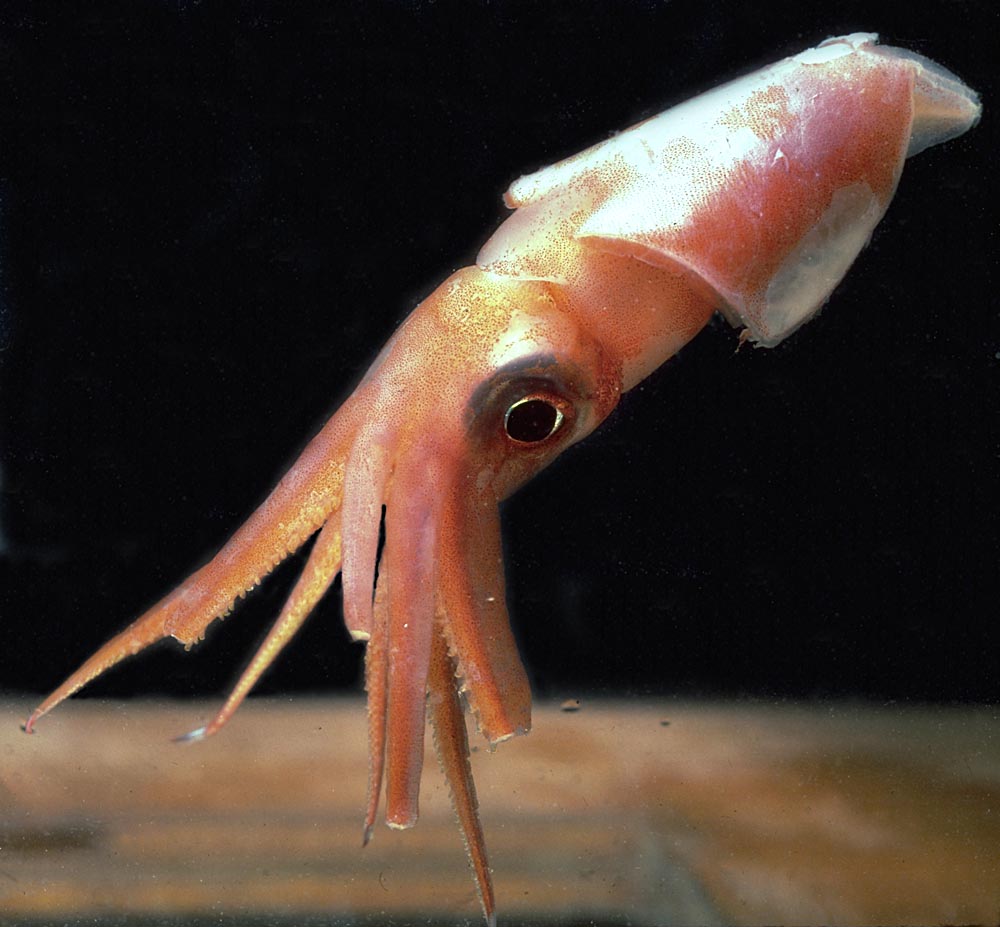
© 1996 Richard E. Young Octopoteuthis is a curious animal. As the name suggests, it's a squid that looks like an octopus. Babies have eight arms and two tentacles, but they lose the tentacles as they grow up--becoming the only adult squid with eight appendages.

They have other intriguing features as well. We tend to think of squid as relatively sociable animals traveling in schools or shoals, but Octopoteuthis lives a solitary life in the deep sea, rarely coming across another member of the same species.

Researchers at Ecole Polytechnique Fédérale de Lausanne are hoping the Higgs boson is found at the LHC for a big reason - they think it can explain universal expansion and even reveal the possible existence of another closely related particle.

The Higgs boson would help explain why the majority of elementary particles possess mass. but a group of EPFL physicists say it would also help us understand the evolution of the Universe from the moment of its birth - and it could be verified with data from the Planck satellite.

A study out tomorrow in Nature by researchers from the Institute of Healthy Ageing at the University College of London and colleagues is questioning the anti-aging effects of sirtuin – which is “just”the most important anti-aging gene of the decade - claiming that its capacity to increase longevity was nothing more than an experimental error, and showing that,once the flaws are corrected, sirtuin has no effect on lifespan.

To religious fundamentalists, atheists in science are engaged in an insidious campaign to undercut morality and replace it with God-less relativism and moral equivalence.  To militant atheists, religious people are intellectually immature, anti-science busybodies telling people how to live.

