A new genome-wide study examines genetic variants associated with nine metabolic traits and is the first to draw out novel variants from a population unselected for current disease. The traits are indicators for common disease such as cardiovascular disease, type 2 diabetes, blood pressure, inflammation and lipid levels.
Cohorts are followed throughout their lives, gathering lifelong information about their health: these data will help researchers to dissect the complex causes of common disease, whether genetic or environmental. The current study might indicate genetic variants that influence early development of disease, informing public health measures.
A new study presages a real aim of genetics: to look at whole populations to in order determine the significance of individual genetic variants for individual health. A research team says they found six novel genetic variants that are associated with lipid levels, a common indicator of heart or artery disease.
The power of 'genetic microscopes' has increased because the methods are in place to study many thousands of DNA samples. This study, involving over 20,000 samples and researchers from a dozen European countries, is the first to find such lipid–gene links by looking at the general population, rather than patients.
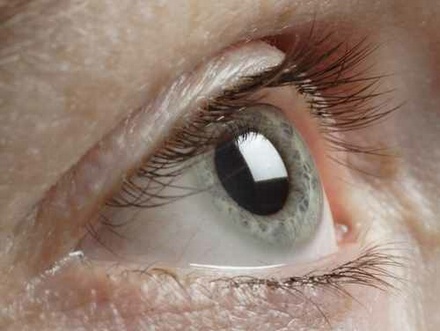
A future episode of CSI or your favorite crime drama may have an interesting new way to establish time of death, thanks to the work of a team of researchers from the University of Santiago de Compostela. Based on the analysis of several substances from the vitreous humour of the eye of cadavers, they write in the journal Statistics in Medicine, they have developed a piece of software that makes it possible to establish precisely the post mortem interval (PMI), information that will make the work of the police and the courts of justice easier.
The wild pea pod is big and heavy, with seemingly little prayer of escaping the shade of its parent plant.
And yet, like a grounded teenager who knows where the car keys are hidden, it manages – if it has a reasonable chance of escape.
University of Florida researchers working at the world's largest experimental landscape devoted to wildlife corridors – greenways that link woods or other natural areas — have discovered the pea and similar species share, given a clear shot, a mysterious ability for mobility. Though their seeds are neither dispersed by birds nor borne by the wind, they are nevertheless far more likely to slalom down corridors than slog through woods.
For the first time in Australia, scientists at Sydney's Centenary Institute have filmed an
immune cell becoming infected by a parasite and followed the infection as it begins to spread throughout the body.
Professor Wolfgang Weninger, head of the Immune Imaging program at the Centenary Institute, says the discovery was made possible using high powered multi-photon microscopy which allows real cells to be viewed in real time.
Speaking of science and religion, I got significantly annoyed by a short piece in Nature magazine by Michael Bond (13 November 2008). Bond reviews two recent books on Buddhism and science: “Mind and Life: Discussions with the Dalai Lama on the Nature of Reality,” by Pier Luigi Luisi, and “Buddhism and Science: A Guide for the Perplexed,” by Donald S. Lopez.
LONDON, December 6 /PRNewswire/ -- Local heroes could be eligible to win a bursary worth GBP20,000 towards projects that promote sustainable living, as the 2nd year of the Future Friendly Awards launches across the country this week.
The Future Friendly Awards 2008 is a nationwide search for real people who are making a difference to their local community by championing sustainability and inspiring others to do the same. Following the phenomenal success of the awards last year, the Future Friendly Awards 2008 will provide five finalists with a chance to have a film made showcasing their work, and one overall winner with a bursary worth GBP20,000 to continue their project.
Middle-aged men want younger women and don't mind talking about their own positive qualities to get them, according to research at Gothenburg University and Oxford University that studied 400 matchmaking ads to see how men and women choose partners.
There's no shortage of ideas about how men and women choose their partners. Among the more established myths is that men place more emphasis on attractive appearance, whereas resources and social status are more important to women. By examining romantic advertisements, researchers at the University of Gothenburg and the University of Oxford say they were able to test how valid these presumed preferences are when modern individuals choose partners.
Four living presidential science advisors, Democrats Drs. John H. Gibbons and Neal F. Lane and Republicans Drs. Edward E. David and John. P. McTague, have written an article called "Making a Critical Connection: Science Advice and the Next President", which highlights the need for the swift appointment of a science advisor whom President-elect Barack Obama trusts.
In times of economic distress and plenty, ninety percent of Americans pray, more than half of us once a day or more. We pray for big things—to stay healthy, to keep our jobs, and to strengthen our relationships. And we pray for small things—to find parking spaces and missing items. Some of us are sure God exists and others pray simply to cover the bases.