




A new species of bacterium that causes leprosy has been identified through intensive genetic analysis of a pair of lethal infections, a research team reports in the December issue of the American Journal of Clinical Pathology.

All cases of leprosy, an ancient disease that still maims and kills in the developing world, previously had been thought to be caused by a single species of bacterium, said lead author Xiang-Yang Han, M.D., Ph.D., associate professor in Laboratory Medicine at The University of Texas M. D. Anderson Cancer Center. 
New ways of squeezing out greater efficiency from solar photovoltaic cells are emerging from computer simulations and lab tests conducted by a team of physicists and engineers at MIT.

This project, along with other research work going on now in solar cells, has the potential to get costs down "so that it becomes competitive with grid electricity," said Peter Bermel, a postdoctoral researcher in MIT's physics department who has been working on the project. While no single project is likely to achieve that goal, he said, this work is "the kind of science that needs to be explored in order to achieve that."
A study published in Journal of the American Water Resources Association states that the "Green Great Wall," a forest shelterbelt project in northern China running nearly parallel to the Great Wall, is likely to improve climatic and hydrological conditions in the area when completed. The project, which relies on afforestation (a process that changes land without dense tree cover into forest), could lead to an increase in precipitation by up to 20 percent and decrease the temperature in the area.
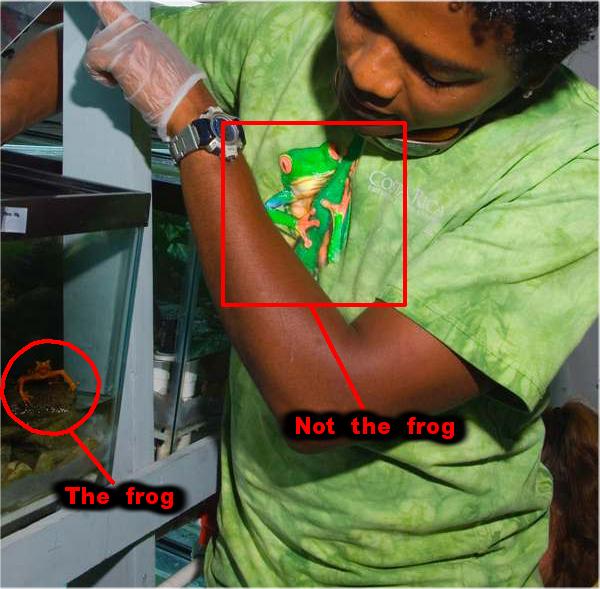
A new frog species has been discovered in Panama and will be announced in the December issue of Journal of Herpetology by a research team led by STRI former visiting scientist Joseph Mendelson, from Zoo Atlanta.

The amphibian, a type of tree frog with bright reddish- and green-colored skin that grows to a length of 122 mm was discovered by Edgardo Griffith while working with Mendelson in El Valle. Mendelson was head of the Amphibian Recovery Project in 2005 under the STRI umbrella. Today, Griffith is the director of the El Níspero zoo's Amphibian Conservation Center in the Valle de Anton, working with the Houston Zoo.
Bacteria that can cause serious heart disease in humans are being spread by rat fleas, sparking concern that the infections could become a bigger problem in humans. Research published in the December issue of the Journal of Medical Microbiology suggests that brown rats, the biggest and most common rats in Europe, may now be carrying the bacteria.

Since the early 1990s, more than 20 species of Bartonella bacteria have been discovered. They are considered to be emerging zoonotic pathogens, because they can cause serious illness in humans worldwide from heart disease to infection of the spleen and nervous system.

Bacteria that cause stomach ulcers and cancer could also be giving us bad breath, according to research published in the December issue of the Journal of Medical Microbiology. For the first time, scientists have found Helicobacter pylori living in the mouths of people who are not showing signs of stomach disease.

The mouth is home to over 600 different species of bacteria, some of which can cause disease. Helicobacter pylori has recently been shown to cause stomach ulcers and is also responsible for a large proportion of gastric cancers. Scientists estimate that between 20 and 80 % of people in the developed world and over 90 % of people in the developing world carry the bacterium.

A study of people living with the devastating effects of multiple sclerosis (MS) has provided an idea of the economic cost of living with the incurable, life-long condition.   The independent research is one of the largest ever studies into the financial impact of MS and has revealed that the cost of being diagnosed with MS is on average nearly GBP17,000 per person.

New research says that we should be looking to the ground, not the sky, to see where climate change could have its most perilous impact on life on Earth.  Scientists at the University of Toronto Scarborough have published research findings in Nature Geoscience that says global warming actually changes the molecular structure of organic matter in soil.
Only people in the tobacco industry denial mindset realistically state that repeated exposure to sex and violence in the media does not lead to problems in children but television advocates can at least latch on to a study saying they may be the biggest but they aren't the only problem; a new study by Myeshia Price and Dr. Janet Hyde from the University of Wisconsin in the Journal of Youth and Adolescence says low self-esteem, poor relationships with parents, and low academic achievement are some of the other factors that may add up to young people having sex before the age of 15.
Drs. John Sij, Cristine Morgan and Paul DeLaune have studied nitrate levels in irrigation water from the Seymour Aquifer for the past three years, and have found nitrates can be as high as 40 parts per million. Though unacceptable for drinking, the water would benefit agricultural producers who use it for irrigation. 

This high concentration of nitrates is a concern because it exceeds the federal safe drinking water standards as the aquifer is used as a municipal water source for the communities of Vernon, Burkburnett and Electra, as well as some rural families, Sij said.

