NEW YORK, February 12 /PRNewswire/ --

This year, Nokia headlines with their Internet Services. Nokia President and CEO Olli-Pekka Kallasvuo reinforces the company's vision and embraces the Internet by unveiling a new line up of converged devices and services that promote collaboration and sharing.

(See video from Nokia at: http://media.medialink.com/WebNR.aspx?story=34522)

The new handsets all exhibit different location based and multimedia experiences, from pedestrian navigation to geotagging and movie viewing to video and photo sharing. Nokia sees mapping and navigation as a fundamental platform for the mobile phones of the future. They also reveal the next step towards Ovi, the Internet service environment, by introducing 'Share on Ovi'.

Heterogeneity provides stability, say scientists from the Universities of Fribourg and Bonn, whether this is in a shower, in power grids or even on the stock market.

It's a big reason why the electrical grid does not break. When Al Gore had the brilliant idea to have everyone watching his Live Earth concerts shut off their lights as a symbolic gesture, he had to be reminded that the surge when people turned the lights back on would put a lot of people in danger. The grid could not take it.

In the shower example, showers in youth hostels can be risky when there is not enough hot water for everybody. If only one visitor turns up the hot tap during the early morning shower, everyone else is threatened by an icy gush of water. This unwanted form of hydrotherapy is particularly likely to happen when all the shower taps have the same possible settings, in other words if cold and hot water can be adjusted to exactly the same amount in all showers. But if the water taps in each shower have their individual quirks, the risk of extreme fluctuations is less.

As a book junkie, I love to get and give book recommendations. Here is my Darwin Day recommended books list:

What Evolution Is, Ernst Mayr - My favorite brief, single-volume primer on evolution for non-specialists.

A new approach to the cooling of buildings across the developing world that needs nothing but wind and sun to operate has been devised by engineers in India. Writing in the International Journal of Sustainable Design, the team explains the concept of a combined solar chimney and wind tower system that can reduce the temperature of incoming appear by 5 degrees Celsius.

Jyotirmay Mathur of the Mechanical Engineering Department, at the Malaviya National Institute of Technology, in Jaipur, together with architect and urban designer Rajeev Kathpalia of Vastu Shilpa Consultants, in Ahmedabad, point out that the development of energy-efficient, and even passive, cooling systems for buildings is essential in the light of environmental pressures and costs. In the past, they point out, building designers had to rely on natural ways and means for maximising comfort inside buildings.

An international team of cosmologists, leaded by a researcher from Paris Observatory, has improved the theoretical pertinence of the Poincaré Dodecahedral Space (PDS) topology to explain some observations of the Cosmic Microwave Background (CMB). In parallel, another international team has analyzed with new techniques the last data obtained by the WMAP satellite and found a topological signal characteristic of the PDS geometry.

The last fifteen years have shown considerable growth in attempts to determine the global shape of the universe, i.e. not only the curvature of space but also its topology. The « concordance » cosmological model which now prevails describes the universe as a « flat » (zero-curvature) infinite space in eternal, accelerated expansion.

From medicine to make-up, plastics to paper - hardly a day goes by when we don't use titanium dioxide.

Now researchers at the University of Leeds have developed a simpler, cheaper and greener method of extracting higher yields of one of this most useful and versatile of minerals.

In powder form titanium dioxide (TiO2) is widely used as an intensely white pigment to brighten everyday products such as paint, paper, plastics, food, medicines, ceramics, cosmetics - and even toothpaste. Its excellent UV ray absorption qualities make it perfect for sunscreen lotions too.

BARCELONA, Spain, February 11 /PRNewswire/ --

- Broad SDK Strategy Builds on Recent Publication of APIs to Set Out Developer Roadmap

Mobile World Congress -- LiMo Foundation, a global consortium of mobile leaders delivering an open handset platform for the whole mobile industry, today announced the roll out of a comprehensive Software Development Kit (SDK) strategy encompassing Native, Java and Webkit SDKs.

(Logo: http://www.newscom.com/cgi-bin/prnh/20080211/DC13778LOGO )

BARCELONA, Spain, February 11 /PRNewswire/ --

- New Professional Services Help Combat A Multi-Billion Dollar Problem With Sub-Meter Location Accuracy

- Visit Tecore Networks at Mobile World Congress in Barcelona, Stand 8C78

As computers become more complex, the demand increases for more connections between computer chips and external circuitry such as a motherboard or wireless card. And as the integrated circuits become more advanced, maximizing their performance requires better connections that operate at higher frequencies with less loss.

Improving these two types of connections will increase the amount and speed of information that can be sent throughout a computer, according to Paul Kohl, Thomas L. Gossage chair and Regents’ professor in Georgia Tech’s School of Chemical and Biomolecular Engineering.

Arsenic poisoning did not kill Napoleon in Saint Helena, as affirmed by a new meticulous examination performed at the laboratories of the Italian National Institute of Nuclear Physics (INFN) in Milano-Bicocca and Pavia, together with the University of Milano-Bicocca and the University of Pavia.

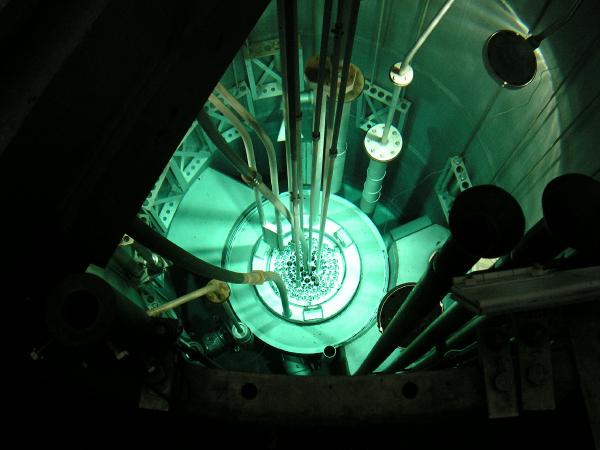
The physicists performing the study used a small nuclear reactor used exclusively for research purposes at the University of Pavia, applying techniques that were created for the project known as “Cuore” (“Heart”), which is being developed at the INFN’s national laboratories in Gran Sasso.

The research, published in the journal “Il Nuovo Saggiatore”, was performed on hair samples that had been taken during different periods of Napoleon Bonaparte’s life, from when he was a boy in Corsica, during