







Honestly, did you even known there was a Department of Pedagogy anywhere? Well, there is. They teach about the science of teaching. And apparently cartoons.

Pilar Casares García is a teacher in the Department of Pedagogy at the University of Granada but instead of teaching about teaching, she researches male chauvinism. In cartoons.

This was apparently once a real problem once but she says it's better now; women are as intelligent, agile, attractive, strong, and heroic as their male counterparts ... or more.

A Columbia University Medical Center research team has uncovered how stimulation of a particular brain region can help stave off the deficits in working memory associated with extended sleep deprivation.

Working memory is a specific form of short-term memory that relates to the ability to store task-specific information for a limited timeframe, e.g., where your car is parked in a huge mall lot or remembering a phone number for few seconds before writing it down. It has long been established that cognitive performance, such as working memory, declines with sleep deprivation.

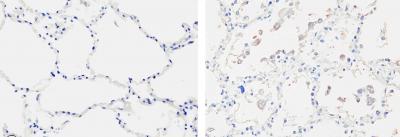
Researchers have uncovered the mechanism that contributes to the buildup of fibrous lung tissue in patients with severe acute respiratory syndrome (SARS), finding that a SARS viral protein important for replication can enhance pulmonary fibrosis by inhibiting the activity of the enzyme that breaks down connective tissue. The results offer up a new pathway to treat the pulmonary damage of SARS.

Infection with the SARS virus can lead to severe inflammation in the lungs, which can lead to respiratory distress, fibrosis, and eventually lung failure.

The Potomac Institute for Policy Studies has just released a new monograph that presents an alternative view of the character of warfare in the 21st Century. This new model argues that future conflicts will blur the distinction between war and peace, combatants and non-combatants.

Rather than distinct modes of war, we will face “Hybrid Wars” that are a combination of traditional warfare mixed with terrorism and insurgency.

Conflict in the 21st Century: The Rise of Hybrid Wars, by Research Fellow Frank Hoffman, summarizes the background and analysis of the changing character of warfare in our time. Examining the debate over the past decade about the evolution of modern warfare in the post Cold-war world, several thinkers have claimed that we were in the midst of a “Revolution in Warfare.”

Researchers at Yale School of Medicine have found that the gene ENPP1 is linked to preterm birth and low birth weight among Hispanic women.

Errol Norwitz, M.D., associate professor in the Department of Obstetrics, Gynecology & Reproductive Sciences at Yale, will present preliminary results from this research at the Society for Maternal Fetal Medicine Annual Meeting on February 2 in Dallas, Texas.

One out of eight babies in the United States is born prematurely—delivery prior to 37 weeks gestation. These babies don’t fare as well as their full-term counterparts, especially if they are born prior to 28 weeks gestation.

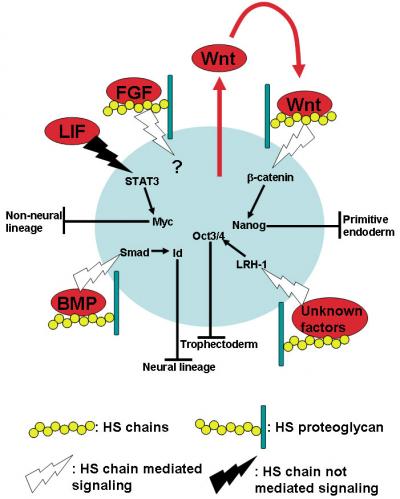
Heparan sulfate, a carbohydrate molecule that coats certain proteins on the cell surface, is critical for the proper proliferation and potency of embryonic stem cells, researchers report.

Stem cells’ tremendous therapeutic potential arises from their ability to continually self-renew and turn into any adult cell type. Researchers have long been trying to uncover the basis of these abilities, but while several proteins and growth factors are known to play a role both inside and outside the cell, the molecular mechanisms remain largely unknown.

Many of the stem-cell associated can attach to heparan sulfate molecules, so Shoko Nishihara and colleagues examined what would happen to mouse stem cells in cell culture if heparan sulfate production was reduced or blocked.

There's renewed interested in guayule and lesquerella, two native Texas plants, said Dr. Mike Foster, a research scientist with the Texas AgriLife Research and Extension Center at Lubbock Texas AgriLife Research.

Guayule produces a natural rubber with fewer proteins that does not produce the allergic reaction common rubber sometimes does. Lesquerella produces oil similar to that of castor. All U.S. castor oil is imported.

Guayule for rubber

“There are about 300 medical devices that require natural rubber,” he said. “Many occupations require people to wear gloves and the guayule natural rubber does not produce the allergic reactions because of fewer proteins. That’s where we are headed with this.”

Rainfall data from a NASA satellite show that summertime storms in the southeastern United States shed more rainfall midweek than on weekends.

Why would that be? Thomas Bell, an atmospheric scientist at NASA's Goddard Space Flight Center, says air pollution is the culprit because it also peaks mid-week.

The link between rainfall and the day of the week is evident in data from NASA's Tropical Rainfall Measuring Mission satellite, known as TRMM. Midweek storms tend to be stronger, drop more rain and span a larger area across the Southeast compared to calmer and drier weekends.

To find out if pollution from humans indeed could be responsible for the midweek boost in rainfall, the team analyzed particulate matter, the concentrations of airborne particles associated with pollution, across the U.S. from 1998 to 2005. The data, obtained from the Environmental Protection Agency, showed that pollution tended to peak midweek, mirroring the trend observed in the rainfall data.

TORONTO, Canada, February 1 /PRNewswire/ --

Budding young physicists, age 16 and 17, can now apply to attend the 'International Summer School for Young Physicists' (ISSYP) at Perimeter Institute (PI), the independent, non-profit research center in Waterloo, Ontario, Canada.

International students from all around the world are invited to apply and be challenged by some of the most fascinating ideas about how the universe works - from the weird quantum world of atoms to black holes, warped spacetime and the expanding universe.

Genetic mutations in the Toll-like receptor 4 (TLR4) gene appear to have significant association with inflammatory injury to the placenta and developing baby according to researchers from the University of Pittsburgh’s department of obstetrics, gynecology and reproductive sciences.

“This indicates a possible genetic predisposition to a kind of misfire in immune system response that could contribute to placental inflammation and spontaneous preterm birth,” said Hyagriv Simhan, M.D., assistant professor of obstetrics, gynecology and reproductive sciences at the University of Pittsburgh School of Medicine, who is presenting the work. “These injuries are important because they are more common in preterm babies and associated with major health consequences like cerebral palsy.”

TLR4 enables the body to recognize pathogens and activate the immune system. This gene is expressed most abundantly in the placenta and in white blood cells.


