





A new study may explain why women with a mutation in the BRCA1 gene face up to an 85 percent lifetime risk of breast cancer; researchers from the University of Michigan Comprehensive Cancer Center found that BRCA1 plays a role in regulating breast stem cells, the small number of cells that might develop into cancers.

The study, in mice and in human breast cancer cells, found that BRCA1 is involved in the stem cells differentiating into other breast tissue cells. When BRCA1 is missing, the stem cells accumulate unregulated and develop into cancer.

“Our data suggest that an important reason women with BRCA1 mutations get breast cancer is that BRCA1 is directly involved in the regulation of normal breast stem cells. In these women, loss of BRCA1 function results in the proliferation of breast stem cells. Since we believe that breast cancer may originate in these cells, this explains why these women have such a high incidence of breast cancer,” said senior study author Max S. Wicha, M.D., Distinguished Professor of Oncology and director of the U-M Comprehensive Cancer Center.

Political party affiliation has little bearing on the number of “green” actions people take, a new study by Porter Novelli and George Mason University shows.

According to the survey of more than 11,000 American adults and nearly 1,000 of their children, Democrats and Republicans differ only slightly when it comes to taking actions to protect the environment, despite great differences in their perceptions of danger related to global warming.

While Democrats were almost twice as likely as Republicans to believe that global warming is a serious problem and a threat to all life on the planet, on average they perform only about 15 percent more “green” actions than Republicans. For example, 65 percent of those surveyed who always vote Republican and 71 percent of those who always vote Democrat said they are actively reducing energy use in their homes.

Traditional ecosystems in which communities of plants and animals have co-evolved and are interdependent are increasingly rare, due to human-induced ecosystem changes. As a result, historical assessments of ecosystem health are often inaccurate.

A team of scientists present a new approach to management efforts in a paper posted this week on Frontiers e-View. The researchers suggest that such efforts should focus less on restoring ecosystems to their original state and more on sustaining new, healthy ecosystems that are resilient to further environmental change.

Timothy R. Seastedt (University of Colorado at Boulder), Richard J. Hobbs (Murdoch University in Australia) and Katharine N. Suding (University of California at Irvine) looked at ecosystem management studies from the past 12 years to develop a new approach to managing ecosystems in the face of increasing human impacts.

Most of the Earth’s listed active volcanoes are located at the borders between two tectonic plates, where upsurge of magma from the mantle is facilitated.

When these magmatic uprisings occur at a subduction zone, where one tectonic plate plunges under another, they give rise to volcanic massifs such as the Andes cordillera. Other volcanic chains are formed along oceanic ridges, submarine regions of ocean-floor extension.

However, some volcanoes are governed by a completely different mechanism: intraplate volcanism. As their name suggests, these volcanic constructions appear in the very centre of tectonic plates. Scientists now know that some of them, such as the Hawaii-Emperor archipelago or Reunion Island, result from magmatic upsurges generated at the boundary between the Earth’s core and mantle situated 2 900 km deep.

Others, such as those of the central Pacific, display different characteristics. They are anomalous, in their simultaneously high number, unusually high concentration and short life-span and prompt scientists to look for hypotheses other than a deep-mantle plume to explain the causes of intraplate volcanism.

Only 4% of the universe is made of known material - the other 96% is traditionally labelled into two sectors, dark matter and dark energy. Dr HongSheng Zhao at the University of St Andrews believes dark matter and its counterpart dark energy may be more closely linked than was previously thought.

Astronomers believe that both the universe and galaxies are held together by the gravitational attraction of a huge amount of unseen material, first noted by the Swiss astronomer Fritz Zwicky in 1933, and now commonly referred to as dark matter.

Dr Zhao reports that, "Dark energy has already revealed its presence by masking as dark matter 60 years ago if we accept that dark matter and dark energy are linked phenomena that share a common origin.”

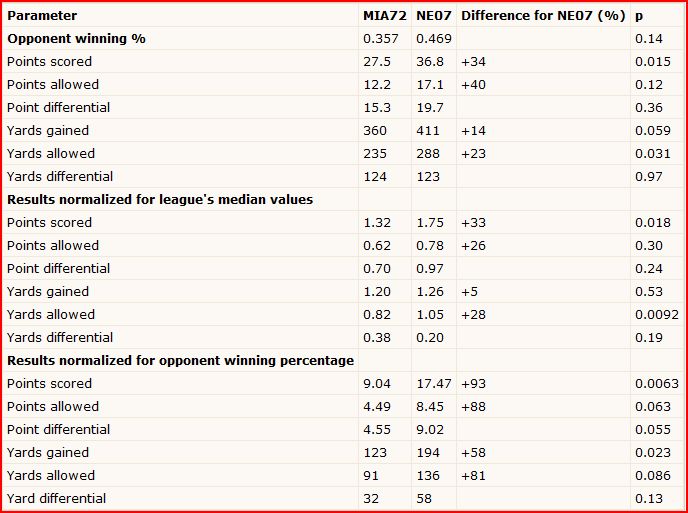
Sports pundits across the country have been comparing the so-far unbeaten 2007 New England Patriots to the perfect 1972 Dolphins all year. A New York cardiologist has used the scientific statistics used in large-scale medical trials to determine which of the two teams is superior.

Using a format and approach typically reserved for the cardiovascular therapy studies he writes and reviews, Dr.

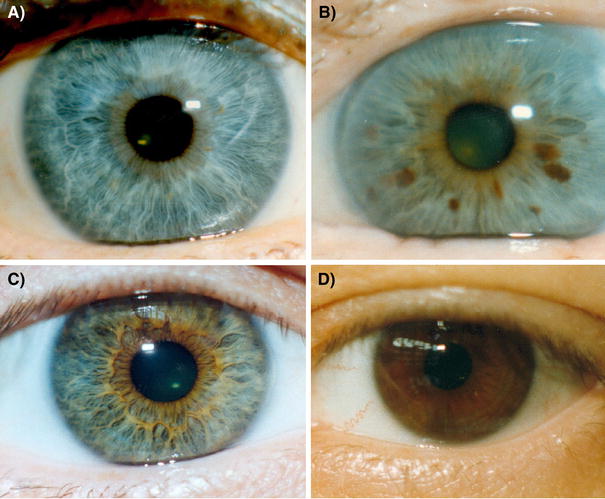
A team at the University of Copenhagen have tracked down a genetic mutation which took place 6-10,000 years ago and is the cause of the eye color of all blue-eyed humans alive on the planet today.

What is the genetic mutation?

“Originally, we all had brown eyes”, said Professor Eiberg from the Department of Cellular and Molecular Medicine. “But a genetic mutation affecting the OCA2 gene in our chromosomes resulted in the creation of a “switch”, which literally “turned off” the ability to produce brown eyes.”

The OCA2 gene codes for the so-called P protein, which is involved in the production of melanin, the pigment that gives color to our hair, eyes and skin.

Healthy consumers can handle low levels of bacteria occasionally found in cosmetics but for severely ill patients these bacteria may trigger life-threatening infections, as patients in the intensive care unit at one Barcelona hospital discovered after using contaminated body moisturizer. The Burkholderia cepacia bacteria outbreak is detailed in Critical Care.

Five patients suffered from infection including bacteremia, lower respiratory tract infection and urinary tract infection associated with the bacterial outbreak in August 2006.

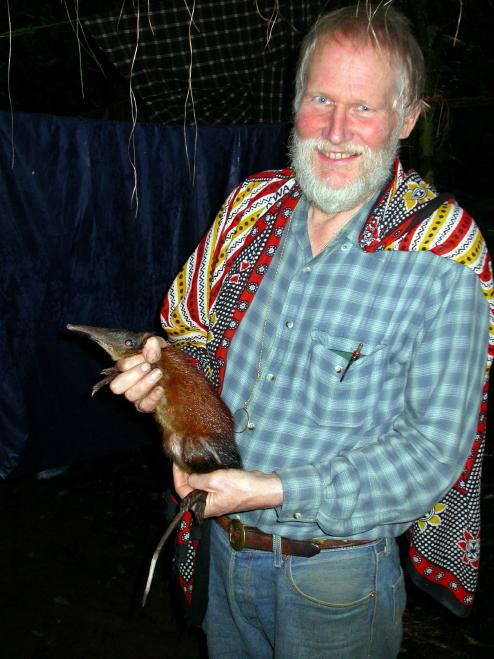
Although there is unquestionably much left to be discovered about life on Earth, charismatic animals like mammals are usually well documented, and it is rare to find a new species today—especially from a group as intriguing as the elephant-shrews, monogamous mammals found only in Africa with a colorful history of misunderstood ancestry.

Like shrews, these small, furry mammals eat mostly insects. Early scientists named them elephant-shrews not because they thought the animals were related to elephants but because of their long, flexible snouts. Ironically, recent molecular research has shown that they are actually more closely related to elephants than to shrews.

Monster.com is the perfect example of a company that spent its entire marketing budget on a Super Bowl ad and launched a success story. Is that the exception?

No, it turns out that Super Bowl advertisements do work, but not in the way you might expect. They don't often launch small companies into the Pro Bowl of the business world. Rather, a good Super Bowl ad means people assume the advertising works, anticipate more revenue, and push up the stock price of the company - without actually increasing sales.

Researchers in the University at Buffalo School of Management and Cornell University examined 529 commercials that aired during 17 Super Bowls from 1989-2005, and found that investors favored stocks of firms that aired likeable Super Bowl commercials.


