



University of Toronto quantum optics researchers have discovered new behaviors of light within photonic crystals that could lead to faster optical information processing and compact computers that don't overheat.

"We discovered that by sculpting a unique artificial vacuum inside a photonic crystal, we can completely control the electronic state of artificial atoms within the vacuum," says Ma, a PhD student under John's supervision and lead author of a study published in the Dec. 4 issue of Physical Review Letters.  "This discovery can enable photonic computers that are more than a hundred times faster than their electronic counterparts, without heat dissipation issues and other bottlenecks currently faced by electronic computing."
Often promoted as a 'clean-burning' alternative to gasoline that could help break our oil addiction, ethanol would likely worsen health problems caused by ozone, especially in winter, according to research presented today at the American Geophysical Union meeting in San Francisco.

Applying emissions data to the Los Angeles area to model vehicle pollutants, researchers projected emissions for the year 2020, when more ethanol-powered vehicles will likely be in use

They estimated that vehicle emissions would be about 60 percent less than today, because automotive technology will likely continue to become cleaner over time.  They investigated two scenarios, one that had all the vehicles running on E85 and another in which the vehicles all ran on gasoline.
According to four studies appearing in the latest issue of the Journal of Volcanology and Geothermal Research, the plumbing that feeds the Yellowstone supervolcano shows a plume of molten rock rising at an angle from the northwest at a depth of at least 410 miles, contradicting claims that there is only shallow hot rock moving like slowly boiling soup.

The research also indicates that the banana-shaped magma chamber of molten rock a few miles beneath Yellowstone is 20 percent larger than previously believed, so a future cataclysmic eruption could be even larger than thought.
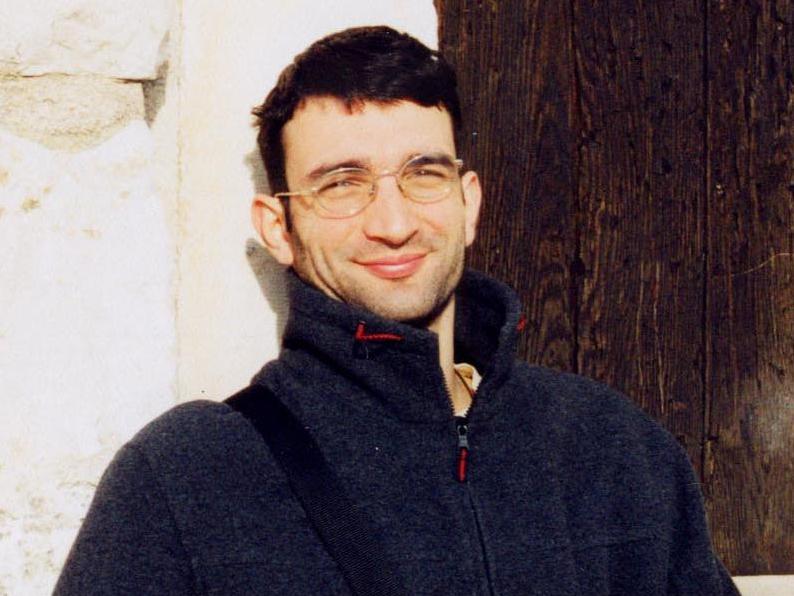
Daniel Tammet is an autistic savant and author of the recent book Embracing the Wide Sky: A Tour Across the Horizons of the Mind (Free Press). You may have heard of him. For example, most people first became aware of the existence of Iceland upon hearing that Tammet learned Icelandic in a week.

This is also the fellow that rattled off the first 22,514 digits of pi in five hours, enough for even the most exacting civil engineer, and far more accurate than the 19th century Texas town that passed an ordinance that pi would be approximated as 4. If ever there were a real human with superpowers, then Tammet fits the bill. Although stricken with adversity, his brain nevertheless is in certain respects blessed with something extra, smarter, almost magical.
A small segment of scientists are not in favor of skepticism; primarily if it happens to be in their discipline.   But a group of cancer researchers welcomes it and asks for even more.

Writing in the Journal of the National Cancer Institute, a trio discusses the exaggerated fears and hopes that often appear in news coverage of cancer research and seek to provide guidance for both the media and journals to help alleviate the problem.
You are in a game show with nineteen other players. You don't know the other players, you can't see them, and you can't communicate with them. The game you are in is called 'Greed!', and is straightforward to explain. You are asked to write down a whole dollar amount in the range $1 - $1,000,000 on a piece of paper. You will be paid the amount you asked for if it is deemed to be 'non-greedy'. Whether your request is indeed 'non-greedy' will be decided once all twenty request have been received by the host of the show. Your requested amount will be labeled 'non-greedy' if no other player has asked for less, and at least one player has asked for more.
New nanosensors can measure cancer biomarkers in whole blood for the first time, according to an article Nature Nanotechnology, and that could dramatically simplify the way physicians test for biomarkers of cancer and other diseases. 

A team led by Mark Reed, Yale's Harold Hodgkinson Professor of Engineering&Applied Science at Yale, and Tarek Fahmy, associate professor of biomedical and chemical engineering, used nanowire sensors to detect and measure concentrations of two specific biomarkers: one for prostate cancer and the other for breast cancer. 

The gases which formed the Earth's atmosphere and probably its oceans did not come from inside the Earth but from outer space, according to a study by University of Manchester and University of Houston scientists.

The report in Science claims that textbook images of ancient Earth with huge volcanoes spewing gas into the atmosphere will have to be rethought, putting to rest the age-old view that volcanoes were the source of the Earth's earliest atmosphere.   Dr Greg Holland, Dr Martin Cassidy and Professor Chris Ballentine tested volcanic gases to support their new theory.

The research was funded by Natural Environment Research Council (NERC).


