

So now we know what the news is, as expected, Hubble has found new evidence of possible plume activity on Europa. In a series of ten observations, they saw them on three occasions. Here are the images they created.

The possible plumes are in the seven o'clock position, not far from the South pole - though the central image here has another possible plume that's close to the equator.

Interestingly, they spotted them in the same position as the previous plume detection in 2012:

For at least a billion years of the distant past, planet Earth should have been frozen over but wasn’t, and one popular notion was that methane, with 23-34 times (yes, it is unclear) the heat-trapping capacity of carbon dioxide, could have reigned supreme for most of the first 3.5 billion years of Earth history, when oxygen was absent initially. 

Environmentalists today are in a panic about greenhouse gases, but between 1.8 billion and 800 million years ago, microscopic ocean dwellers really needed them. The sun was 10 to 15 percent dimmer than it is today—too weak to warm the planet on its own. Earth required a potent mix of heat-trapping gases to keep the oceans liquid and livable.

Jeremy Corbyn has recently been re-elected to leader of the labour party in the UK with an even stronger mandate than before of 62% of the vote, as many of you will know. This opens up the possibility of a future prime minister of the UK who has said that he will never authorize use of nuclear weapons to kill civilians. So is he right to say this? Well yes I’d say he is right. For my whole life ever since I understood what it meant, since the 1960s, I’ve been against the bomb and in favour of unilateral disarmament by the UK. The situation is more complex for the US and if I was in the US I don't know what I'd say.

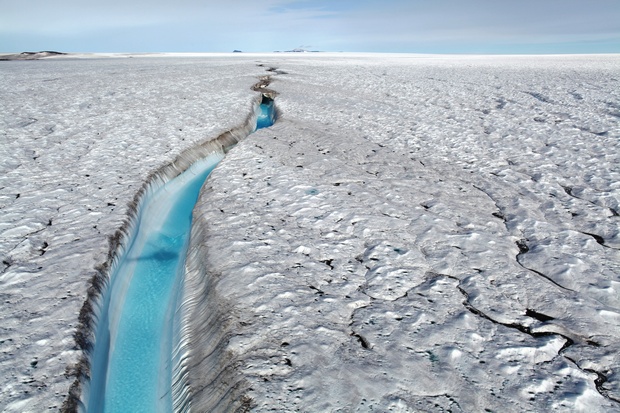
Postglacial rebound, uplift in Greenland blamed on global warming, has actually made it harder to measure ice loss due to global warming, according to a new paper in Science Advances.
Yesterday I read with interest and curiosity some pages of a book on the search and discovery of the Higgs boson, which was published last March by Rizzoli (in Italian only, at least for the time being). The book, authored by physics professor and ex CMS spokesperson Guido Tonelli, is titled "La nascita imperfetta delle cose" ("The imperfect birth of things"). 
The third non-browning Arctic apple variety - yes, using science - the Arctic Fuji, has been approved by the U.S. Department of Agriculture’s Animal and Plant Health Inspection Service (USDA APHIS). Science has shown they are the same as conventional apples, they just won't brown as much, so all of those organic food people will have a lot less food waste.

Except organic food shoppers will never buy these, because they love food waste and environmental strain if it means getting to hate science again.
In 2012's "Science Left Behind" I noted something that was perfectly obvious to anyone who was not in a progressive ideological bunker - that while both the American left and right were each anti-science about some things, only the right wing got any science media attention about it. And that was despite the fact that the left's anti-science beliefs are far more dangerous.

Jamie Samson and Marta Manser from the Department of Evolutionary Biology and Environmental 1Studies at UZH studied colonies of Cape ground squirrels (Xerus inauris) in the wild at the Kalahari Research Center in South Africa. The diurnal rodents temporarily store their food reserves in several hiding places. As their habitat is very arid and sparsely vegetated, points of reference in the environment, such as trees or bushes, are few and far between. The UZH researchers have now discovered how the social rodents orient themselves to find their way back to their temporary food stashes. "The squirrels probably use the position of the sun as the most important cue to roughly adjust their direction of movement," explains Samson.

Position of the sun as a rough guide

EAST LANSING, Mich. -- Laser technology has revealed a common trait of Alzheimer's disease - a sticky situation that could lead to new targets for medicinal treatments.

Alzheimer's statistics are always staggering. The neurodegenerative disease affects an estimated 5 million Americans, one in three seniors dies with Alzheimer's or a form of dementia, it claims more lives than breast and prostate cancers combined, and its incidence is rising.

To help fight this deadly disease, Lisa Lapidus, Michigan State University professor of physics and astronomy, has found that peptides, or strings of amino acids, related to Alzheimer's wiggle at dangerous speeds prior to clumping or forming the plaques commonly associated with Alzheimer's.

TORONTO, September 12, 2016 - Public figures such as United States presidential candidates Hilary Clinton and Donald Trump may have to do a lot more than just say sorry to win back public trust after a misdeed, said a York University researcher whose study on trust was published today.

"Whether it's a boss, co-worker or the public, saying sorry is not always enough to win back broken trust, especially when gender stereotypes are also broken. Both have happened with Clinton and Trump in the last few months," said Shayna Frawley, PhD candidate in human resource management at York U who led the study with York U alumna Jennifer Harrison, now at NEOMA Business School in France.

