





More powerful computers are allowing scientists and engineers to conduct simulations that grow more realistic each year. While companies are using these tools to slash the costs of producing everything from airliners to antibiotics, researchers in Houston are using them to refine their search for the genetic causes of disease.

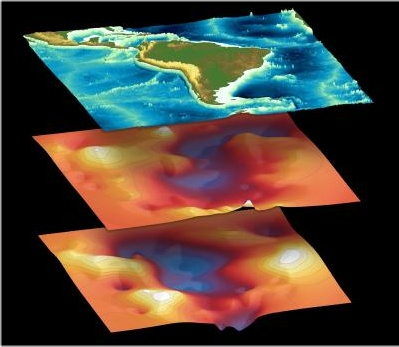
Factoring in crustal strength changes along the San Andreas Fault would improve the predictive models that researchers use to understand the likelihood and intensity of earthquakes there. That's the conclusion from a study published in the April issue of Geology titled, "Diffuse interseismic deformation across the Pacific-North America plate boundary."
 

Investigators at St. Jude Children's Research Hospital have mapped out many of the dynamic genetic and biochemical changes that make up a cell's response to a shortage of a molecule called Coenzyme A (CoA), a key player in metabolism. The results provide the most detailed look ever obtained of the complex metabolic changes in a cell triggered by a potentially fatal stress.

Metabolism is the sum of all biochemical reactions involved in maintaining the health of the cell, including breaking down and synthesizing various molecules to produce energy and build substances the cell needs to operate normally. CoA plays key roles in the cell's metabolism by participating in biochemical reactions in specific areas throughout the cell.

Craftsmen tile walls or floors by hand; but how can you get an ordered monolayer onto a substrate when the "tiles" are microscopically small instead of big and easy to handle? Previously, self-assembly processes have been the method of choice for this scale. Korean researchers have now come to the realization that even such tiny components can be arranged in a "do-it-yourself" method. As they describe in the journal Angewandte Chemie, their manually produced monolayers of microcrystals are qualitatively superior to the self-assembled variety.

As an electromagnetics guy I stay in touch with a lot of what is happening in that segment of physics by subscribing to plain, ol' email lists. People who need info just fire off a question to the group and someone helps.

Occasionally recruiters spam the place because, you know, all of their recruiting emails are terribly important to the whole planet. When I got my email this morning, I saw this:

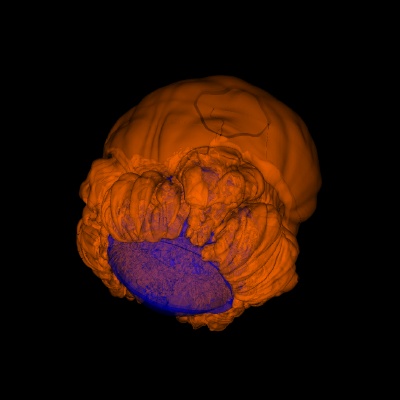
University of Chicago scientists will demonstrate how to incinerate a white dwarf star in unprecedented detail at the “Paths to Exploding Stars” conference on Thursday, March 22, in Santa Barbara, Calif.

White dwarf stars pack one and a half times the mass of the sun into an object the size of Earth. When they burn out, the ensuing explosion produces a type of supernova that astrophysicists believe manufactures most of the iron in the universe.

The theory that Earth once underwent a prolonged time of extreme global freezing has been dealt a blow by new evidence that periods of warmth occurred during this so-called 'Snowball Earth' era.

Analyses of glacial sedimentary rocks in Oman, published online today in Geology, have produced clear evidence of hot-cold cycles in the Cryogenian period, roughly 850-544 million years ago. The UK-Swiss team claims that this evidence undermines hypotheses of an ice age so severe that Earth's oceans completely froze over.

Scientists from the NIOZ Royal Netherlands Institute for Sea Research obtained for the first time a detailed temperature record for tropical central Africa over the past 25,000 years. They did this in cooperation with a German colleague from the University of Bremen, The scientists developed an entirely new method to reconstruct the history of land temperatures based on the molecular fossils of soil bacteria. They applied the method to a marine sediment core taken in the outflow of the Congo River. This core contained eroded land material and microfossils from marine algae. The results show that the land environment of tropical Africa was cooled more than the adjacent Atlantic Ocean during the last ice-age.

Fresh evidence that suggests monkeys can learn skills from each other, in the same manner as humans, has been uncovered by a University of Cambridge researcher.

Dr Antonio Moura, a Brazilian researcher from the Department of Biological Anthropology, has discovered signs that Capuchin monkeys in Brazil bang stones as a signalling device to ward off potential predators.

