




Maps of the sea surface temperature around Galapagos Islands and Cocos Island in the Pacific Ocean are being produced daily and are available online in full resolution in near-real time as part of the Medspiration project, an ESA-funded effort to represent the most reliable temperature of the seas on a global basis.

Galapagos Islands and Cocos Island have been integrated into Medspiration until 31 March in order to support the study of wildlife migration processes from the two islands as part of ESA’s new Diversity project, which kicked off in January 2007 to support the initiative of the United Nations Convention on Biological Diversity (UNCBD) to reduce significantly the current rate of biodiversity loss by 2010.

A new nanoscale apparatus developed at JILA—a tiny gold beam whose 40 million vibrations per second are measured by hopping electrons—offers the potential for a 500-fold increase in the speed of scanning tunneling microscopes (STM), perhaps paving the way for scientists to watch atoms vibrate in high definition in real time.


This slow-motion simulation of the JILA nanoscale motion detector shows the wiggling of a floppy metal beam, just 100 nanometers thick, as it is struck by an electric current at the dot. Red indicates the greatest change in position from the rest state. Credit: Credit: K. Lehnert/JILA

Psychologists have taken the "media priming" effects of popular video console and PC-based games on the road, finding that virtual racing seems to lead to aggressive driving and a propensity for risk taking. Extending prior findings on how aggressive virtual-shooter games increase aggression-related thoughts, feelings and behaviors, researchers at Munich's Ludwig-Maximilians University and the Allianz Center for Technology found that of 198 men and women, those who play more virtual car-racing games were more likely to report that they drive aggressively and get in accidents. Less frequent virtual racing was associated with more cautious driving.

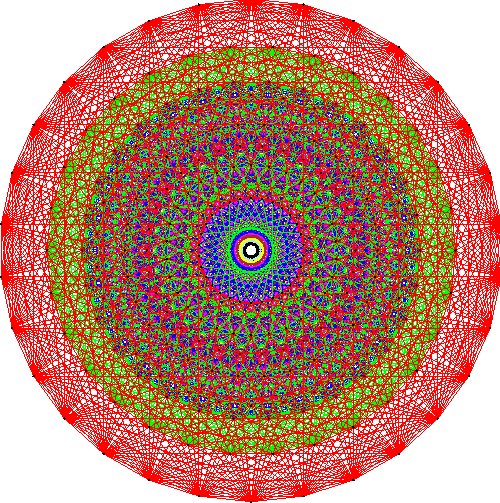
The American Institute of Mathematics (AIM), one of the leading math institutes in the U.S., announced today that after four years of intensive collaboration, 18 leading mathematicians and computer scientists from the U.S. and Europe have successfully mapped E8, one of the largest and most complicated structures in mathematics. Partners on this project included MIT, Cornell University, University of Michigan, University of Utah and University of Maryland.


The E8 root system consists of 240 vectors in an eight-dimensional space. See what is E8? Those vectors are the vertices (corners) of an eight-dimensional object called the Gosset polytope 421.

New non-toxic and targeted therapies for metastatic breast and ovarian cancers may now be possible, thanks to a discovery by a team of researchers at the University of British Columbia.

In a collaboration between UBC stem cell and cancer scientists, it was found that a protein called podocalyxin – which the researchers had previously shown to be a predictor of metastatic breast cancer – changes the shape and adhesive quality of tumour cells, affecting their ability to grow and metastasize. Metastatic cancer is invasive cancer that spreads from the original site to other sites in the body.

The discovery demonstrated that the protein not only predicted the spread of breast cancer cells, it likely helped to cause it.

To address the high rate of multiple births resulting from in-vitro-fertilization (IVF), researchers at Yale School of Medicine and McGill University have developed a procedure that estimates the reproductive potential of individual embryos, possibly leading to a decrease in multiple-infant births and a higher success rate in women undergoing IVF.

Over 100,000 in-vitro fertilization procedures are performed each year in the United States. In 2002, 3.1 embryos on average were transferred in IVF cycles, but only 34.3 percent resulted in pregnancies. Of those successful pregnancies, 29 percent resulted in multiple births. These statistics remained unchanged within the last decade suggesting that an improvement is needed over the current methodology used for embryo evaluation.

A federal law requiring publicly traded firms to disclose whether they have adopted codes of ethics for their senior financial officers may be useful, but a Penn State researcher says its impact is often limited.

A firm's board of directors needs to be the driving force behind creating and implementing the program in most cases for it to truly be successful.

"According to my research, firms with ethics programs overseen by their boards of directors disclose more credible financial information—as perceived by financial analysts—than do firms having ethics programs not overseen by their boards, and firms not having ethics programs," said Andrew Felo, assistant professor of accounting at Penn State Great Valley graduate school in suburban Philadelphia.

I saw a press release about a global warming 'virtual march'( we'll get back to that ) and a tour being conducted by Laurie David ( married to "Seinfeld" co-creator Larry David and thus an expert on climate science, also founder of the website that put out the press release ) and Sheryl Crow called the "Stop Global Warming College Tour" beginning April 9th in Dallas.

I was itching to find more information about it and, other than discovering they were going to show clips from Al Gore's movie ( yeah, no college student will have seen that ) and Sheryl Crow would sing a few songs at each stop, the only interesting thing I came across was an article in something called the


One of the very first posts I made on a  blog over a year ago was “Praise the Lord, not Petroleum”.  It discussed the very public and high profile actions a significant number of Evangelical Christian organizations were taking to fight global warming.  Their underlying argument is simple: if the Earth, and all living things are god’s creation, we should not destroy it and them with global warming.

Using a systems biological analysis of genome-scale data from the model plant Arabidopsis, an international team of researchers identified that the master gene controlling the biological clock is sensitive to nutrient status.

This hypothesis derived from multi-network analysis of Arabidopsis genomic data, and validated experimentally, has shed light on how nutrients affect the molecular networks controlling plant growth and development in response to nutrient sensing.


