SAN MATEO, California, October 13 /PRNewswire/ --

- Technology Leader Mines Hard-to-Find Data from the Web

FirstRain(R), the leading provider of search-driven research, today announced the launch of its UK operations. This milestone makes an innovative fundamental data stream available to U.K. firms for the first time.

"FirstRain feeds us fundamental information on industries and companies that is not generally available on sell-side research," said Luis Benoliel, analyst at First State Investments. "This helps us reduce the risk of missing important industry data points."

Scientists have found a new possible explanation for why people who eat more fruit and vegetables may gain protection against the spread of cancers; a fragment released from pectin, found in all fruits and vegetables, that binds to and may inhibit galectin 3 (Gal3), a protein that plays a role in all stages of cancer progression.

Population studies such as EPIC, the European Prospective Investigation of Cancer, identified a strong link between eating lots of fibre and a lower risk of cancers of the gastrointestinal tract. But exactly how fibre exerts a protective effect is unknown.

Pectin is better known for its jam-setting qualities and as being a component of dietary fibre. The present study supports a more exciting and subtle role.

If there’s one halfway healthy thing that most people do, it’s take a multivitamin pill. My word, taking a little pill with decent amounts of the essential micronutrients and minerals keeps you from getting scurvy, right?

Right. Most people don’t eat sufficient fruits and vegetables. Most people don’t get enough vitamin C over the course of a week to keep them from getting low-grade scurvy, unless you’re one of the smart few who toss back an orange juice shot in the morning.

(Just for the record, I imbibe espresso shooters in the morning. I’m not getting up on my high elliptical strider and being healthier-than-thou.

Scientists have discovered that a bone infection is caused by a newly described species of bacteria that is related to the tuberculosis pathogen. The discovery may help improve the diagnosis and treatment of similar infections, according to an article published in the International Journal of Systematic and Evolutionary Microbiology.

Some rare genetic diseases can make patients susceptible to infections with Mycobacterium species, the bacteria that amongst other diseases, cause tuberculosis and leprosy. These patients often suffer from recurring mycobacterial infections throughout their whole lives. Because of this, researchers are trying to identify unusual species that cause disease in order to improve treatment strategies.

Only A Theory: Evolution and the Battle for America's Soul
by Kenneth R. Miller
Viking, 2008

Ken Miller is not preaching to the choir. Although he has a day job as an active research biologist at Brown University, Miller has spent more than two decades on the front lines of the battle over evolution as a writer, lecturer, and expert witness in court. During these two decades of culture war, he has come to realize that, although the stakes are high in this fight, sometimes the best tactic is the non-martial one: don't treat the American public as pawns in a propaganda war.

Miller starts with the assumption that most people will be fairly open-minded about evolution and intelligent design. Before they make a firm judgment on the role of evolution in our public schools, people genuinely want to know what the scientific status of evolution is, and whether intelligent design is truly a scientific challenger. Many previous books debunking evolution have missed people like this. Such books typically fall into two categories: necessary but dense, technical works that provide, in detail, the scientific community's best response to the claims of intelligent design advocates, and scathing, hard-hitting attacks that fire up those who already accept evolution, but turn off readers who are trying hard to understand this issue without being strongly biased either way. Only A Theory is a genuine attempt at persuasion, and its approach is a result of Dr. Miller's years of practice speaking to audiences who want to give both sides a fair shot.

Don't be fooled, however, into thinking that Miller is trying to find some mutually satisfactory middle ground. For those who want to know whether evolution really is good science, his answer is unambiguous - evolution is one of the most successful and important theories we have in biology. And what about intelligent design? Its advocates have not even attempted to make this a real scientific discipline; evolution is the only scientific game in town.

Scientists at Bonn and Düsseldorf Universities investigated over 500,000 positions in the human genome and found a gene variant which occurs clearly more frequently in bald men than in control persons. This means they have found a new hair loss gene, according to their study in Nature Genetics.

In 2005, these scientists had already characterized the first hair-loss gene inherited through the maternal line, which explained why hair-loss in men often reflects that of their maternal grandfathers. This newly discovered gene, on the other hand, may now account for the similarity in cranial hair growth between father and son.

Would you ever have thought there could be anyone considered an expert on the political impact of late-night comedy shows on candidates? Us either, but that's the claim.

American University says Lauren Feldman is that expert and in her real job she is an assistant professor at American University’s School of Communication. Feldman did an analysis of the 2004 election and the results say Tina Fey’s humorous impersonations of vice presidential candidate Sarah Palin on Saturday Night Live (SNL) could be doing real damage to the McCain campaign in the 2008 election. Even if they aren't, it's a good rumor to start.

To get from one cell to a complex organism, cells have to divide, travel around the body and arrange intricate shapes and specialized tissues. The best way to understand these dynamic processes is to look at what happens in the first few hours of life in every part of an embryo. While this is possible with invertebrates with a few hundred cells, like worms, it was previously impossible to achieve for vertebrates.

“Imagine following all inhabitants of a town over the course of one day using a telescope in space. This comes close to tracking the 10 thousands of cells that make up a vertebrate embryo – only that the cells move in three dimensions,” says Philipp Keller. Together with Annette Schmidt he carried out the research in the labs of Jochen Wittbrodt and Ernst Stelzer at the European Molecular Biology Laboratory (EMBL).

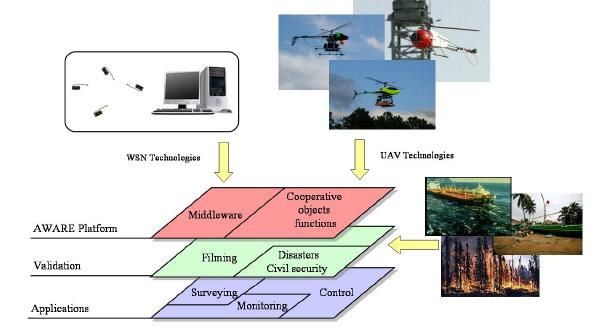
Unmanned helicopters could soon be a key part of emergency relief operations, as well as bringing a new dimension to filmmaking, thanks to innovative work done by European researchers.

When natural disasters happen one of the first casualties is often the communications network. As a result, rapid response crews can be working virtually blind, cut off from each other and the victims they are trying to help. Where there are transport arteries, such as roads, rivers and railways, they are also very often damaged or disrupted, which makes getting medical and relief supplies to survivors extremely difficult.

When such disasters happen in remote areas with little in the way of communications or transport infrastructure to start with, the problem is exacerbated. A solution for both the communications and delivery of supplies problems is now being researched in an EU-funded project, called AWARE, which comprises academic and commercial partners from five European countries.

Humans have a built-in weapon against HIV, but until recently no one knew how to unlock its potential. A study published in Nature reveals the atomic structure of this weapon, an enzyme known as APOBEC-3G, and suggests new directions for drug development.

APOBEC-3G is present in every human cell. It is capable of stopping HIV at the first step of replication, when the retrovirus transcribes its RNA into viral DNA.

The study's authors, led by Xiaojiang Chen of the University of Southern California, were able to show the atomic structure of the active portion of APOBEC-3G.