A national survey into the bedroom behavior of British women has revealed that 46% percent never or rarely achieve orgasm. The survey, conducted by Scarlet magazine and the makers of the PelvicToner to mark National Orgasm Day on July 31, polled over 2000 women across the country and found that women with better pelvic floor muscles were also enjoying better sex lives.

The survey is ongoing at http://www.orgasmsurvey.co.uk. The latest survey results can be downloaded from the site.

 Athletes, both professional and amateur, as well as the general public are convinced that human growth hormone (HGH), Erythropoietin (EPO) and anabolic-androgenic steroids (AAS) are all artificial and controversial paths to improved performance in sports.  The recent headlines that have included Barry Bonds, Marion Jones, Floyd Landis, Dwayne Chambers, Jose Canseco, Jason Giambi, Roger Clemens and many lesser known names (see the amazingly long list of doping cases in sport) have referred to these three substances interchangeably leaving the public confused about who took what from whom. 
With so many athletes willing to gamble with their futures, they must be confident that they will see significant short-term results.  So, is it worth the risk?  Two very interesting recent studies provide some answers on at least one of the substances, HGH.

UPDATE: See a video clip here

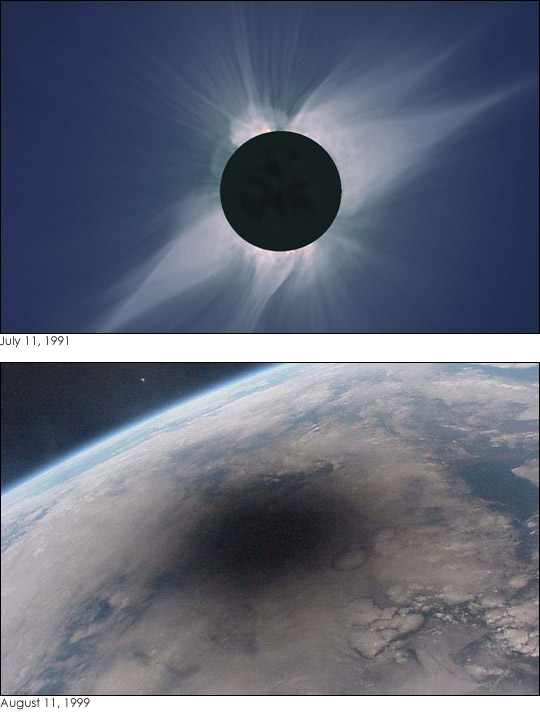
Total solar eclipses take place when the Earth, Moon and Sun are aligned and the shadow of the Moon touches the surface of the Earth. At mid-eclipse, observers within the lunar shadow briefly see totality, where the silhouette of the Moon completely covers the Sun, revealing the beautiful outer solar atmosphere or corona.

On August 1st, 2008 there will be a total eclipse visible from Canada, northern Greenland, Svalbard, the Barents Sea, Russia, Mongolia and China.

People in the British Isles will see a partial solar eclipse, with between 1/10th and 1/3rd of the Sun obscured by the Moon.

Global climate change could explain the explosion in marine biodiversity that took place 460 million years ago, according to researchers from INSU-CNRS Laboratoire PaléoEnvironnements et PaléobioSphère (CNRS)Université Claude Bernard Lyon and Australian National University in Canberra.

They have found evidence of a progressive ocean cooling of about 15°C over a period of 40 million years during the Ordovician, a geologic period extending from 490 to 440 million years ago. Until now, this geologic period had been associated with a "super greenhouse effect" on our planet. The results from this study were published in the July 25, 2008 issue of Science.

A collaboration between chemists and biologists has made it possible to identify the effects of a new class of molecules, polyoxometalates, primarily composed of metals and oxygen.

Polyoxometalates are anionic inorganic metal oxide structures that have valuable catalytic properties. These molecules are very powerful inhibitors of a specific protein kinase, CK2, an enzyme that is overactive in a number of cancers. The enzyme's instrumental role in controlling cell proliferation and survival makes it an important target in the search for new medications.

Individuals affected by celiac disease (gluten intolerance) often present an altered calcium (Ca2+) metabolism that can cause osteopenia, a bone mass decrease due to the impaired adsorption of this mineral, which can lead to osteoporosis (in 35-85% of the cases).

This phenomenon is particularly frequent among late-diagnosed celiac patients, as in the case of adult people, but can be present in children too.

With the aim of recognizing calcium metabolism alterations and impaired bone mineralization, laboratory and radiology exams, such as dual energy x-ray absorptiometry (DEXA), are often performed. These exams – that provide information on the health status of the bones before the onset of a specific therapy (namely the gluten-free diet) and help to monitor the progression of the bone disease once the diet is started - are nowadays indicated in children too. But are they really necessary in the celiac child?

Stories stating that soy products lower sperm count do not tell the whole story, according to a statement released by the Soyfoods Association of North America is a non-profit trade association that has been promoting consumption of soyfoods in the diet since 1978.

They say the small scale, preliminary study that Dr. Jorge Chavarro published in Human Reproduction is based on recollected intake of soyfoods and not on specific diets containing soyfoods.

“This study is confounded by many issues, thus I feel the results should be viewed with a great deal of caution,” said Dr. Tammy Hedlund, a researcher in prostate cancer prevention from the University of Colorado Health Sciences Center, Department of Pathology. Dr. Chavarro found that “soyfood and soy isoflavone intakes were unrelated to total sperm count, ejaculate volume, sperm motility, or sperm morphology” which are the important measures of sperm quality and male fertility.

Here are some quotes we have all heard (or said ourselves) on the golf course or at the ball diamond. 
On a good day:
"It was like putting into the Grand Canyon"
"The baseball looked like a beach ball up there today"

On a bad day:
"The hole was as small as a thimble"
"I don't know, it looked like he was throwing marbles"

The baseball and the golf hole are the same size every day, so are these comments meaningless or do we really perceive these objects differently depending on the day's performance?  And, does our performance influence our perception or does our perception help our performance?

SAO PAULO, Brazil, July 26 /PRNewswire/ --

- Amid reports that G-7 members are close to an agreement in the current phase of Doha Round talks in Geneva, the president of the Brazilian Sugarcane Industry Association is en route to Switzerland to closely monitor the final stages of the negotiation.

Access to major markets around the globe for Brazilian sugarcane ethanol with lower tariffs, and full integration of ethanol in global trade, as is the case with any other product: these are the key expectations of the Brazilian Sugarcane Industry Association (UNICA) as the current phase of Doha Round negotiations in Geneva, Switzerland, draws to a close.

Puffer fish might kill, oysters are slimy and salmon skin is uncommon to eat, but around the word there are some even more unique drinks and delicacies that tests ones sensory analysis and may take customary valor to a new universe.

The scorpion drink—Is made by soaking a scorpion in vodka for three months after it has gone through a special detoxification process. Originated in China, sold in the U.K. supposedly improves libido, lowers toxins in the blood stream and lowers blood pressure.

Fried Spiders—The recent Cambodian craze involves frying Thai Zebra Tarantula’s as big as a hand in a mixture of MSG, sugar, salt and garlic. This spider dish began in the 1970’s after people had little to eat during the rule of Khmer Rouge.

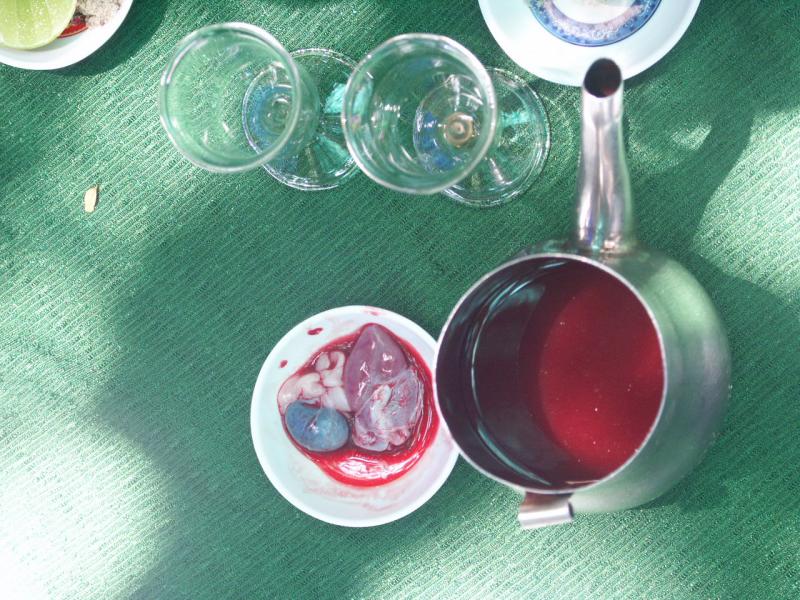
Cobra blood—Though research on the effects of cobra blood is limited, it can be found in restaurants and bars in places like Indonesia. The potent delicatessen is consumed in a shot-glass amount and is reported to cause vivid dreams.