





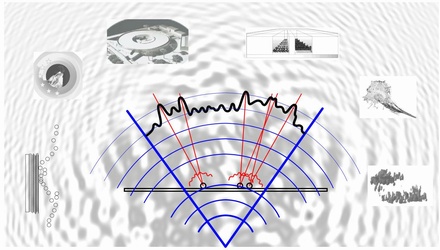

LONDON, April 13 /PRNewswire/ -- A major international exercise using advanced new technology to help European nations improve their response to massive coastal flooding was held throughout Europe last week. Emergency command centres in the UK, Sweden, Holland and Ireland worked together to coordinate a joined-up response to flooding from a simulated tsunami in another EU member state. The exercise was of particular relevance in the light of the major tidal surge that nearly overwhelmed flood defences in the eastern United Kingdom, Germany and Holland in November 2007, and the growing threat from rising sea levels caused by climate change.

The amount of oxygen available to a baby in the womb can affect their susceptibility to developing particular diseases later in life. Research presented at the annual Society for Endocrinology BES meeting in Harrogate shows that your risk of developing cardiovascular disease can be predetermined before birth, not only by your genes, but also by their interaction with the quality of the environment you experience in the womb.

Researchers at the University of Cambridge, led by Dr Dino Giussani, examined the role that oxygen availability in the womb plays in programming your susceptibility to different diseases. His group found that babies that don’t receive enough oxygen in the womb (e.g. due to pre-eclampsia or placental insufficiency) are more likely to suffer from cardiovascular disease when they are adult.

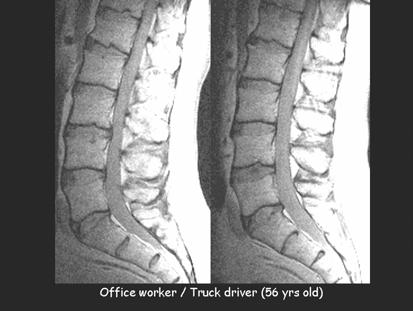
What do you learn by looking at the spines of hundreds of Finnish twins? If you are the international team of researchers behind the Twin Spine Study, you find compelling proof that back pain problems may be more a matter of genetics than physical strain.

The findings of the Twin Spine Study, an ongoing research program started in 1991, have led to a dramatic paradigm shift in the way disc degeneration is understood. Last month a paper presenting an overview of the Twin Spine Study’s multidisciplinary investigation into the root causes of disc degeneration received a Kappa Delta Award from the American Academy of Orthopaedic Surgeons, arguably the most prestigious annual award in musculoskeletal research.

Prostate tumors grew more quickly in mice who exercised than in those who did not, leading to speculation that exercise may increase blood flow to tumors, according to a new study by researchers in the Duke Comprehensive Cancer Center (DCCC) and the Duke Prostate Center.

“Our study showed that exercise led to significantly greater tumor growth than a more sedentary lifestyle did, in this mouse model,” said Lee Jones, Ph.D., a researcher in the DCCC and senior investigator on this study. “Our thought is that we may, in the future, be able to use this finding to design better drug delivery models to more effectively treat prostate cancer patients, and those with other types of cancer as well.”

Combustion without flames can be used to build much more efficient industrial gas turbines for power generation than are used in current models and produce almost no polluting emissions, say
Mohamed Sassi of The Petroleum Institute in Abu Dabi and colleagues Mohamed Hamdi and Hamaid Bentîcha, at the National School of Engineers of Monastir.

They explain that flameless combustion, or more precisely flameless oxidation (FLOX), has become a focus of industrial research. It has, they say, the potential to avoid one of the major noxious pollutants from gas turbines, NOx, or nitrogen oxides.

In flameless combustion, the oxidation of fuel occurs with a very limited oxygen supply at very high temperature. Spontaneous ignition occurs and progresses with no visible or audible signs of the flames usually associated with burning. The chemical reaction zone is quite diffuse, explains Sassi, and this leads to almost uniform heat release and a smooth temperature profile. All these factors could result in a much more efficient process as well as reducing emissions.

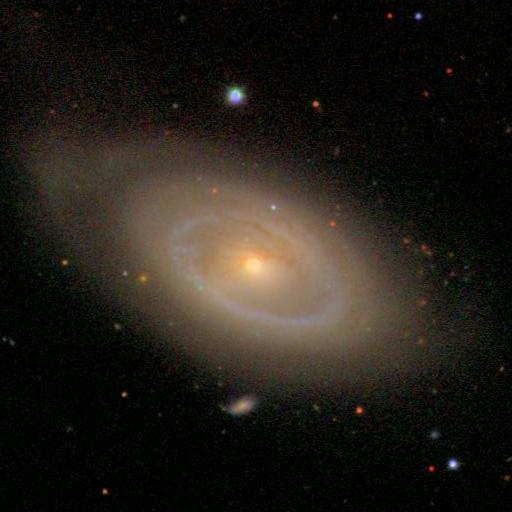
A study of active and inactive galaxies by Paul Westoby, Carole Mundell and Ivan Baldry from the Astrophysics Research Institute of Liverpool John Moores University has given new insights into the complex interaction between super-massive black holes at the heart of Active Galactic Nuclei (AGN) and star formation in the surrounding galaxy.

The team studied the properties of light from 360,000 galaxies in the local Universe to understand the relationship between accreting black holes, the birth of stars in galaxy centres and the evolution of the galaxies as a whole.

The study finds that gas ejected during the quasar stage of AGN snuffs out star formation, leaving the host galaxies to evolve passively. The study also reveals a strong link between galaxy mergers and the formation of super-massive black holes in AGN, but shows that if the environment becomes too crowded with galaxies, then the likelihood of firing up a supermassive black hole becomes suppressed.

KeeLoq, a remote keyless system used for access control since the mid-1990s, is by many the most popular of such systems in Europe and the US. Besides the frequent use of KeeLoq for garage door openers and other building access applications, several automotive manufacturers like Toyota/Lexus base their anti-theft protection on assumed secure devices featuring KeeLoq.

Researchers from Ruhr University Bochum, Germany, presented a complete break of remote keyless entry systems based on the KeeLoq RFID technology. The shown vulnerability applies to all known car and building access control systems that rely on the KeeLoq cipher and allows for illicit access from a distance of 300 feet without leaving traces.

“The security hole allows illegitimate parties to access buildings and cars after remote eavesdropping from a distance of up to 100 meters” says Prof. Christof Paar. His Communication Security Group in the Electrical Engineering and Information Sciences Department has developed the break as part of their research in embedded security.

Electronics work better under cold conditions (-150 C). With less thermal noise, detectors are more sensitive and speed and reliability are increased. Low-noise amplifiers reduce noise further.

Dutch-sponsored researcher Srinivas Vanapalli has investigated the possibilities for the extreme cooling of electronic components at a chip level.

Besides research into extremely small structures, Vanapalli has constructed a proof-of-principle cooler which, despite the smaller dimensions, cools more effectively than conventional coolers and has therefore aroused commercial interest.

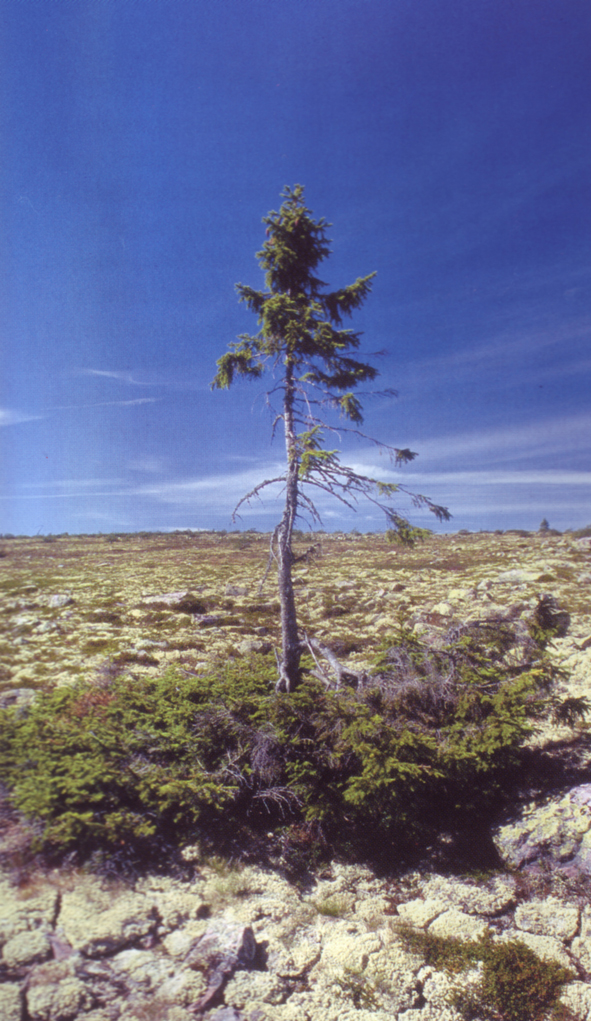
The world’s oldest recorded tree is a 9,550 year old spruce in the Dalarna province of Sweden.

The spruce tree has shown to be a tenacious survivor that has endured by growing between erect trees and smaller bushes in pace with the dramatic climate changes over time.

For many years the spruce tree has been regarded as a relative newcomer in the Swedish mountain region.

”Our results have shown the complete opposite, that the spruce is one of the oldest known trees in the mountain range,” says Leif Kullman, Professor of Physical Geography at Umeå University.

Countless hours spent designing, hand-building and testing model rockets has paid off for 100 teams that will be vying for the sixth annual Team American Rocketry Challenge national title next month.

The Aerospace Industries Association announced the finalists for the world's largest rocket contest Friday. The teams will meet at Great Meadow in The Plains, Va., on May 17 for a final fly-off and a chance to win more than $60,000 in scholarships and other prizes.

About 7,000 students on 643 teams from 43 states and the District of Columbia took part in the qualifying rounds of competition.

