






LOS ANGELES, March 10 /PRNewswire/ --

- Chrysler cites Bunkspeed 3D rendering tools as 'key ingredient' responsible for reinventing the auto company's marketing imagery process

Bunkspeed, Inc. announced today that Chrysler Group has selected its 3D rendering applications to turn CAD data into professional-quality marketing imagery. Among other benefits, Chrysler expects to significantly decrease ad production costs.

Nearly 25 million U.S. women between the ages of 14 and 59 are infected with HPV, and the annual cost of screening and treating cervical abnormalities is about $4 billion, according to a statement from the Society of Gynecologic Oncologists.

For many unvaccinated women HPV infections clear up naturally without causing any cervical problems, as do many pre-malignant lesions. In other cases, HPV prompts cell changes that can gradually put women at greater risk of cervical cancer.

A significant drop in abnormal Pap test results happened after girls and women were given the vaccine named Gardasil to prevent cervical cancer, according to a researcher at the University of Alabama at Birmingham (UAB).

While the findings are not definitive that Gardasil prevents cancer, they do signal the vaccine will spare thousands of women a diagnosis of cell abnormality or malignant changes that may lead to more tests and possibly surgery, said Warner Huh, M.D., associate professor in the UAB Division of Gynecologic Oncology and the doctor chosen to present the data.

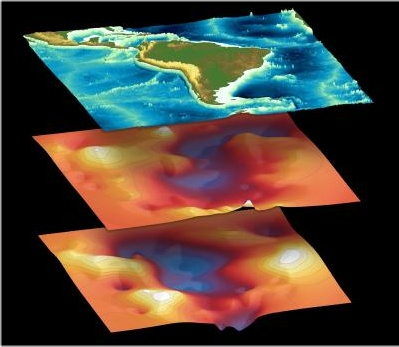
In Vadose Zone Journal, researchers state that a much smaller spatial resolution should be used for modeling soil water.

Soils are complicated porous media that are highly relevant for the sustainable use of water resources. Not only the essential basis for agriculture, soils also act as a filter for clean drinking water, and, depending on soil properties, they dampen or intensify surface runoff and thus susceptibility to floods. Moreover, the interaction of soil water with the atmosphere and the related energy flux is an important part of modern weather and climate models.

An accurate modeling of soil water dynamics thus has been an important research challenge for decades, but the prediction of water movement, especially at large spatial scales, is complicated by the heterogeneity of soils and the sometimes complicated topography.

The Hercules Beetle is remarkable not only for its strength, able to carry up to 850 times its own weight, but also the protective outgrowth of its exoskeleton, which also changes from green to black as its surrounding atmosphere gets more humid.

It's the strongest creature in the world but the color-changing trick is what scientists have long sought to understand. A new investigation into the structure of this peculiar protective shell which could aid design of ‘intelligent materials.’

I feel like I am going to be preaching-to-the-choir with this blog. The fact that you are reading it puts you in the "choir." I would encourage all of you to read the first two columns of the article "A New Bottom Line For School Science" by Jeffrey Mervis in Science Vol. 319, p. 1030-33, Feb. 22, 08.

The quote from this article that has me upset is "I don’t use a textbook or assign written homework because so many of them (the students) wouldn’t be able to read it." If this were a quote from a third grade teacher in a rural school for the children of migrant workers, I would still be upset but I could understand the teacher’s dilemma.

Genome-wide association studies are increasingly widely used to discover genetic variations that increase the risk of common diseases like heart disease and type 2 diabetes. Intuitively they're quite straightforward: take a few thousand individuals with a disease (cases), a few thousand healthy individuals (controls), examine hundreds of thousands of genetic variations in both groups using new large-scale genotyping technologies, and see which variants are more common in cases than controls. This simple approach has turned out to be a powerful tool, uncovering genes involved in a multitude of common diseases.

Wind energy is regarded by many as the most viable source of short-term renewable energy.

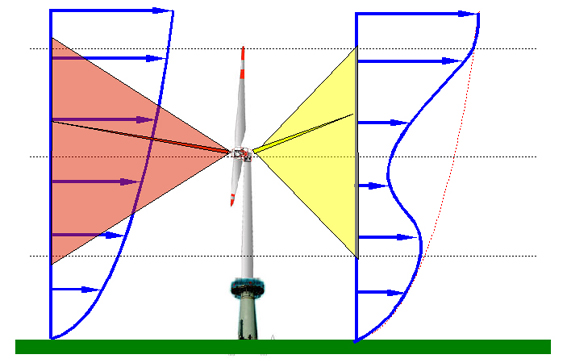
Optimal operation of new generation wind turbines will only be possible through the reliable measurement of the wind inflow characteristics. Experience has shown that accurate power generation estimation based on wind speed is a challenging task.

For large new turbine models, conventional mast wind speed measurements are not feasible based on cost and technical considerations. Researchers at the Endowed Chair of Wind Energy (SWE) of the University of Stuttgart are working together with researchers from the University of Oldenburg and other project partners on an alternative remote sensing technique.

Radio waves accelerate electrons within Jupiter’s magnetic field in the same way as they do on Earth, according to new research. The discovery overturns a theory that has held sway for more than a generation and has important implications for protecting Earth-orbiting satellites.

Using data collected at Jupiter by the Galileo spacecraft, Dr Richard Horne of British Antarctic Survey (BAS) and colleagues from the University of California, Los Angeles, and the University of Iowa found that a special type of very low frequency radio wave is strong enough to accelerate electrons up to very high energies inside Jupiter’s magnetic field.

Scientists funded by the Biotechnology and Biological Sciences Research Council (BBSRC) have published new research in Molecular Pharmacology identifying the structure of a receptor in the brain implicated in conditions such as epilepsy and pre-menstrual tension. The same receptor has also been reported to be highly sensitive to alcohol.

The University of Cambridge team, in collaboration with colleagues at Aston University and the University of Alberta, have determined the arrangement of the constituent parts of an uncommon but important type of GABA receptor in the brain. GABAA receptors in the central nervous system play important roles in the body’s response to gamma-aminobutyric acid (GABA), a chemical used by the brain to control certain functions.

By understanding how the receptors’ sub-units are arranged, scientists may now be able to develop drugs to block or stimulate them, providing hope for sufferers of a range of conditions.

There is a particular narrative about science that science journalists love to write about, and Americans love to hear. I call it the 'oppressed underdog' narrative, and it would be great except for the fact that it's usually wrong.

The narrative goes like this:

1. The famous, brilliant scientist So-and-so hypothesized that X was true.

2. X, forever after, became dogma among scientists, simply by virtue of the brilliance and fame of Dr. So-and-so.

3. This dogmatic assent continues unchallenged until an intrepid, underdog scientist comes forward with a dramatic new theory, completely overturning X, in spite of sustained, hostile opposition by the dogmatic scientific establishment.

We love stories like this; in our culture we love the underdog, who sticks to his or her guns, in spite of heavy opposition. In this narrative, we have heroes, villains, and a famous, brilliant scientist proven wrong.

