




A Western diet may be negatively affecting your brain not just your belly. Jams, CC BY-NC-SA

By Terry Davidson, American University and Camille Sample, American University


Hurricane Sandy pummeled cities along the east coast in 2012, causing billions of dollars in damage. Shutterstock

By Delavane Diaz, Stanford University

Climate change is as much an economic problem as an environmental one.

The effects of climate change, such as damage from more severe weather or health problems from higher temperatures, will impose a cost on society. On the other hand, moving away from a fossil fuel-based energy system will require significant investments into low-carbon technologies. How does society determine which efforts are most cost-effective?

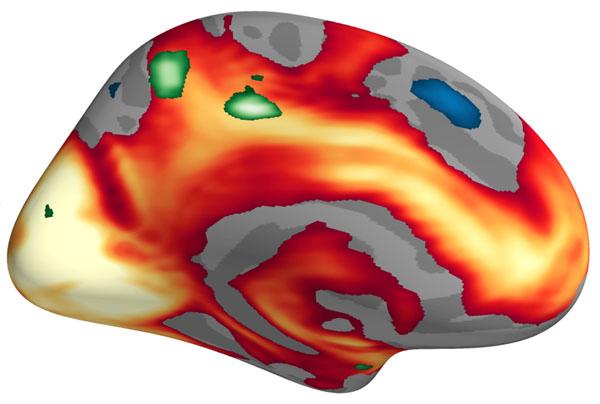
Men and women are different in lots of ways and some contend that women are more emotional and that makes a difference in others areas. A recent large-scale study focused on determining the gender-dependent relationship between emotions, memory performance and brain activity.  

The scientists found that women rate emotional images as more emotionally stimulating than men do and are more likely to remember them but there were no gender-related differences in emotional appraisal of neutral images.
When there is a market, someone will sell to it, even if it does not make much sense. So you can purchase organic pineapples and non-GMO rock salt if it makes you feel better.

In Europe, most genetically modified foods, as European politicians define them, are banned but cows eat GMO feed. The cows can't tell the difference nor have studies shown any difference in milk production or meat. Vermont passed a GMO labeling law but made sure to exempt cows so that the $300 million company run by the primary funder of the Just Label It campaign could still use milk from Vermont cows fed GMO grain in organic yogurt.

Researchers are on the verge of developing a new class of anesthetics, something that has not happened in decades, according to a study published in Anesthesiology. It is being derived thanks to a new approach to identifying compounds may lead to the next generation of anesthetics.

Positional cloning is a genetic mapping technique used to pinpoint the location of specific traits of interest, such as disease-causing genes or mutations, within the genome. Very simply, this map-based technique involves crossing mutant individuals with wild-type individuals and examining the offspring in order to localize a candidate region in the genome for the mutation. By identifying genetic markers that are linked to the trait, progressively more precise areas on a chromosome are defined until the gene is identified.

This approach has contributed to the successful mapping of genes involved in numerous human diseases such as Huntington's disease and cystic fibrosis, an important first step in understanding these conditions.

A research team has discovered a molecular "rheostat" in the brain's appetite control center that may provide new insights into obesity, which is at epidemic levels in this country.

The discovery of this novel cell signaling pathway, reported today in the journal Nature, revises the previous "on-off" switch model of appetite control, said Roger Cone, Ph.D., who led the research team with Masoud Ghamari-Langroudi, M.D., Ph.D.

The discovery centers on a receptor in the brain's appetite control center, the melanocortin-4 receptor, or MC4R, a G-protein coupled receptor (GPCR) embedded in the membranes of nerve cells.

Acute kidney injury often arises after major surgery because the kidneys can be deprived of normal blood flow during the procedure. The use of contrast media, or dyes, can contribute to this problem.

In patients undergoing coronary angiography or percutaneous coronary intervention, which are heart procedures that use dyes to help surgeons visualize the arteries, a high dose of the statin atorvastatin was linked with a reduction in blood levels of creatinine, a marker of kidney injury, as well as a lower incidence of acute kidney injury compared with a low dose of the statin.

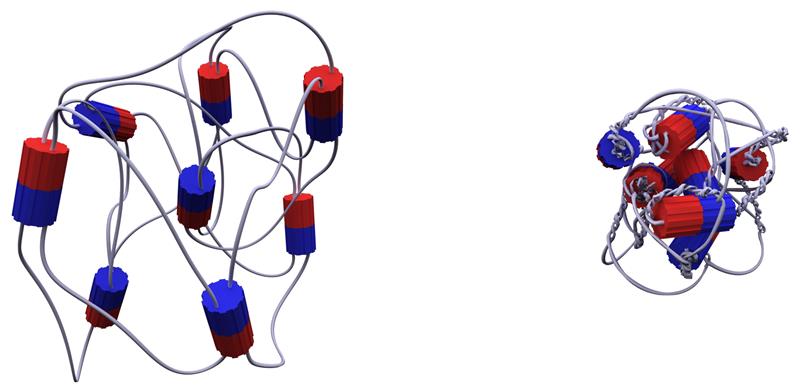
Sometimes the whole is greater than the sum of its parts, said Aristotle. That certainly applies to biology, where molecular motions in living systems have a macroscale effect - such as large muscles that contract due to protein motors.

A team at CNRS's Institut Charles Sadron led by Nicolas Giuseppone, professor at the Université de Strasbourg has  used this concero to make a polymer gel that is able to contract through the action of artificial molecular motors. When activated by light, these nanoscale motors twist the polymer chains in the gel, which as a result contracts by several centimeters. Another advantage is that the new material is able to store the light energy absorbed. 
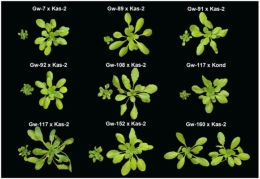
A recently published study offers new clues about the evolution of the immune system in European populations of the plant Arabidopsis thaliana and the underlying genetic mechanisms associated with immunity. 
The species Arabidopsis thaliana, which is naturally distributed across the northern hemisphere, belongs to the same family than mustard. The species is used as model in plant biology studies because its genome is relatively small and appropriate for genetic studies.


