





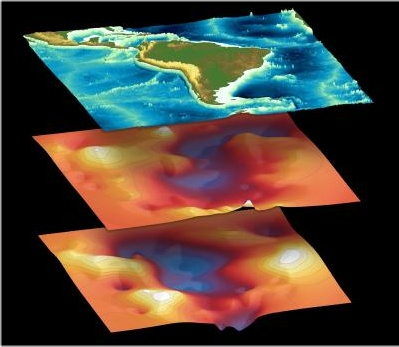


The heated national debate on complex issues related to costs of health care was ignited by the implementation the Affordable Health Care Act (ACA) in January 2014. There is no national system that adequately records and quantifies the wide range of issues related to health care costs, so the arguments have been based primarily on undocumented opinion.

As always, anecdotal reports related to health issues get the most attention. Since such reports are most often at best unreliable and at worst misleading, accepting them as fact adds to the combative unproductive nature of the public debate. As a result, academic economist estimates of the future costs under the ACA have varied from large increases to considerable reductions.


Abu Hamza addressing worshippers in London under police observation. Stefan Rousseau/PA

By Matthew Francis, Lancaster University

Abu Hamza has been sentenced to life in a US prison, after being found guilty of 11 charges of terrorism and kidnapping. The ruling was handed down as events unfolded in France, once again putting his role in inspiring jihadist sympathizers in the spotlight.

A new study has found that removing native forest and putting in farms can accelerate erosion so dramatically that in a few decades as much soil is lost as would naturally occur over thousands of years.

Had you stood on the banks of the Roanoke, Savannah, or Chattahoochee Rivers a hundred years ago, you'd have seen a lot more clay soil washing down to the sea than before European settlers began clearing trees and farming there in the 1700s. Around the world, deforestation and food productions have been blamed for increasing erosion above its natural rate.

In 1833, Constantin Wilhelm Lambert Gloger published his key observation that warm-blooded animals tend to be more heavily pigmented or darker the closer they live to the equator.

This week, University of Pittsburgh researchers Matthew Koski and Tia-Lynn Ashman proved that the same phenomenon described by Gloger exists among flowers. One of the reasons investigators had not pursued proof of Gloger's rule in flowers is that pollinators, such as bees, don't see what we see when they look at a flower. They see in the ultraviolet as well as visible ranges. What appears bright yellow to a person can appear dark or patterned to a bee.


Theist, gnostic, agnostic and atheist. What is the difference? Link: ben-kay.com

By Mark Beeson, University of Western Australia

Getting on for 14 billion years ago the universe suddenly sprang into life.

I can’t actually do the math, as they say, but I’m happy to accept the word of those who can that the physics is unambiguously nailed down. But for all their undoubted brilliance, mathematicians and physicists don’t know what was going on before the big bang.

A study using geckos has found that evolution can downgrade or entirely remove adaptations that have been previously acquired, giving the species new survival advantages. 

Since it is only January 8th, most people have not yet given up on their New Year's Resolution to get in shape so this is still relevant.

Despite what supplement salespeople - and an alarming number of nutritionists in 2015 who make money promoting them - the only ways to lose weight are to starve or work up a sweat. And working up a sweat is the smart way to go.

Before you pack your gym bag, pack your brain with some crazy facts about sweat, courtesy of American Chemical Society's Sophia Cai in the Speaking of Chemistry series.

Maybe fat gets a bad rap. Immune responses matter but when it comes to skin infections, those response may depend greatly upon what lies beneath, according to a paper published in Science. Fat cells below the skin help protect us from bacteria, they write.

Richard Gallo, MD, PhD, professor and chief of dermatology at UC San Diego School of Medicine, and colleagues have uncovered a previously unknown role for dermal fat cells, known as adipocytes: They produce antimicrobial peptides that help fend off invading bacteria and other pathogens.
The number of large earthquakes fell considerably in 2014, down to 12 from 19 in 2013. The trend was similar worldwide. Only 11 earthquakes reached magnitude 7.0-7.9 and one registered magnitude 8.2, in Iquique, Chile on April 1st. That was the lowest annual total of earthquakes magnitude 7.0 or greater since 2008, which also had 12. On average, since 1900 there have been 18 large earthquakes each year.

Millions of earthquakes occur throughout the world each year but most go undetected because they have very small magnitudes or hit remote areas.  In the United States, the US Geological Survey National Earthquake Information Center (NEIC) publishes the locations for about 40 earthquakes per day. 

The first Kinematics dress, now acquired by the MoMA. Nervous System

By Martijn Gommeren, Cardiff Metropolitan University

Have you considered buying a 3D printer? A major spectacle at the Consumer Entertainment Show in Las Vegas for the last two years, they’re now available for as little as £300 – around the same price as the latest Xbox One or Playstation 4.

