
A new non-deformed energy storage phase change material (PCM) can retain and release heat according to specific temperature requirements - a breakthrough that might make a significant difference to the cost of heating and cooling buildings.

If, for example, the required optimum temperature in a room is 22°C, the material can be fixed so that it starts absorbing any excess heat above that temperature.  The heat-regulating material looks like a circular tablet with the circumference of a large coin in the laboratory and can be manufactured so small that it can be sprayed as an unobtrusive microscopic film on surfaces and could be applied anywhere, from walls and roofs to wallpaper.

The future of networking may mean streaming high-definition movies at blazing fast speeds and the routers are the lights in the room.

Scientists at the Fraunhofer Institute for Telecommunications, Heinrich Hertz Institute HHI in Berlin, Germany, have developed a new transfer technology for video data and were able to transfer data at a rate of 100 megabits per second (Mbit/s), without any losses, using LEDs in the ceiling that light up more than ten square meters (90 square feet). 

"This means that we transferred four videos in HD quality to four different laptops at the same time," says Dr. Anagnostis Paraskevopoulos from the HHI.

Where are we humans going, as a species? If science fiction is any guide, we will genetically evolve like in X-Men, become genetically engineered as in Gattaca, or become cybernetically enhanced like General Grievous in Star Wars.

All of these may well be part of the story of our future, but I'm not holding my breath. The first of these - natural selection - is impracticably slow, and there's a plausible case to be made that natural selection has all but stopped acting on us.
What do you get when you mix Mad Men styling, IKEA how-to, and NASA high tech?  In an incredibly terse 1 minute and 28 seconds, with no sound needed, NASA asks "So, You Want to Build a Satellite?" and explains why rocket science is hard.  Seriously, this is the sort of video that you don't need sound, and it features no talking heads or chatty scientists.  It's an elegant, straightforward wake-up call about the intrinsic difficulties that space exploration brings.


What is Bedwetting?

The medical name for not being able to control urination is Enuresis (pronounced: en-yuh-ree-sis). It is sometimes also called involuntary urination. Nocturnal enuresis is involuntary urination that occurs at night, usually while the childis sleeping.

There are two kinds: Primary and Secondary. Primary is bedwetting that has occurred since infancy. Secondary develops at least 6 months, or even several years, after the child has learned to control their bladder.

Do you remember the dijet mass bump found by CDF in W plus jets events ? That signal, whose significance exceeded four standard deviations, had everybody around go crazy for a while.

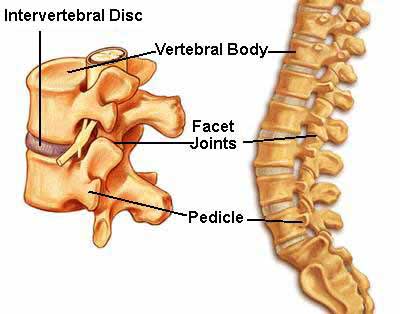
Millions of people are suffering from back pain, making it a major continuous source of physical discomfort for many. Normally, each vertebra in the spine is cushioned by intervertebral discs (see figure 1). But these discs can degenerate due to age or injury, potentially pinching nerves, causing pain and impeding movement. The normal course of treatment for degenerated discs, is the administration of painkillers, physical therapy and steroid injections to ease inflammation. As a last resort, surgery to fuse two vertebra together can be done, limiting back flexibility. Artificial discs have been developed in the past few years, but these are all made of plastic or metal, and they can wear out and don’t provide a full range of motion.


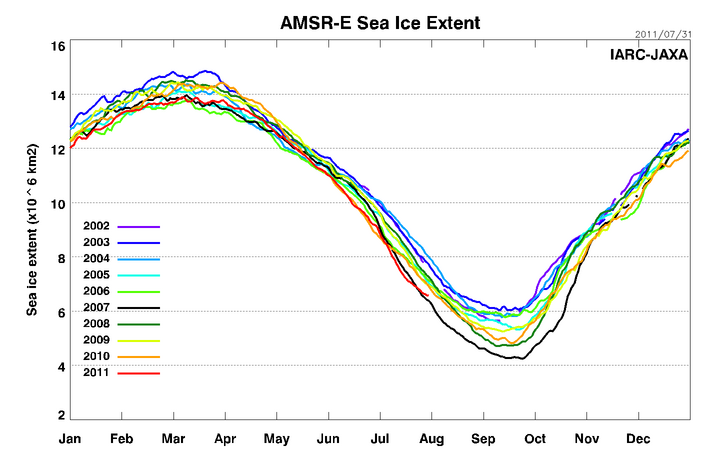
Arctic Ice August 2011

In the days of sailing ships and the early days of steam, even into the early years of the 20th century, much of the Arctic remained inaccessible due to the extensive pack ice.

When explorers attempted to penetrate the ice, it is often found from their journals that they did so in late August.  There are many references to be found of an 'open season' during which it was possible to maneuver a ship through an open lead during a period which was often only of two weeks duration, or less.  In some years, the ice simply did not open as expected, and the explorers would either go home or overwinter nearby, to try again the next year.
The hormone oxytocin may be the "cuddle chemical" but recent research has found that oxytocin can promote negative emotions too.

Salespeople love oxytocin - they think if they spray it on customers will trust them more.  Mothers bond with babies due to oxytocin.  It's positive effects are well known but studies have also found that oxytocin can increase gloating and envy.

Molecules of oxygen have been found in the nearby Orion star-forming complex, the first undisputed detection of oxygen molecules in space.   Previous missions looking for the molecular variety, two atoms of oxygen bonded together, had been fruitless.

Yet as interesting as the discovery is, it leads to a bigger question; the observed amount of atomic oxygen is far less than expected.  Where is all the oxygen hiding in the cold clouds?

Dark oxygen, anyone?