Bacteria that we carry in our bodies may help decide who we marry, according to a new study that analyzes the gut of...a small fruit fly.
A group of molecular biologists recently demonstrated that the symbiotic bacteria inside a fruit fly greatly influence its choice of mates. They propose that the basic unit of natural selection is not the individual living organism, plant or animal, but rather a larger biological milieu called a holobiont. This milieu can include plant or animal life as well as their symbiotic partners. In the case of animals, these partners tend to be microorganisms like intestinal bacteria.
While everyone panicked about NASA's
arsenic announcement, TechDirt informs us that a
TechDirt brings word that "Woman Claims Legal Loophole Means She Now Owns The Sun...
Anyone who woke up yesterday morning hoping that December 2nd 2010 might be a historic day in the search for extraterrestrial life is likely to be sorely disappointed. All week the hype has been building since the NASA PR machine announced that they were about to release an astrobiology finding that would "impact the search for evidence of extraterrestrial life." Speculation got a little bit crazy to say the least!
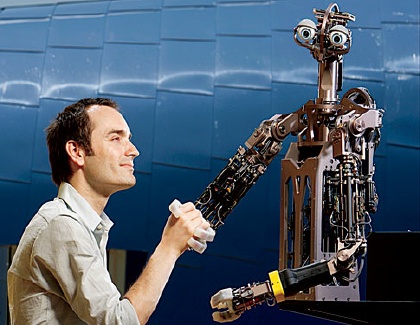
In the cult television series Mystery Science Theater 3000, we are treated to two aliens and a dude wisecracking their way through terrible old B-movies like Project Moonbase. For example, in their episode watching the 1963 movie, The Slime People: Up from the Bowels of the Earth, the main character calls the operator on the payphone at a deserted L.A. airport, and one of the robots improvises, “Hi. This is the human race. We're not in right now. Please speak clearly after the sound of the bomb.”
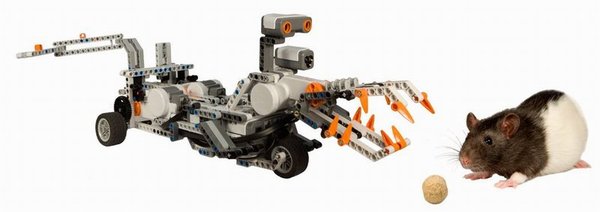
We instinctively know how to keep ourselves safe and so do other animals, according to neuroscientists in the Proceedings of the National Academy of Sciences. University of Washington researcher Jeansok Kim demonstrates that rats weigh their odds of safely retrieving food pellets placed at varying distances from a perceived predator.
Stay or forage might seem obvious but rats need to get out and find food and how do they decide whether it's safe to leave the nest was the focus of Kim and co-author June-Seek Choi, a visiting professor in the UW psychology department from Korea University. They studied how the amygdala, an important brain area for perceiving and reacting to fear, was involved in the rats' decisions to risk their safety for food.
It seems that Abigail and Jacob will be at the top of Santa's gift-list this Christmas morning. A school rewards site says that children with these names are most likely to behave well.
Little girls called Beth and little boys named Josh will not be so fortunate; children with those names appear less prone to good behavior (so more prone to naughtiness? Look for an evolutionary psychology study coming soon!)
H0 charge "clouds"  in |4,3,1> state.
In about 1985, while considering a banal problem of scattering from atoms, I occasionally discovered the positive-charge (second) atomic form-factors

describing effects of interaction of a charged projectile with the atomic nucleus [1]:
 (1)
(1)
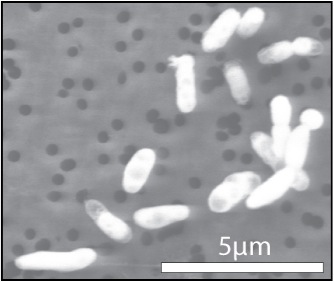
Astrobiology researchers say a new discovery may have expanded the definition of life. Conducting tests in the harsh environment of Mono Lake in California, they have discovered the first known microorganism on Earth able to thrive and reproduce using the toxic chemical arsenic, substituting arsenic for phosphorus in its cell components.
Carbon, hydrogen, nitrogen, oxygen, phosphorus and sulfur are the six basic building blocks of all known forms of life on Earth. Phosphorus is part of the chemical backbone of DNA and RNA, the structures that carry genetic instructions for life, and is considered an essential element for all living cells.
Recently, two posts of Lisa Jo Rudy’s at About.com have garnered the disdain of loyal AoA (Age of Autism blog) readers. Anne Dachel felt strongly enough to write a lengthy post about the upcoming tsunami (The AoAites are nothing if not consistent in their descriptors) and Rudy’s questions concerning whether working towards making our children normal is a worthwhile goal and the funding of our children’s education and therapies.
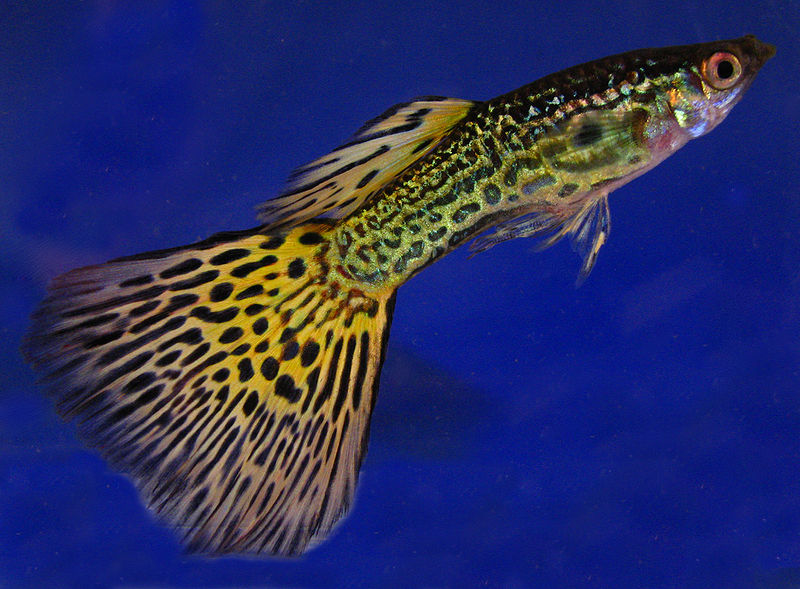
Contrary to what many of us would predict most female animals are not monogamous. Not even swans or penguins, those (supposedly) hallmarks of monogamy. Also surprising is the evidence that in most cases the female deliberately looks for the multiple sexual partners since female multiple mating (known as polyandry) is costly, risky and seems to bring no benefits to the females involved.