Who says science journalism is dying when it seems to be gloating about slaying one sacred cow after another: chiropractic, homoeopathy and now... dieting.
The internet is bursting to the seams with weight loss programs, slimming advice, nutrition counselling, fitness regimes, low fat, low carb, low salt, low sugar, low motivation diets. It's enough to drive one to drink, except that it would also make you fatter...or would it?
I've been pondering this for some time and have just now been fired into action by a comment I made in another article “
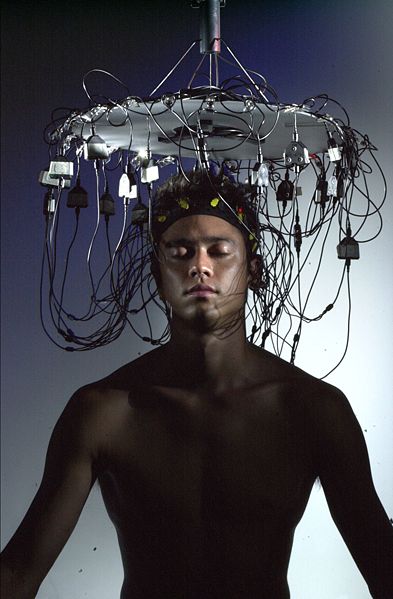
Building Smarter Artificial Intelligence By... Shrinking the Body?” One approach to artificial intelligence is to model the activities of neurons as electrical circuits with multiple inputs and multiple outputs. The model assumes that each individual neuron affects only those other neurons with which it has direct contact at the synapses. But, we also know that an electrical signal will also generate an electromagnetic field.
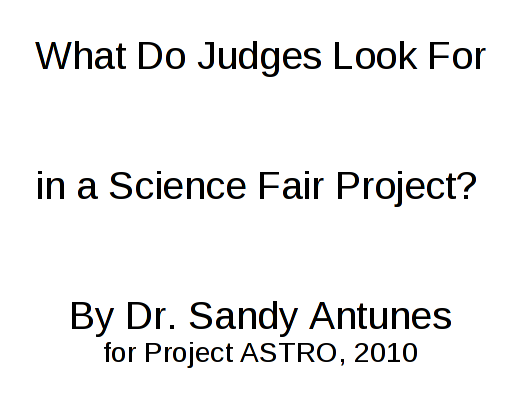
After judging my fifth science fair (for this year), I've decided to share my secrets of a science-fair-judging scientist. Appropriately, I made this as a Science Fair 3-fold poster. At the risk of alienating Hank, the much put upon ScientificBlogging editor, I'm going to see if my poster breaks this article software.
But then again, I did say these were secrets. So making them hard to blog about sort of fits!
.... oh, but I do put a pure-text version at the end. Enjoy!
Alex
Researchers writihg in Proceedings of the Royal Society B say they have made a discovery in understanding the origins of human vision. They say they have determined which genetic 'gateway,' or ion channel, in the hydra is involved in light sensitivity. Hydra are simple animals that, along with jellyfish, belong to the phylum cnidaria. Cnidarians first emerged 600 million years ago.
Complex traits with components of individual evolutionary histories are always more difficult to understand but a gene called opsin is present in vision among vertebrate animals and is responsible for a different way of seeing than that of animals like flies. The vision of insects emerged later than the visual machinery found in hydra and vertebrate animals.
An international team of space physicists reports that Mars is constantly losing part of its atmosphere to space as a result of pressure from solar wind pulses. Their new study in Geophysical Research Letters should help scientists better understand the evolution of Mars's atmosphere.
The researchers analyzed solar wind data and satellite observations that track the flux of heavy ions leaving Mars's atmosphere. Results of the analysis showed that Mars's atmosphere does not drift away at a steady pace; instead, atmospheric escape occurs in bursts.
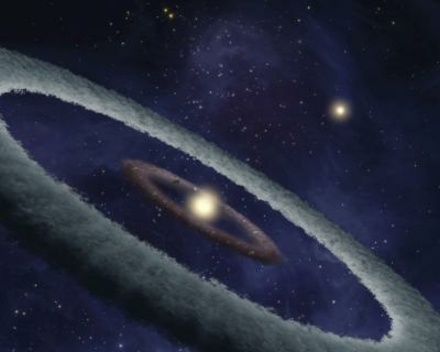
The asteroid 1999 RQ36 may be able to tell scientists how the solar system was born, and perhaps, shed light on how life began. The chunk of rock and dust, about 1,900 feet in diameter, also might hit us someday, according to NASA researchers studying the asteroid.
Asteroids are leftovers from the cloud of gas and dust – the solar nebula -- that collapsed to form our sun and the planets about 4.5 billion years ago. As such, they contain the original material from the solar nebula, which can tell us about the conditions of our solar system's birth.
In some asteroids, this material was altered by heat and chemical reactions, either because they collided with other asteroids, or because they grew so large that their interiors became molten.
A lack of free time is no longer a viable excuse for avoiding exercise, according to a new study in The Journal of Physiology.
Researchers studying interval training have found that it not only takes less time than what is typically recommended, but the regimen does not have to be overly intense to be effective in helping reduce the risk of such diseases at Type 2 diabetes.
The study adds to a growing body of research that has zeroed in on this particular style of exercise in which a person trains hard but for less time.
Birds communicate with their developing chicks before they hatch by leaving them messages in the egg, new research published in Science has found.
By changing conditions within the egg, canary mothers leave a message for their developing chicks about the life they will face after birth. In response, nestlings adjust the development of their begging behavior.
If chicks get a message that they will be reared by generous parents then they beg more vigorously for food after hatching. But chicks that are destined to be raised by meaner parents end up being much less demanding.
A study of blind scorpions published in Cladistics is challenging the long-held assumption that specialized adaptations are irreversible, evolutionary dead-ends.
According to the new phylogenetic analysis of the family Typhlochactidae, scorpions currently living closer to the surface (under stones and in leaf litter) evolved independently on more than one occasion from ancestors adapted to life further below the surface (in caves).
Scorpions are predatory, venomous, nocturnal arachnids that are related to spiders, mites, and other arthropods. About 2,000 species are distributed throughout the world, but only 23 species found in ten different families are adapted to a permanent life in caves. These are the specialized troglobites.
Amazon rain forests were unaffected by a major drought in 2005, neither dying nor thriving, contrary to a previously published report and claims made the by the IPCC, according to a new study in Geophysical Research Letters.
"We found no big differences in the greenness level of these forests between drought and non-drought years, which suggests that these forests may be more tolerant of droughts than we previously thought," said Arindam Samanta, the study's lead author from Boston University.