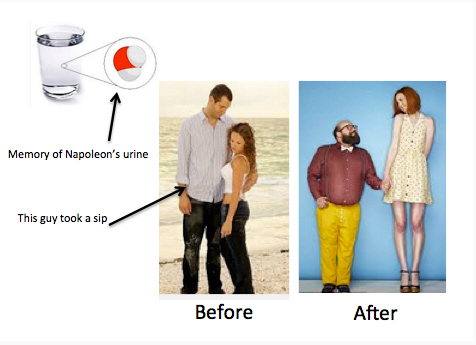





There are sometimes complaints that modern men only prefer one certain female body type, but we should blame evolution and prehistoric influences, according to a new study.

Professor Anthony Ray from the Department of Evolution and Human Behavior at Mack University investigated male mate preferences for female figures. 200 males, ages 17-21 and receiving extra credit in an introductory psychology class at a small liberal arts college, were presented with images of women who had differing lumbar curvature but the same buttock size and vertebral wedging. 

A large majority of the men consistently preferred women whose buttock size and vertebral wedging most closely matched prehistoric ideals on what he calls the "Kardashian Lumbar Curvature Index".

Though the developed world is concerned about greenhouse gas emissions implicated in climate change and global warming, reactions in nature have been less consistent.

Polar bears have been increasingly forced on shore due to sea ice loss, where they eat berries, birds and eggs, while ice seals, the usual lipid-rich prey of bears, couldn't be happier that thinner ice has made them harder to get to.
It is rare enough to have one accepted scientific paradigm turned on its head, but last week we had two. Pay attention. This may never happen again.

A study that was just published in the oft cited “Journal of Unintentional Environmentalism and Bassoon Maintenance” got things rolling. It provided proof that proponents of homeopathy have been right all along, despite longstanding, dogmatic and arrogant protestations by second rate pseudoscientific hacks such as myself. More on this later.

A new paper has found that criminal masterminds have been engaging in creating future henchmen starting at the earliest ages - Kindergarten.

Suitable candidates are carefully placed in Kindergarten where they develop vast academic and social networks so that when they begin their lives of crime, they have friends in all the right places. 
Taking inspiration from Resonaances, who this year offers much more than an April's Fool in his blog (I am also flattered to see that I am featured there, and with a character of my liking), I am going to offer some predictions for the next run that the LHC is going to start, at the unprecedented energy of 13 TeV, in the next few weeks. The unconventional thing is that I will force the natural scepticism out of my brain, and try to be over-optimistic.
The prediction for 2015-2016

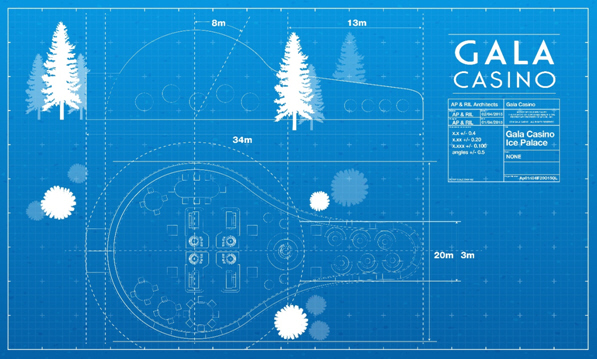
A recent study undertaken by the Institute of Polar Science has backed plans by Gala Casino to create the first ever Ice Casino.

Led by Professor Ross Bight, a renowned figure in the fields of both human and animal behaviour in the Arctic, the research has found that players become more composed and focussed whilst being subjected to a colder temperature. 

BP’s annual Energy Outlook report, released in February, details the results from modelling of what it sees as the “most likely” energy scenario out to 2035. In this scenario global fossil use increases by 33%, consistent with a scenario the International Energy Agency (IEA) uses to describe the trajectory towards global warming of 6C – far beyond the accepted “safe” limit of 2C.

When it comes to survival of the fittest, it's all about your mother, according to a study that analyzed 24 years' worth of data from a population of North American red squirrels in Canada's Yukon and measured maternal genetic effects in squirrel offspring.  

Conclusion: Adaptive success in squirrels is often hidden in the genes of their mother. Biologists have debated "nature vs. nurture" for decades. To what extent are we born a blank slate and how much of our destiny in life is written out for us in terms of our genetics?
 WHOI
The biggest challenge facing climate models is similar to those facing economic ones - predicting the past is relatively easy, but predicting the future is far more of a challenge. In the United States, predicting hurricanes is less accurate than NCAA tournament pools, forecasters did not come close to predicting 15 in 2005 or 2 in 2013, but a team from the University of Arizona write in an upcoming Weather and Forecasting article that they are 23 percent less error prone - at predicting the past, anyway.

Newly published research posits an explanation for why 100 million Americans estimated to be taking prescription and over-the-counter antacid and heartburn medications may be at an increased risk of bone fractures.

A new study in mice notes that stomach acid in the gastrointestinal tract plays an important role in helping the intestines absorb and transfer calcium to the skeletal system and so while the introduction of proton pump inhibitor-based antacids reduces the level of acidity in the stomach to bring relief to patients, that reduction also interrupts and even stops the gut from absorbing much needed calcium.

