The next time you need to get a creative boost, try playing a video game. Not all day, that is the road to unemployment, but taking a break to play an open-ended building game, like Minecraft, has been found to increase creativity. Especially if you just do whatever you'd like.
Population level metrics such as Body Mass Index (BMI) or statistical correlation using epidemiology don't do much to inform individual experience, and psychology faces the same issue. Surveys can tell us whatever surveys can tell us about what a particular group of people taking surveys think, but there is a reason that no polling group does well with Congressional districts that are contentious. It simply doesn't work. As we learned when we first believed the anti-vaccine problem was a fringe religious issue, what people claim on surveys is not their behavior.(1)
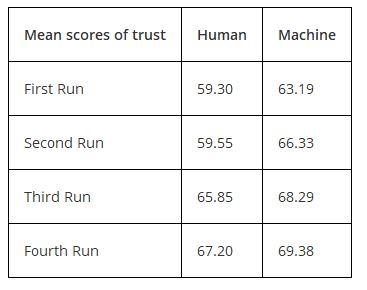
Automated automobiles are coming, the question is how they will behave. Not how they will perform, anything is guaranteed to be safer than millions of distracted individuals and ATM machines have shown what accuracy will look like, but how they will behave, their driving style, may impact individual uptake in the short term.
Do you want robotic efficiency, a car that won't stop at a cross-section when no other cars are around, or automation that emulates average human driving and not only stops but even peeks ahead to get a better "view" like a human might? The surprising result was that efficiency was not the overwhelming winner; people today prefer a blend of both.
The underlying central metaphor of the new Marvel film "Spider-Man: Far From Home" is that news shouldn't be trusted. Many agree, but whether or not people label it "fake" seems to be based on how different their own bias is.
If you are a Republican and regard CNN is biased, having a conservative voice on their network does not make the outlet seem less biased, it makes the participant seem less credible, even if they believe the individual is honest.
In modern American culture, two exploratory fields in science compete to scare the public or suggest the promise of miracle cures; epidemiology and studies in mice.
Many people who are old enough to have experienced the first moon landing will vividly remember what it was like watching Neil Armstrong utter his famous quote: That’s one small step for a man, one giant leap for mankind”. Half a century later, the event is still one of the top achievements of humankind. Despite the rapid technological advances since then, astronauts haven’t actually been back to the moon since 1972.
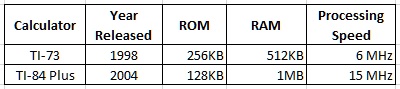
This seems surprising. After all, when we reflect on this historic event, it is often said that we now have more computing power in our pocket than the computer aboard Apollo 11 did. But is that true? And, if so, how much more powerful are our phones?
Andras Kovacs studied Physics at Columbia University. He currently works as CTO of BroadBit Batteries company. Andras recently wrote an interesting book, which I asked him to summarize and introduce here. The text below is from him [T.D.]

This blog post introduces a newly published book, titled "Maxwell-Dirac Theory and Occam's Razor: Unified Field, Elementary Particles, and Nuclear Interactions".
The fossilized skull of a Paleolithic adult man from around 33,000 years ago and known as the Cioclovina calvaria has been extensively studied. But there was controversy over trauma on the skull--specifically a large fracture on the right aspect of the cranium and whether that specific fracture occurred at the time of death or as a postmortem event.
Computer simulations using twelve synthetic bone spheres tested scenarios such as falls from various heights as well as single or double blows from rocks or bats. Along with these simulations, the authors inspected the fossil both visually and virtually using computed tomography technology.
This paper in Nature shows that if the world including China and India gradually ramp up their commitments to become 1.5°C compatible, then the new coal fired power plants they built recently or are building right now will need to be used at low capacity or for a shorter than usual lifetime than the industrial average of 53% capacity for 40 years.
Though Europe and Asia still smoke far more cigarettes than intelligent people should, and therefore cancer rates due to that will stay high for another 20 years or more, the clear trend in lifestyle diseases is obesity-related ones.
That is actually a win, and far better than the bleak Population Bomb promoted by people like John Holdren and Paul Ehrlich just a few decades ago. Though there is still famine in parts of the world, they are parts of the world where groups opposed to science can manipulate people who don't trust outsiders or understand the technology, no differently than than distrust vaccines. The peaks and valleys of food have leveled out so famine is only going to decrease.